Clear Sky Science · en
Physiological medium and 3-hydroxybutyrate modulate autophagy-linked organelle remodeling in human external urethral sphincter myoblasts
Why Bladder Control Depends on Tiny Cell Cleanups
Leaking urine while coughing, laughing, or lifting is far more common than most people realize, especially in older adults and people with obesity or diabetes. This study looks inside the muscle that helps keep urine in—the external urethral sphincter—and asks a surprisingly practical question: does the "diet" of these muscle cells matter more than trendy ketone supplements when it comes to keeping them healthy and strong?
The Muscle Valve That Keeps Us Dry
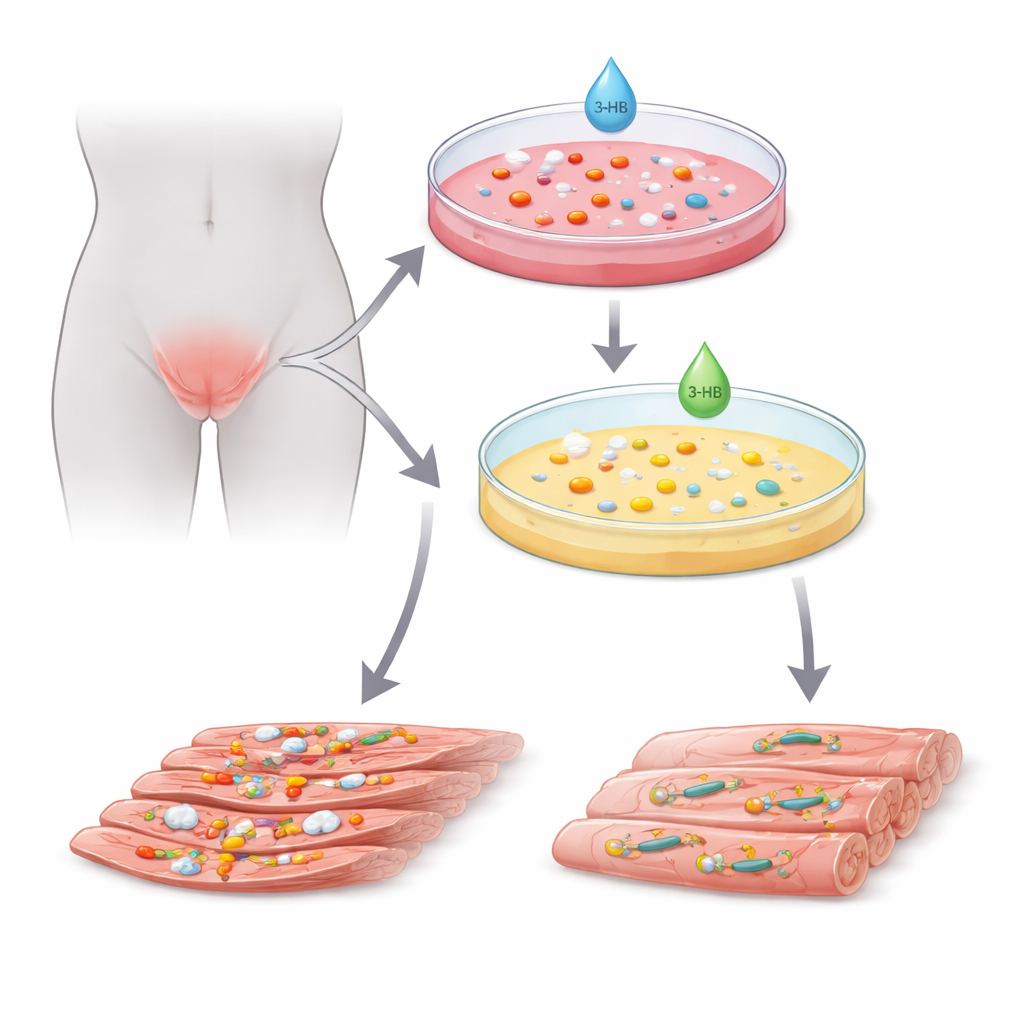
Stress urinary incontinence occurs when the ring of muscle around the urethra can no longer tighten effectively during everyday spikes in belly pressure. Childbirth, surgery, aging, and metabolic diseases can all weaken this muscle. While current treatments explore injections and stem cells, they often give inconsistent results. The authors instead focused on the basic biology of human urethral sphincter muscle cells grown in the lab, aiming to understand how their surrounding nutrients and energy sources shape their ability to mature into sturdy, well-organized fibers.
Comparing Rich and Realistic Cell Diets
The researchers grew human sphincter muscle precursor cells under four conditions: a sugar-rich, nutrient-heavy medium; the same medium plus the ketone body 3-hydroxybutyrate (3HB); a more realistic, lower-sugar "physiological" medium that better matches normal human blood; and that same realistic medium plus 3HB. They then followed how well the cells fused into long muscle tubes, which genes they switched on, and how their internal structures changed over several days. They also profiled hundreds of small molecules in the surrounding fluid to see how cell metabolism shifted over time.
Cleaner Fuel, Better Muscle Build
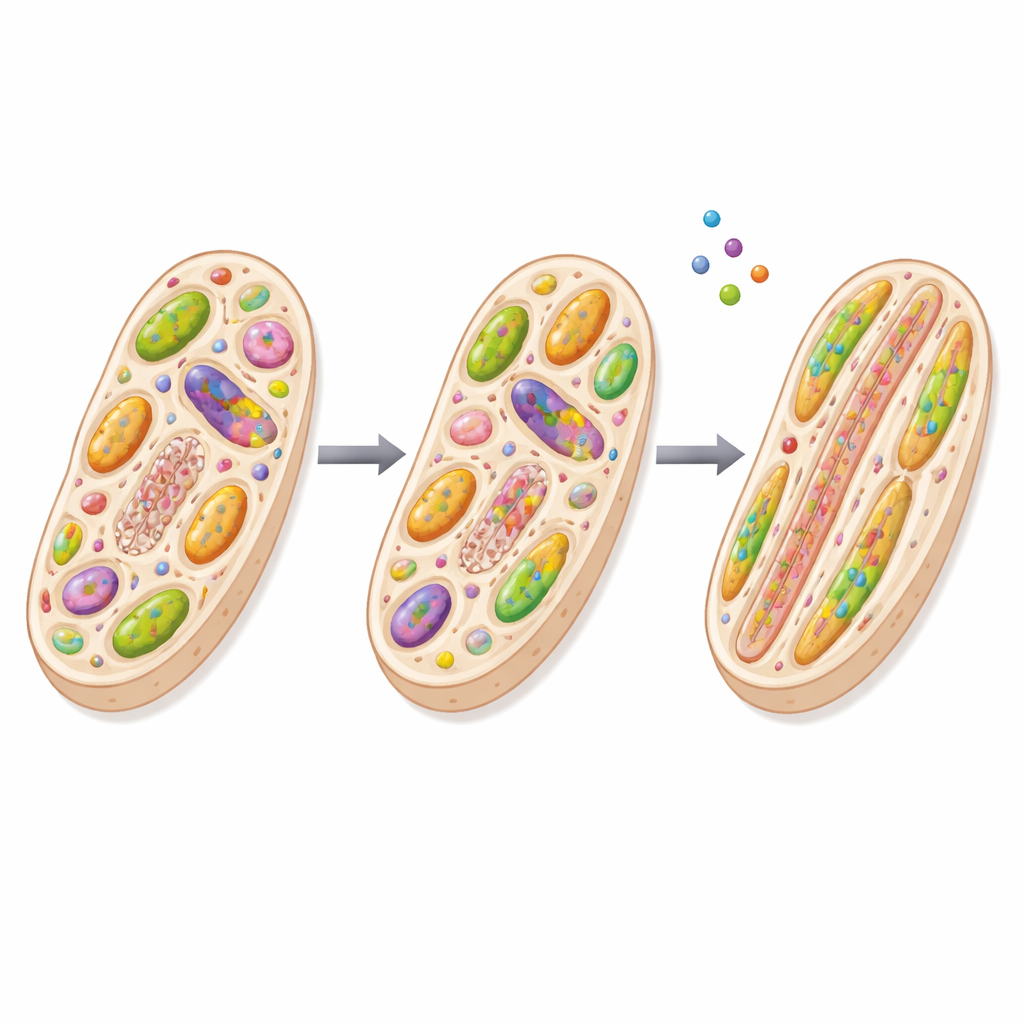
Simply putting the cells into the more physiological, lower-sugar medium had the biggest positive effect. In this setting, muscle fibers formed earlier and more robustly, and key muscle genes turned on sooner and more strongly than in the sugar-rich medium. Electron microscope images revealed that cells in the realistic medium had thicker, better aligned contractile structures and fewer cluttered waste compartments, suggesting that the internal cleanup system—autophagy—was running efficiently. By contrast, cells in the rich medium accumulated many waste-filled structures and showed signs of lingering stress, even when 3HB was added.
Ketone Body as a Subtle Helper, Not a Star Player
The team expected 3HB, a ketone boosted by ketogenic diets and some supplements, to act mainly as an extra fuel supply. Instead, its influence was modest and highly dependent on the background environment. In nutrient-rich conditions, 3HB slightly boosted certain energy-cycle molecules and seemed to ease some organelle stress, trimming back excess waste compartments. In the more realistic medium, however, 3HB sometimes reduced key energy intermediates and led to lingering cleanup structures and less neatly aligned muscle fibers. Across many measured molecules, 3HB shifted signaling pathways linked to cellular housekeeping and gene control, but these shifts were small compared with the broad impact of the overall medium composition.
What This Means for Future Treatments
Taken together, the results suggest that recreating a healthy, balanced metabolic environment is more important for urethral sphincter muscle quality than simply adding ketone bodies. In other words, the "background diet" of the cells sets the stage, and 3HB can only fine-tune what is already there—helping under stressed, nutrient-heavy conditions, but offering little extra benefit when conditions are already close to normal. For people with stress urinary incontinence, especially those with obesity or diabetes, this work supports approaches that restore a more physiological internal environment—through lifestyle, medication, or targeted metabolic therapies—as a foundation for any regenerative treatment aimed at rebuilding the sphincter muscle.
Citation: Kai, H., Hata, S., Hamamatsu, N. et al. Physiological medium and 3-hydroxybutyrate modulate autophagy-linked organelle remodeling in human external urethral sphincter myoblasts. Sci Rep 16, 13610 (2026). https://doi.org/10.1038/s41598-026-43453-4
Keywords: stress urinary incontinence, urethral sphincter muscle, cell metabolism, autophagy, ketone bodies