Clear Sky Science · en
Predicting skeletal fluorosis severity using machine learning across diverse fluoride-exposed populations in China
Why this matters for everyday health
Skeletal fluorosis is a serious bone disorder caused by taking in too much fluoride over many years. It can turn from vague aches into bent spines, stiff joints, and lifelong disability. Millions of people in low- and middle-income countries live in areas where water, coal smoke, or even tea quietly deliver fluoride every day. This study shows how modern data tools can help doctors spot people on a dangerous path much earlier—before the damage becomes permanent.
Hidden danger in daily habits
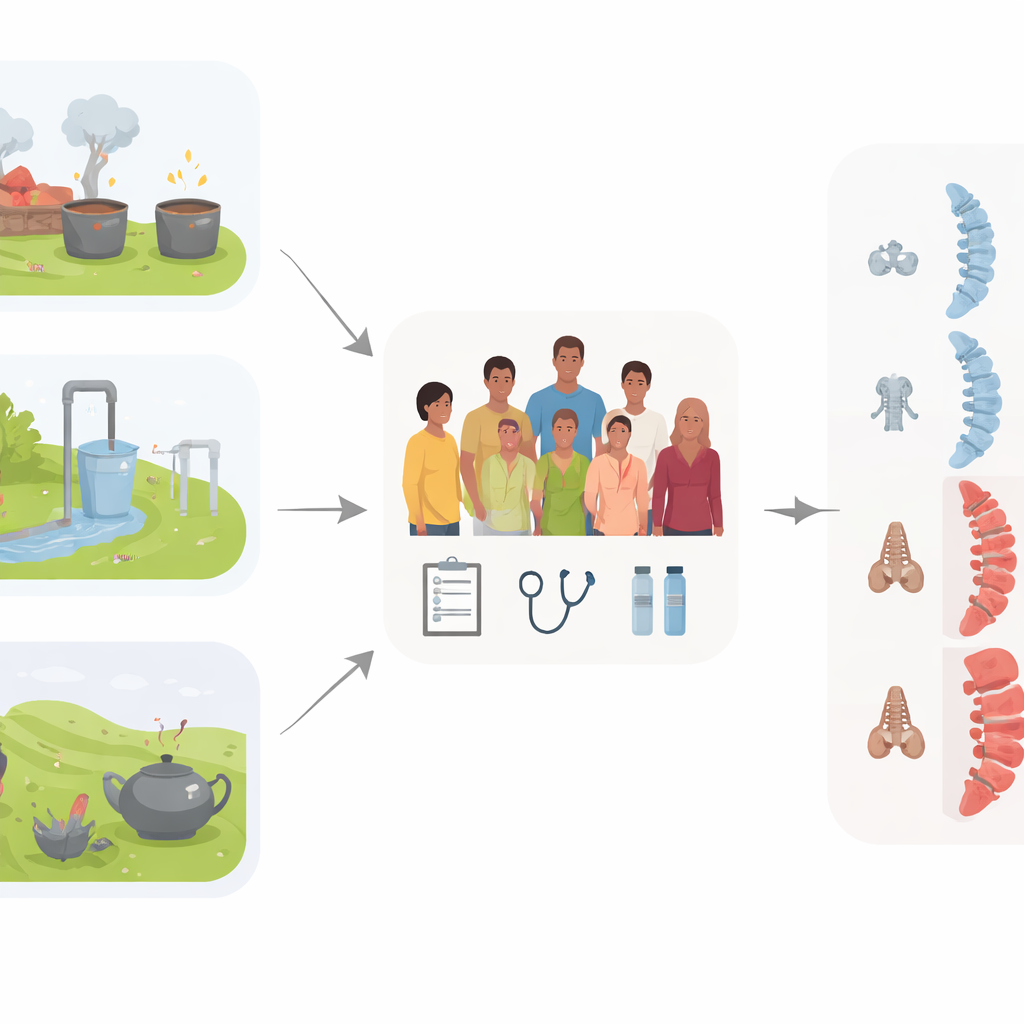
In parts of China and other countries, high fluoride exposure comes from ordinary routines: burning local coal indoors, drinking well water, or consuming strong brick tea. Fluoride slowly builds up in bones, at first causing only mild joint pain or stiffness. By the time X‑rays show clear damage, much of the harm is already done and is hard to reverse. The researchers behind this study asked whether information that is easier to collect—such as age, simple pain scores, joint movement, and urine tests—could be combined to predict how severe a person’s bone damage already is.
A nationwide data picture
The team drew on the China Fluorosis Cohort, launched in 2022, focusing on three regions that represent the main ways people are exposed: coal-burning communities in Guizhou, areas with fluoride-rich drinking water in Shanxi, and brick‑tea–drinking communities in Sichuan. From nearly 1,800 volunteers who all had skeletal fluorosis, 1,309 with complete information were included in the analysis. Every participant answered detailed questionnaires, had their height, weight, and blood pressure measured, underwent joint examinations by orthopedic specialists, and provided blood and urine samples for dozens of chemical tests. Expert radiologists graded each person’s disease as mild or moderate-to-severe using standardized X‑rays.
Teaching computers to recognize severe disease
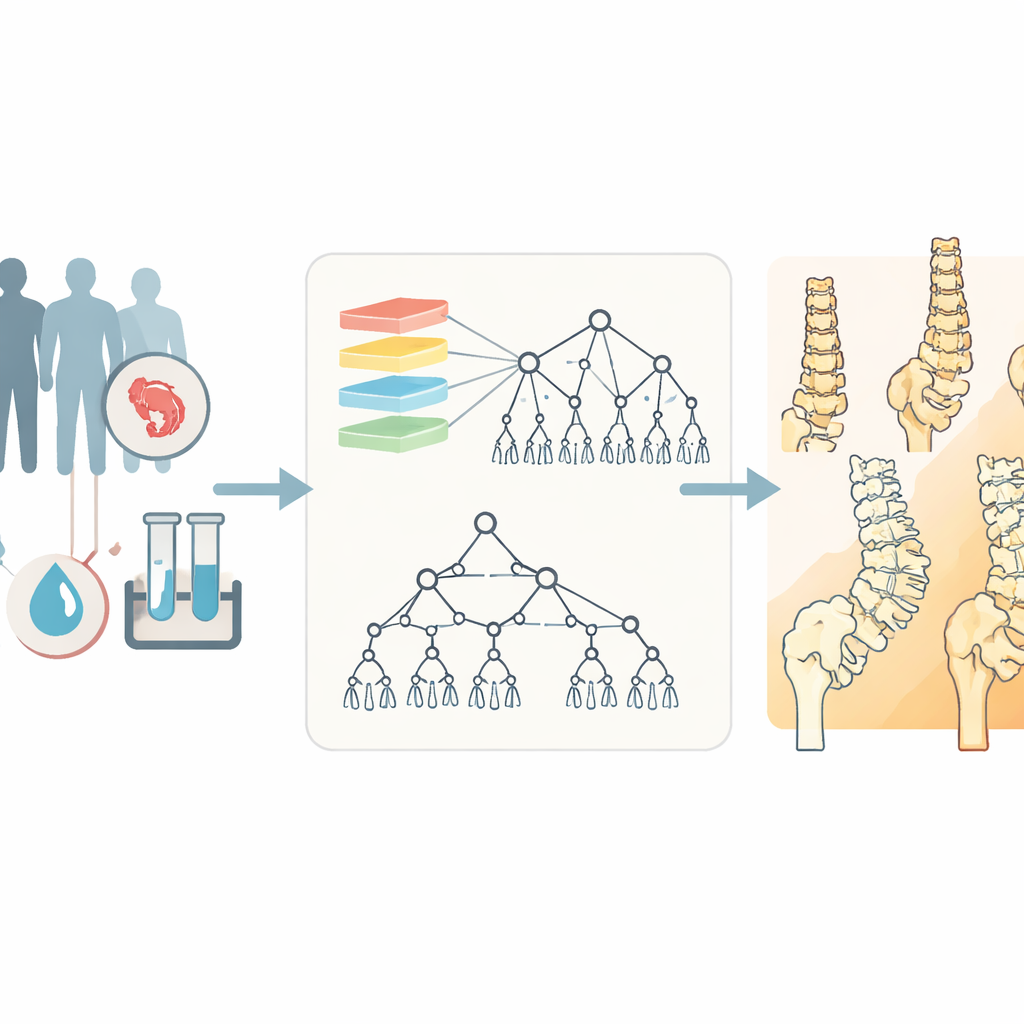
Because dozens of potential risk indicators were recorded, the team first used a statistical filter to winnow 80 measured variables down to 22 that carried the most information about how advanced the disease was. These included where a person lived, their age and sleep time, measures of bone strength, ratings of how freely major joints could move, a simple 0–10 pain score, levels of bone-building and bone-breakdown markers, inflammation signals, standard blood counts, liver function, and the amount of fluoride in urine. The researchers then trained five different computer models, including a popular method called random forest, on data from about 70% of participants, and tested how well the models worked on the remaining 30%. Performance was judged mainly by how accurately the models separated mild from more serious disease.
What the model learned about bones and pain
The random forest model turned out to be the most accurate, correctly distinguishing mild from moderate-to-severe fluorosis in roughly four out of five people in the test group. To open the model’s “black box,” the team used a technique that assigns each input a contribution score for every prediction. Pain level emerged as the single most important signal: higher pain scores strongly pushed predictions toward more severe disease. Limited knee and shoulder movement, older age, and higher urinary fluoride levels also played major roles. People with lower bone mass and altered bone-formation markers were more likely to have advanced damage, even though their bones could appear denser yet more brittle. The model also picked up clear regional patterns: coal-burning areas had the highest share of severe cases, followed by drinking-water regions, while brick‑tea zones tended to show milder, more reversible illness.
What this means for prevention
For families living in high-fluoride environments, this work suggests that simple information—how much a person hurts, how well their joints move, basic lab tests, and where they live—can be combined into an early warning system. Instead of waiting for X‑rays to reveal advanced bone damage, health workers could use such a model to flag people at high risk and prioritize them for closer follow-up, changes in water or fuel sources, or other protective steps. While the approach still needs refinement and testing in other countries, it offers a practical path toward earlier detection and smarter public health planning in communities where skeletons silently record a lifetime of fluoride exposure.
Citation: Long, H., Zeng, J., Wei, S. et al. Predicting skeletal fluorosis severity using machine learning across diverse fluoride-exposed populations in China. Sci Rep 16, 13858 (2026). https://doi.org/10.1038/s41598-026-43429-4
Keywords: skeletal fluorosis, fluoride exposure, machine learning, bone health, environmental epidemiology