Clear Sky Science · en
Pediatric foot anthropometry and its correlation with growth assessment
Why Measuring Kids’ Feet Matters
Parents notice when their children suddenly outgrow their shoes, but few realize that those changing feet can quietly reveal how a child is growing overall. This study from Nigeria asks a deceptively simple question: can basic measurements of children’s feet help track healthy growth, guide better shoe design, and support pediatric care, especially in places where medical resources are limited?
Looking at Growing Feet
The researchers focused on two straightforward measurements: how long and how wide children’s feet are. They studied 389 apparently healthy boys and girls between 4 and 12 years old in Ekpoma, a town in Edo State, Nigeria. Using standard tools similar to a doctor’s height rod and a tailor’s tape, trained assistants carefully measured each child’s height, weight, and right foot length and width. By comparing these measurements with the child’s age, the team looked for patterns that would show how closely feet track overall growth. 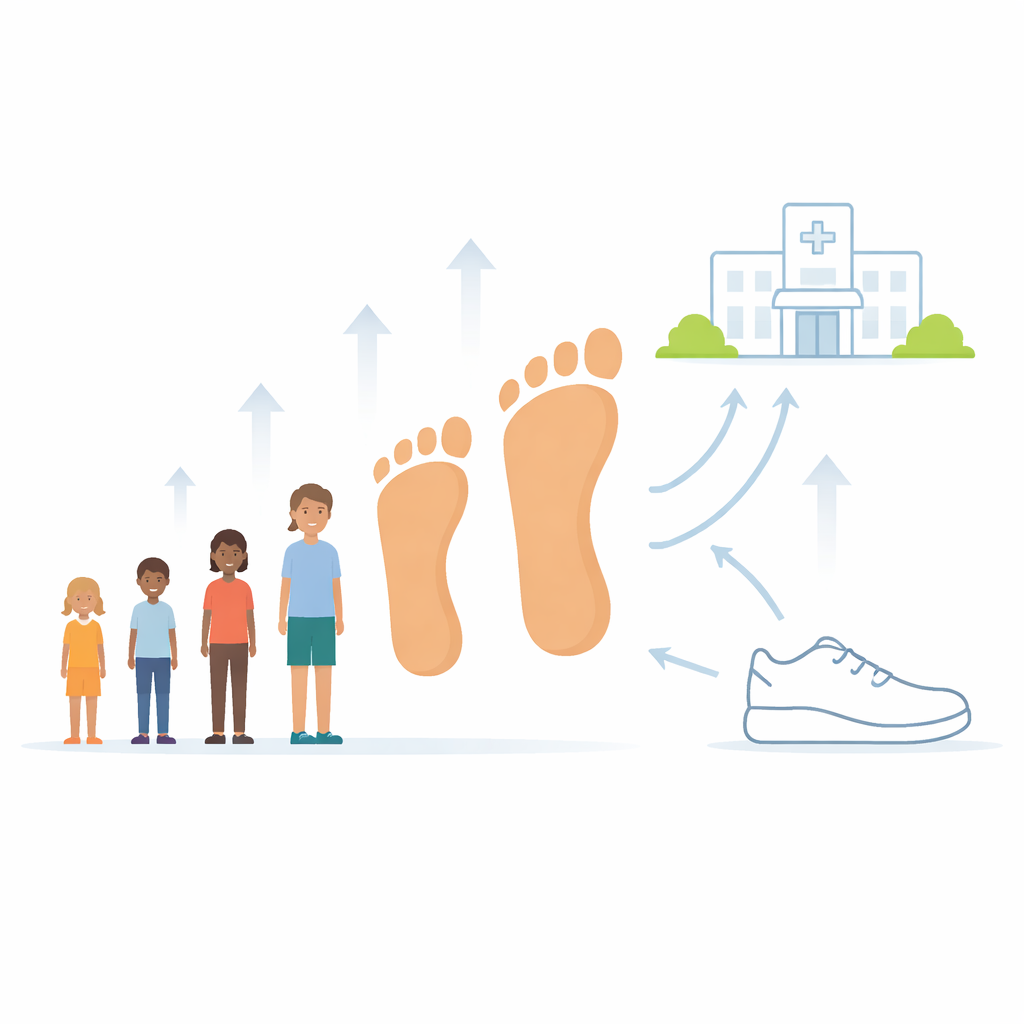
Patterns of Change With Age
The results showed that children’s feet do not grow at a steady, unchanging pace. Foot length increased clearly with age in younger children, especially between 4 and 9 years old. In these age groups, longer feet went hand-in-hand with getting older, reflecting the rapid stretching of the skeleton common in early and middle childhood. But in the 10- to 12-year-olds, the link between age and foot length weakened or almost disappeared. This suggests that, for many children, foot length begins to level off before the famous adolescent growth spurt in height fully unfolds, making the feet an early signal that a major growth phase is passing.
Height, Width, and What They Tell Us
When the team compared foot size with height rather than age, the connection was even clearer. Taller children tended to have longer feet, and this relationship was strong across the group, confirming that foot length can act as a simple stand-in for overall stature. Foot width also tended to increase with both age and height, but these links were weaker. Width continued to adjust even in older children, likely because the foot broadens to support a growing body’s weight and movement, long after length has nearly finished stretching. This difference between length and width hints that feet first get longer, then gradually reshape and widen as children become heavier and more active. 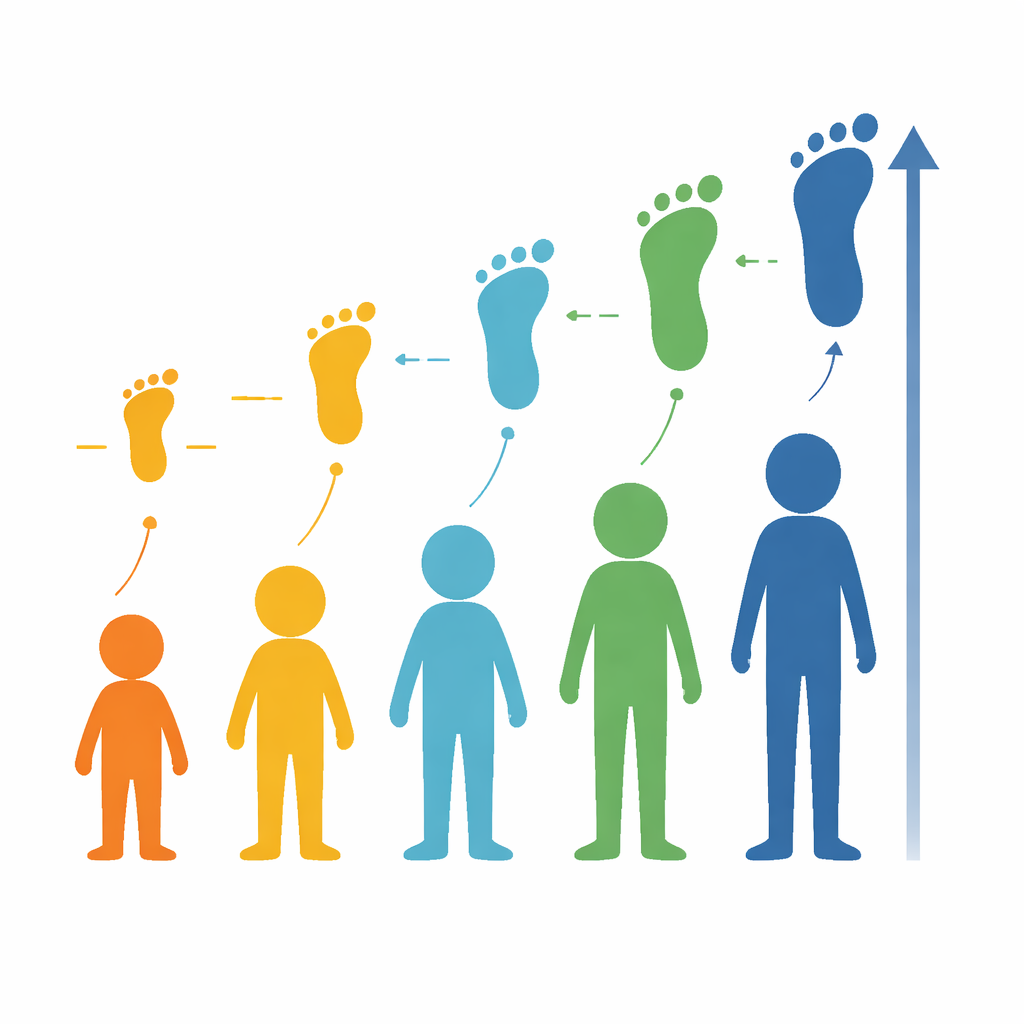
Boys, Girls, and Everyday Uses
Another important finding was what the researchers did not see: there were no meaningful differences between boys and girls in foot length, width, height, or age within this 4–12 year window. That fits with what is known about growth, since strong hormone-driven differences usually appear later in the teenage years. Together, these results have practical implications. In clinics with limited equipment, measuring a child’s feet can help flag whether growth seems on track, prompting more detailed checks if something looks unusual. For shoe designers and public health planners, understanding how fast feet lengthen and how long they continue to widen can guide recommendations for shoe size, extra space at the toes, and appropriate width, helping to avoid cramped or overly loose footwear that may lead to pain or deformity over time.
What This Means for Children’s Health
In simple terms, this study shows that children’s feet can act like an easy-to-read ruler of overall growth. In Nigerian kids aged 4–12, longer feet usually meant both greater height and, in younger ages, increasing years, while a gradually widening foot reflected ongoing adaptation to a growing body. Because boys and girls were similar at these ages, the same basic rules apply to both. By providing locally specific data from an underrepresented region, the research lays groundwork for low-cost growth checks and better-fitting shoes in African settings, where such information has been scarce. Watching how children’s feet change over time could become a practical way to support healthy development and prevent problems before they start.
Citation: Vidona, W.B., Bolaji, T.O. & Esomchi, C.N. Pediatric foot anthropometry and its correlation with growth assessment. Sci Rep 16, 13324 (2026). https://doi.org/10.1038/s41598-026-43428-5
Keywords: children’s foot growth, pediatric anthropometry, growth monitoring, footwear fit, Nigerian children