Clear Sky Science · en
Eco-functional deployment of indigenous nitrogen-fixing microbes to enable temperate crop cultivation in tropical climates
Why Cooler-Loving Crops Matter in a Warming World
Many of the leafy vegetables and fruits that fill supermarket shelves prefer cool, gentle weather. Yet much of the world’s farmland sits in hot, humid regions that are getting even warmer with climate change. This study explores a nature-based shortcut: instead of air-conditioning the soil for temperate crops like lettuce in the tropics, can we enlist helpful native microbes from cooler soils to support these crops under normal tropical greenhouse conditions?
From Chilled Soil to Helpful Microbes
The researchers started with an earlier observation: when tropical soil was artificially cooled to grow temperate root crops, the soil’s nitrogen levels increased. Nitrogen is a key plant nutrient, often supplied as fertilizer. Suspecting that soil microbes might be part of the story, the team collected samples from these cooled plots and searched for bacteria that could grow without any added nitrogen. Seven candidates passed this initial test, hinting that they might be able to tap unusual nitrogen sources or cycle nitrogen in ways useful to plants.

Zooming In on Two Promising Bacteria
From the seven candidates, two strains stood out: Agromyces sp. C10 and Bacillus sp. C21. The scientists examined their DNA and found genes related to nitrogen metabolism, including versions of the classic nitrogen-fixation toolkit and alternative enzyme complexes seen in some other bacteria. However, these genes were only loosely similar to known nitrogen-fixing systems, and the full set required for a complete, functioning machinery was not clearly present. The authors therefore treated these microbes as having “putative” nitrogen-related traits: interesting hints, but far from confirmed nitrogen-fixing powerhouses.
Testing Lettuce in Tropical Greenhouses
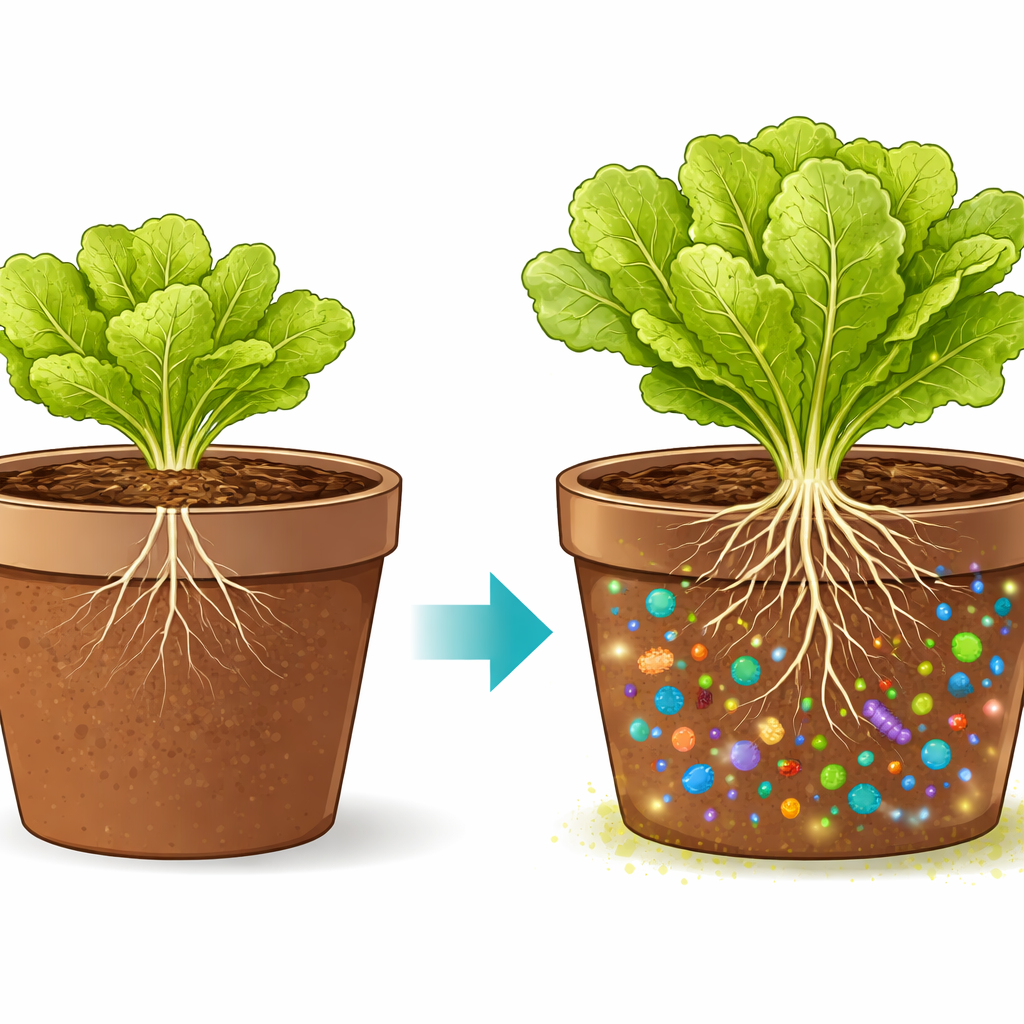
To find out whether these microbes could actually help plants, the team grew lettuce—a temperate crop that usually dislikes heat—in a tropical greenhouse without cooling the soil. Some plants received standard nitrogen fertilizer, some received only the bacteria, some received both, and some received neither. Compared with uninoculated plants without fertilizer, lettuce given either Agromyces C10 or Bacillus C21 grew taller, heavier, and developed longer roots. When fertilizer was added, plants treated with Bacillus C21, in particular, showed further gains in size and vigor, suggesting that the bacteria and fertilizer can work together rather than simply replacing one another.
Soil Nitrogen Rises, but the Source Remains Unclear
After harvest, the researchers measured how much total nitrogen remained in the soil. Pots that had been inoculated with either bacterium tended to hold more nitrogen than those without microbes, with or without chemical fertilizer. This pattern is consistent with the idea that the microbes influence how nitrogen moves through the soil–plant system, possibly by helping retain nitrogen, transforming it into plant-friendly forms, or altering how it is stored in microbial biomass and organic matter. Yet without direct measurements of the key nitrogen-fixing enzyme activity or isotopic tracing of atmospheric nitrogen, the team cannot say whether any of this nitrogen was newly captured from the air.
Promising Partners, but Not Magic Bullets
Overall, the study shows that indigenous bacteria isolated from cooled tropical soils can boost the growth of a cool-loving crop in a hot greenhouse and are linked with higher soil nitrogen after harvest. For now, these microbes look like promising plant growth partners rather than proven living “fertilizer factories.” More precise experiments will be needed to confirm whether they truly fix atmospheric nitrogen and to uncover other ways they might help plants, such as hormone production or improved nutrient uptake. Still, the work offers a proof of concept that carefully chosen native microbes could help make temperate crops a more reliable option in tropical agriculture without the energy cost of cooling the soil.
Citation: Shaárani, S., Sabri, N.S.A., Riyadi, F.A. et al. Eco-functional deployment of indigenous nitrogen-fixing microbes to enable temperate crop cultivation in tropical climates. Sci Rep 16, 12396 (2026). https://doi.org/10.1038/s41598-026-43406-x
Keywords: tropical agriculture, temperate crops, plant growth-promoting bacteria, nitrogen cycling, climate change adaptation