Clear Sky Science · en
Metabotropic glutamate receptor 5 expression associates with pain and inflammatory pathways in interstitial cystitis
A Hidden Source of Pelvic Pain
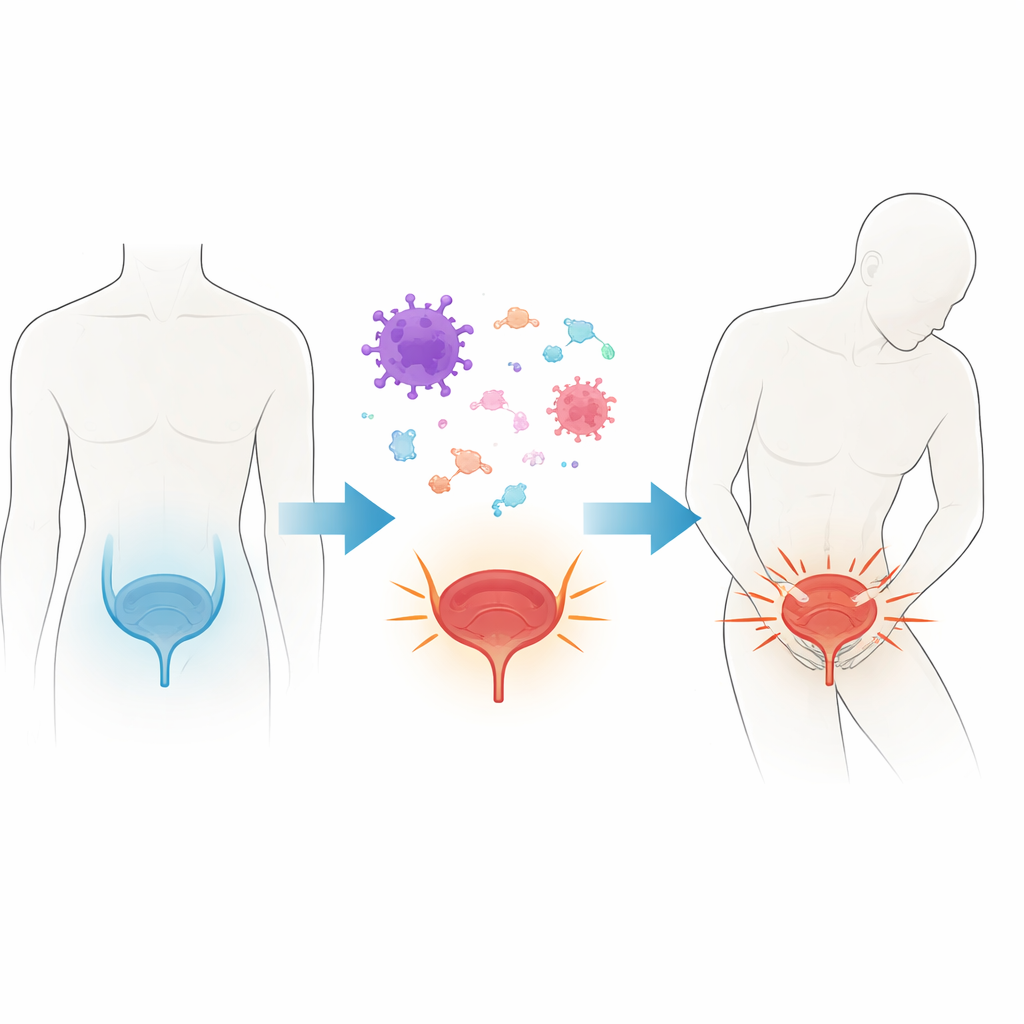
Many people live with constant bladder pain, urgent trips to the bathroom, and sleepless nights, yet never receive a clear explanation for their suffering. This condition, called interstitial cystitis or bladder pain syndrome, can be life‑altering and is notoriously hard to treat. The study summarized here looks inside the bladder wall to uncover how certain nerve‑related sensors might drive both pain and long‑lasting inflammation—offering clues to new, more targeted treatments.
When the Bladder Hurts Without Infection
Interstitial cystitis is not a typical urinary infection. Patients have severe pelvic pain, a frequent and sudden need to urinate, and a greatly reduced quality of life, yet routine tests often look normal. Some patients have visible raw patches and ulcers in the bladder lining, called Hunner lesions, while others do not. Existing treatments mainly try to ease symptoms because the root biological problem is still unclear. The authors focused on a family of proteins called metabotropic glutamate receptors, normally known for their role in brain signaling and pain perception, to see whether they might also be misbehaving in the bladder.
Scanning the Bladder for Pain‑Linked Signals
The team collected bladder biopsies from 61 people: patients with Hunner‑type disease, those with non‑Hunner disease, and control patients having surgery for other reasons but without bladder pain. From these tiny tissue samples, they measured activity of eight glutamate‑sensing genes (mGluR1–8) and compared the results with each person’s pain scores and microscopic tissue changes. They also had a pathologist grade how much immune cell invasion, scarring (fibrosis), and healing‑related tissue (granulation) was present, building a bridge between symptoms, cell‑level damage, and molecular signals.
A Single Receptor Stands Out
Several glutamate receptors were more active in painful bladders than in healthy ones, but one member—mGluR5—stood out. It was strongly elevated in patients with interstitial cystitis, especially those with Hunner lesions. Higher mGluR5 levels went hand in hand with more severe pain ratings, thicker scarred bladder walls, and heavy infiltration by immune cells called lymphocytes and plasma cells. In contrast, two related receptors (mGluR2 and mGluR3), which usually help calm overactive signaling, were also increased but did not match up as clearly with damage and pain. This pattern suggests that mGluR5 may act like a stuck accelerator for pain and inflammation, while the body’s built‑in brakes struggle to keep up.
How Nerve Sensors and Immune Cells Feed Each Other
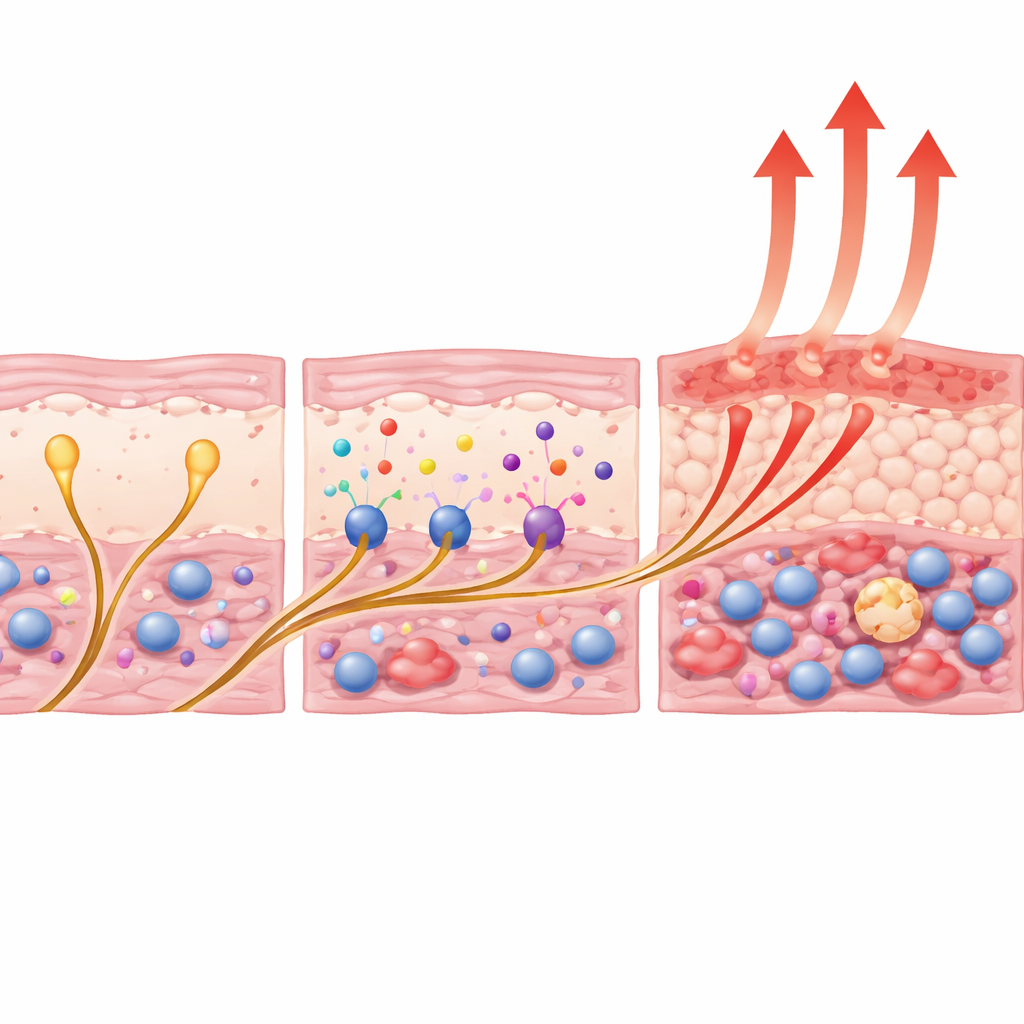
Looking more closely, the researchers found that bladders with high mGluR5 were also rich in markers of an inflammatory control system known as NF‑κB and a powerful inflammatory messenger, interleukin‑1β. To test whether this link was more than a coincidence, they turned to cultured human bladder lining cells. When they activated mGluR5 in these cells, levels of interleukin‑1β rose; when they blocked mGluR5, those levels dropped again. This supports a feedback loop in which overactive mGluR5 on bladder cells and nerves boosts inflammatory signals, which in turn attract more immune cells and promote scarring—changes that can make the bladder stiffer, more sensitive, and more painful over time.
Toward Smarter Treatments for Bladder Pain
For patients, the key message is that their pain may be driven by a specific communication pathway linking bladder nerves and immune cells, not just "irritation" in a vague sense. Because mGluR5 shows strong ties to inflammation, tissue damage, and pain, drugs that block this receptor—or dampen its downstream signals—could form the basis of more precise therapies, especially for people with Hunner‑type disease. While more work in larger groups and animal models is needed, this study points toward a future where bladder pain is treated by targeting its underlying biology, rather than merely masking its symptoms.
Citation: Kwak, Y., Kim, B., Seok, J. et al. Metabotropic glutamate receptor 5 expression associates with pain and inflammatory pathways in interstitial cystitis. Sci Rep 16, 13168 (2026). https://doi.org/10.1038/s41598-026-43394-y
Keywords: interstitial cystitis, bladder pain, glutamate receptor, chronic inflammation, pelvic pain