Clear Sky Science · en
Analysis of the NLRP3 inflammasome components expression in triple-negative breast cancer patients with and without BRCA1 mutations
Why the Body’s Alarms Matter in Tough Breast Cancers
Triple-negative breast cancer is one of the most aggressive forms of breast cancer and is harder to treat because it lacks common hormone and growth factor targets. This study asks a simple but important question: do the body’s own cellular alarm systems inside these tumors help predict which patients are likely to do better or worse over time, regardless of whether they carry BRCA1 gene changes?
The Tough-to-Treat Breast Cancer
Triple-negative breast cancer makes up about one in ten to one in five breast cancer cases and often affects younger women. Because these tumors do not carry estrogen, progesterone, or HER2 receptors, treatment options are mostly limited to chemotherapy and, more recently, some forms of immunotherapy. Many patients with this cancer also carry inherited changes in the BRCA1 gene, which is involved in repairing damaged DNA. These features make triple-negative tumors both unstable and surprisingly visible to the immune system, creating a complex balance between cancer growth and the body’s attempts to fight it.
The Cell’s Internal Alarm System
Inside our cells, there are molecular assemblies often described as alarm systems that sense danger and trigger inflammation. One such system, called the NLRP3 inflammasome, helps activate proteins that can cut other molecules into active alarm signals. In this study, the researchers focused on four key players involved in this alarm pathway within triple-negative breast tumors: the sensor NLRP3, the adaptor protein PYCARD, the enzyme caspase-1, and the inflammatory messenger interleukin-18. Using carefully prepared tumor samples from 88 women and digital tools to analyze staining intensity, they measured how much of each protein was present in cancer cells and surrounding immune cells. 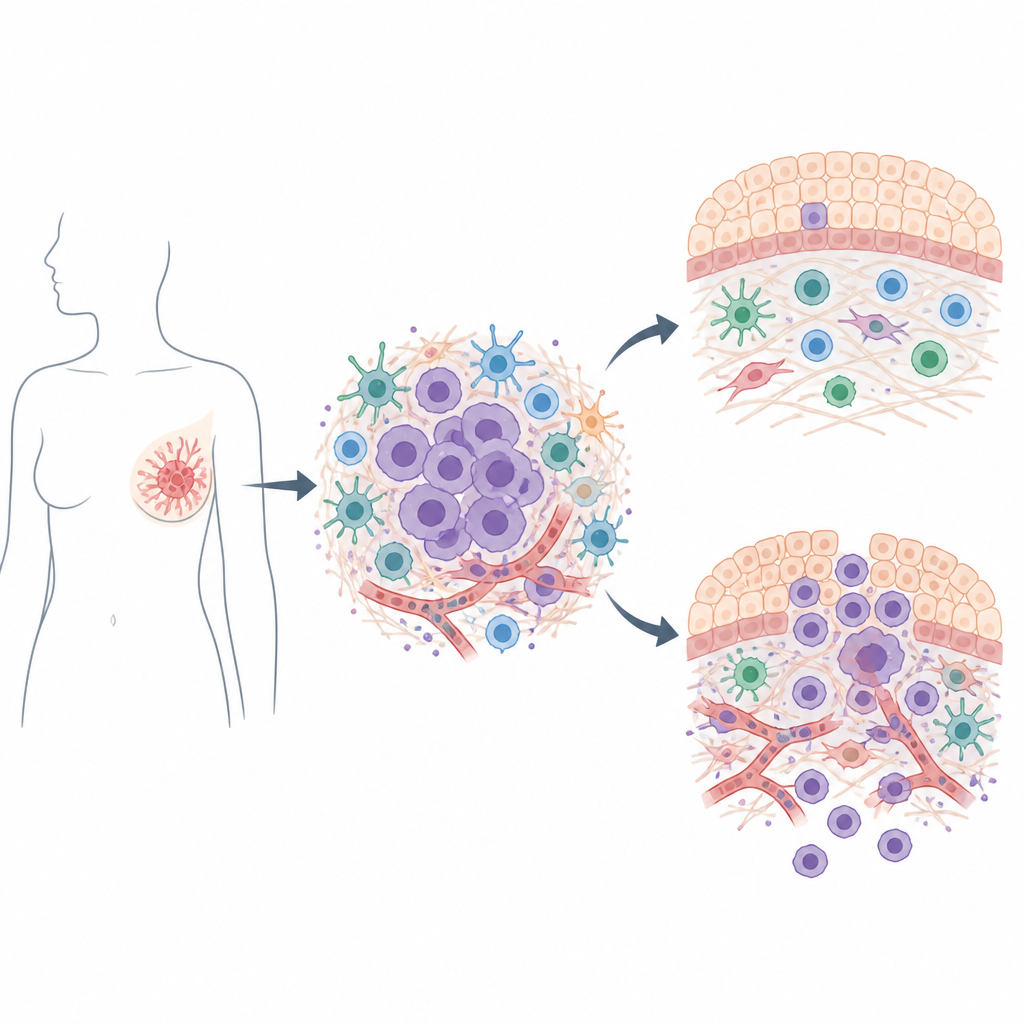
What the Tumor Samples Revealed
When the team compared tumors from women with and without BRCA1 alterations, they found that cancers with BRCA1 changes tended to show higher levels of NLRP3 and interleukin-18. However, these differences did not translate into clear links between BRCA1 status and long-term outcomes. More telling were the patterns directly connecting the alarm components to tumor features and patient survival. Lower caspase-1 levels were linked to smaller tumors, while higher NLRP3 levels were more common in patients whose cancer had already spread to nearby lymph nodes. Despite this seemingly worrisome association with spread, the survival data told a different, more hopeful story about NLRP3.
Signals Linked to Time Without Disease
By tracking how long patients remained free of cancer return and how long they lived after surgery, the researchers discovered that NLRP3 and caspase-1 levels carried important clues. Patients whose tumors had low NLRP3 expression were more than twice as likely to die and more than three times as likely to see their cancer come back compared with those whose tumors had higher NLRP3. Even after taking into account tumor size and lymph node involvement, low NLRP3 remained a strong and independent warning sign. Caspase-1 also showed a link with longer periods without disease, although it did not independently predict overall survival. In contrast, interleukin-18 showed only a weak and unstable connection to outcome, suggesting that its role is more complicated. 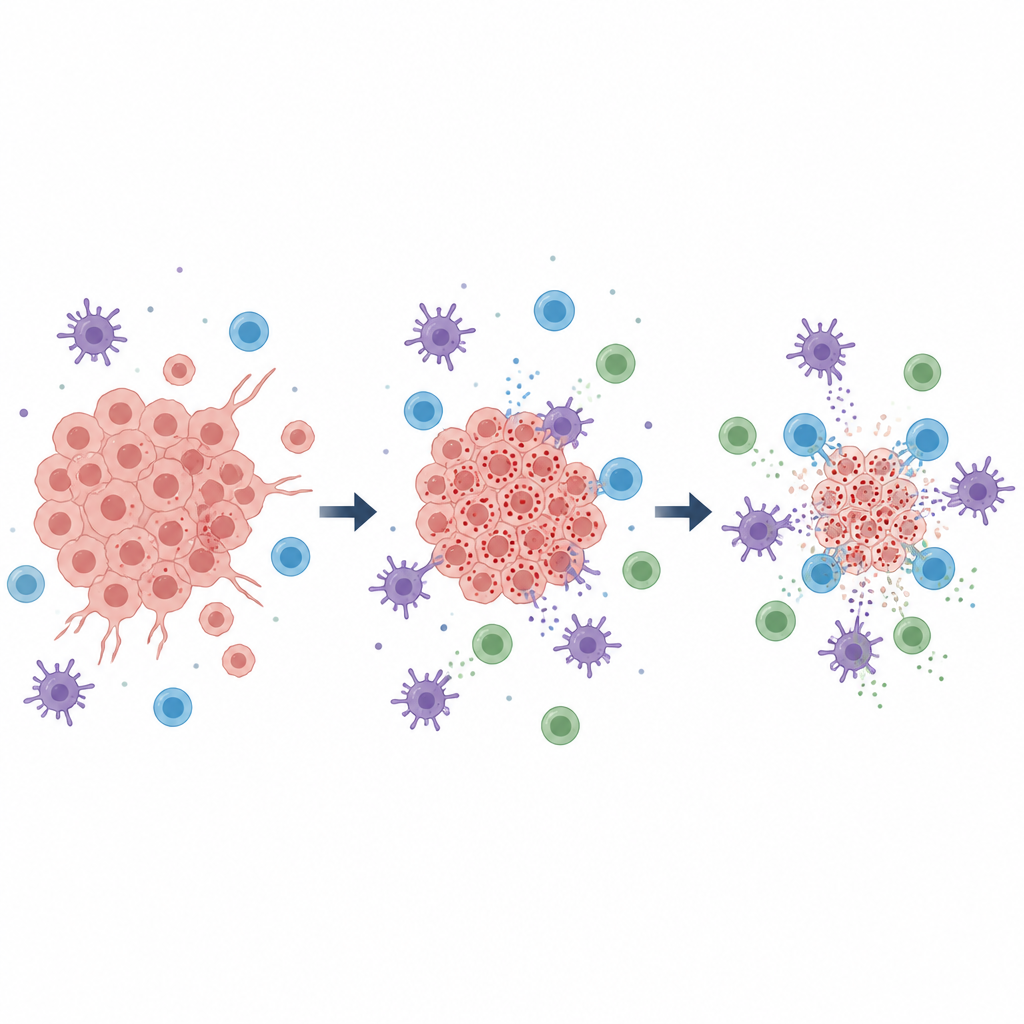
What This Could Mean for Patients
For people facing triple-negative breast cancer, these findings suggest that the level of a single alarm sensor, NLRP3, inside the tumor may help forecast the course of the disease. Tumors that keep this sensor active seem to be associated with better control and longer survival, possibly reflecting a more effective immune response within the cancer’s surroundings. Although the study is exploratory and based on a modest number of patients, it points to NLRP3 and related alarm components as potential markers doctors might one day use to refine risk estimates and guide treatment choices. Larger, carefully designed studies will be needed to confirm whether measuring these proteins can become part of everyday care.
Citation: Faria, S.S., Costantini, S., Di Gennaro, E. et al. Analysis of the NLRP3 inflammasome components expression in triple-negative breast cancer patients with and without BRCA1 mutations. Sci Rep 16, 15316 (2026). https://doi.org/10.1038/s41598-026-43392-0
Keywords: triple-negative breast cancer, NLRP3 inflammasome, BRCA1, prognostic biomarker, tumor immunity