Clear Sky Science · en
Effect of different levels of Fenugreek sprouts on rumen microbiota and milk yield in Hassani goats
Why goat milk and humble sprouts matter
In many dry, marginal regions of the world, hardy goats help turn scant vegetation into milk, meat, and income. Finding safe, low-cost ways to help these animals turn feed into more milk can boost food security without expensive technology. This study tests a simple idea: adding small amounts of dried fenugreek sprouts—a common culinary plant rich in natural bioactive compounds—to the diet of Hassani goats, and seeing how that changes the tiny organisms in their stomachs, the gases they produce, and the milk they give.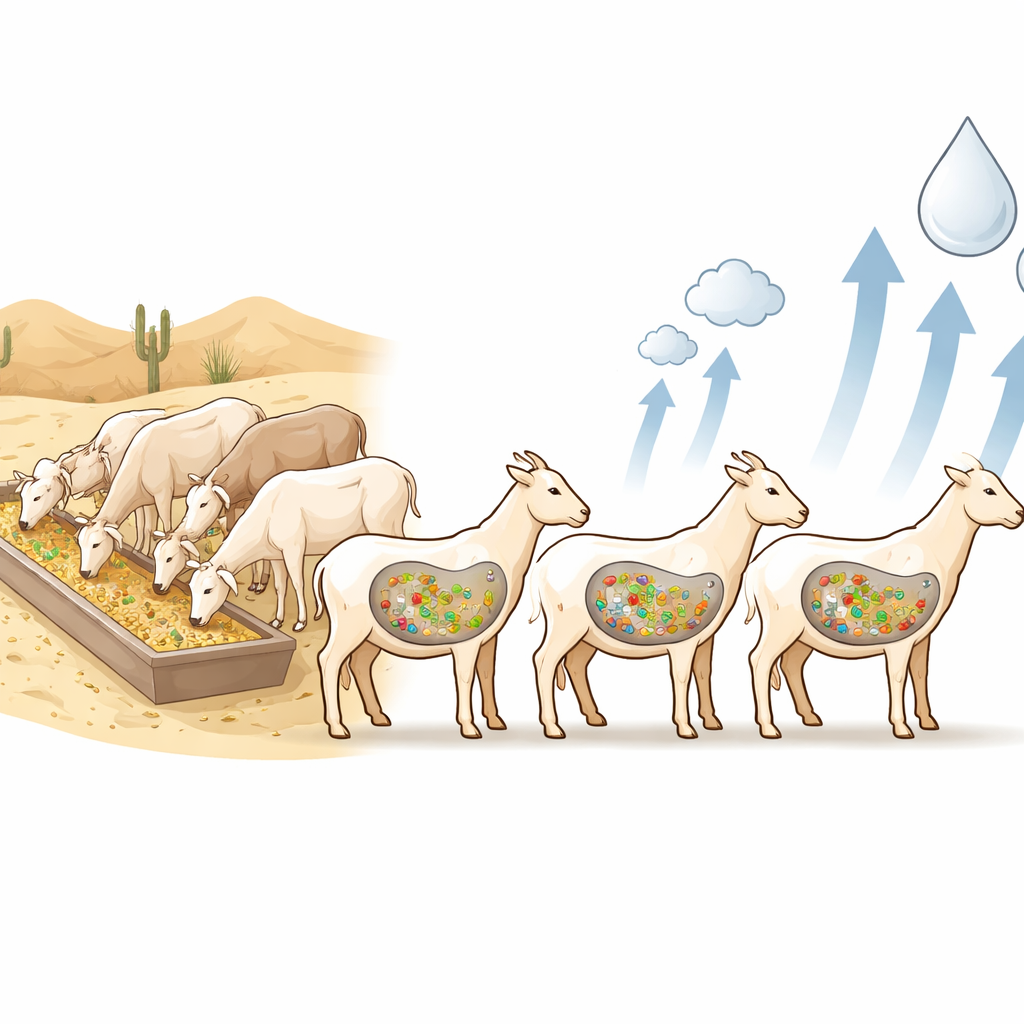
Sprouted seeds as supercharged feed
Fenugreek is already valued as a spice and medicinal herb for people, but sprouting its seeds boosts their protein, fiber, minerals, and natural antioxidant content. The researchers compared the usual goat ration to the same ration plus either 15 or 30 grams per day of dried fenugreek sprouts. All goats were of the same local breed, in early lactation, and were fed for 60 days under desert station conditions in Egypt. This careful setup allowed the team to ask a straightforward question: does a pinch or a handful of sprouts, added daily, make any measurable difference in digestion, milk yield, or the microscopic life inside the goats’ rumens, the first and largest stomach chamber where fermentation occurs?
Peeking inside the goat’s fermentation tank
To understand what was happening inside, the scientists collected rumen fluid and analyzed both its chemistry and its microbial residents. Using modern DNA sequencing, they mapped the bacterial community at high resolution. They found that the goats receiving the higher sprouts dose had more diverse bacterial communities, especially within two major groups—Bacteroidota and Firmicutes—that are known to break down fiber and release energy-rich fermentation products. Beneficial fiber-loving bacteria such as Prevotella, Ruminococcus, Butyrivibrio, and members of the Christensenellaceae family became more abundant with sprouts, while some bacteria linked to less efficient fermentation declined. These shifts suggest that the sprouts nudged the rumen ecosystem toward a community better equipped to digest tough plant material.
From better digestion to cleaner energy use
The chemical profile of the rumen fluid told a similar story. Goats receiving fenugreek sprouts digested more of the protein and fiber in their feed, and their rumen liquid contained higher levels of volatile fatty acids—the key energy molecules produced when microbes ferment plant matter. At the same time, a simple calculation based on fermentation end-products indicated lower methane output in the supplemented goats, especially at the higher sprouts level. Certain bacterial groups favored by the sprouts are known to channel hydrogen, a key ingredient for methane, into other pathways such as propionic acid formation. That means more of the feed’s energy stays in the animal instead of leaving as greenhouse gas.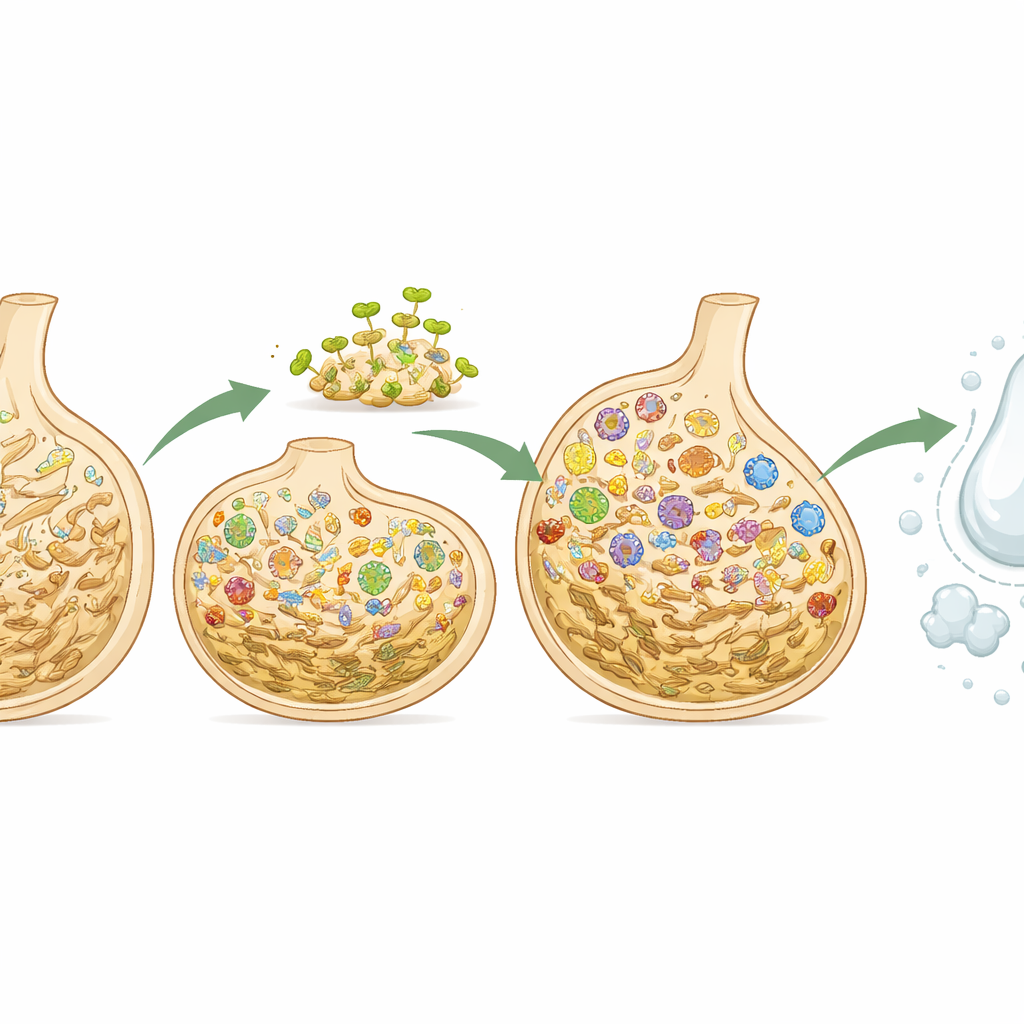
Milk response without changing what milk is made of
Improved digestion and a more efficient rumen ultimately showed up in the milk pail. Goats fed 30 grams per day of dried fenugreek sprouts produced notably more milk than unsupplemented animals or those getting the lower dose. Yet the basic composition of the milk—its fat, protein, sugar, and mineral levels—did not change significantly. In practical terms, farmers would get more liters of roughly the same quality milk from the same amount of feed, simply by adding a small daily portion of sprouts. The study did not directly measure hormones, but previous work suggests fenugreek may also gently stimulate the hormonal pathways that support milk production.
What this means for farmers and the planet
Putting it all together, the study shows that a modest amount of dried fenugreek sprouts can reshape the rumen’s microbial community so it digests feed more completely, generates more useful energy for the goat, and appears to waste less energy as methane. The result is higher milk yield from the same animals, without extra grain or high-tech inputs. While the work focused on one goat breed in one environment and relied on predicted rather than directly measured methane, it points toward a simple, plant-based strategy to support smallholders in harsh climates. For many farmers, a low-cost feed supplement that helps their goats give more milk while likely lightening their environmental footprint is an appealing prospect.
Citation: Rabee, A.E., Nassar, M.S., El-Gendy, M.H. et al. Effect of different levels of Fenugreek sprouts on rumen microbiota and milk yield in Hassani goats. Sci Rep 16, 10988 (2026). https://doi.org/10.1038/s41598-026-43391-1
Keywords: fenugreek sprouts, goat milk production, rumen microbiota, rumen fermentation, methane emissions