Clear Sky Science · en
Optimization and characterization of Sida acuta mediated synthesis of nickeloxide nanoparticles using Taguchi–Grey method
Turning Weeds into Useful Tiny Materials
Nickel oxide nanoparticles are ultra-small particles with special electrical and chemical properties that make them attractive for batteries, sensors, and pollution cleanup. But the way we usually make such particles often relies on harsh chemicals and energy‑hungry equipment. This study shows how an ordinary roadside weed, Sida acuta, can help produce nickel oxide nanoparticles in a cleaner, more controlled way—and how statistical tools can be used to fine‑tune their size and quality for future technologies.
A Common Weed with Hidden Power
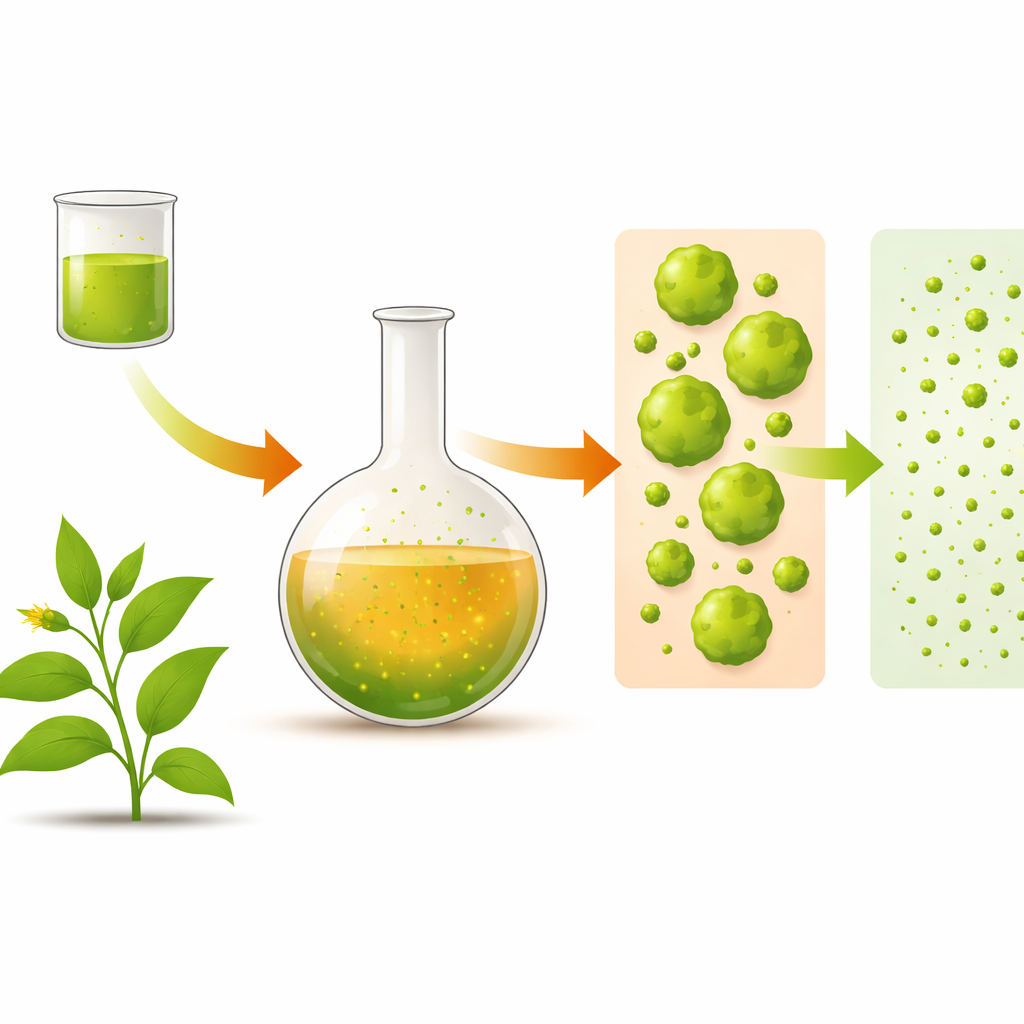
Sida acuta is an abundant, non‑edible plant that grows as a hardy weed in many parts of the world. Its leaves are rich in natural compounds such as polyphenols and flavonoids, which can donate electrons and cling to metal surfaces. The researchers collected and dried the leaves, then prepared a water‑based extract. This green “tea” of plant chemicals replaced the usual synthetic additives that are typically used to turn dissolved nickel salts into solid nickel oxide nanoparticles. Because the plant is not a food crop and is easy to find, it offers a sustainable raw material that does not compete with agriculture.
From Green Brew to Green Nanoparticles
To create the nanoparticles, the team mixed the Sida acuta extract with a nickel nitrate solution and adjusted the mixture to be mildly alkaline. Heating and stirring triggered a visible color change, signaling that nickel ions were being converted into tiny solid particles. Later heating (calcination) turned intermediate compounds into nickel oxide. Detailed measurements using light absorption, X‑ray diffraction, and electron microscopes confirmed that the final product was nickel oxide with a well‑defined crystal structure and particles only a few billionths of a meter across. The plant compounds did double duty, both helping reduce nickel ions into solids and coating the new particles so they stayed separate instead of clumping together.
Finding the Sweet Spot for Size and Uniformity
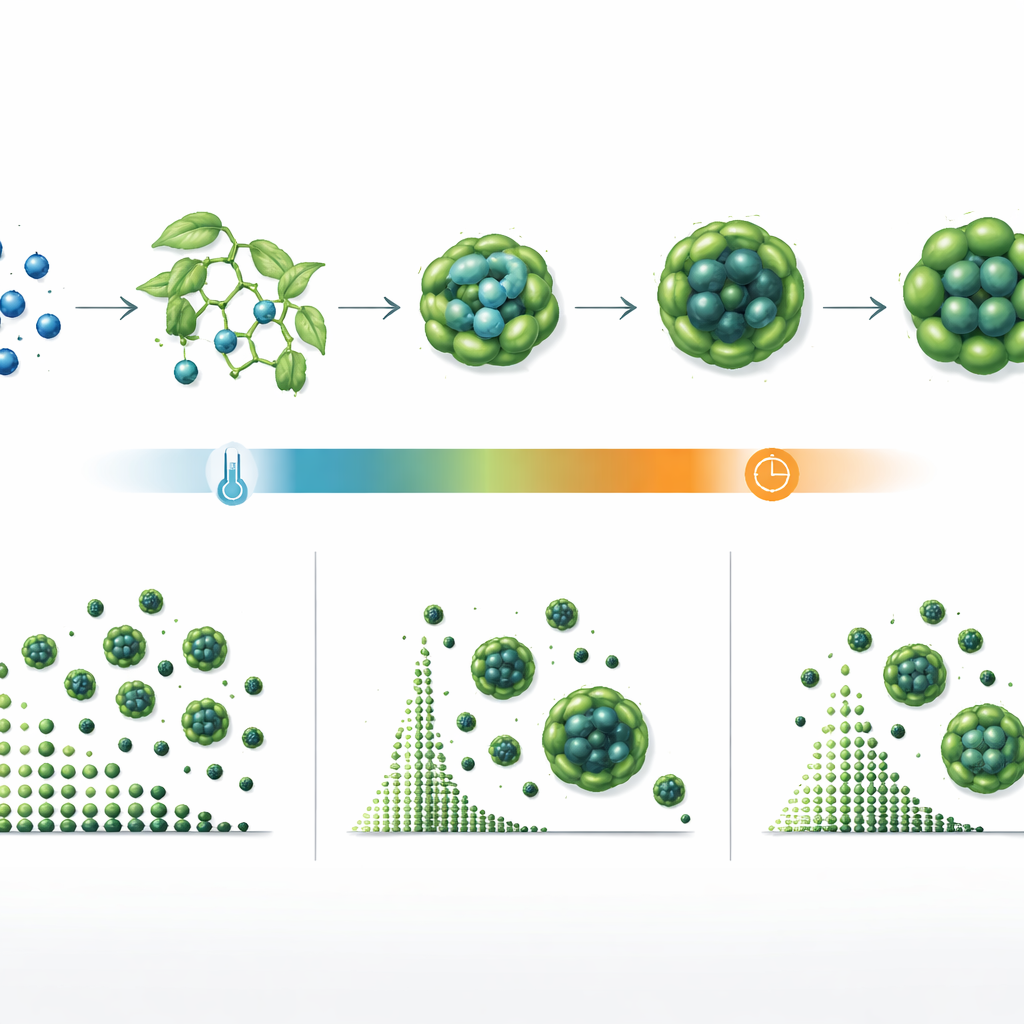
In nanotechnology, size and uniformity are crucial. Smaller, more evenly sized particles expose more surface area and behave more predictably in devices. The researchers focused on two key measures in water: the hydrodynamic diameter (an effective particle size) and the polydispersity index, which reflects how broad the size spread is. Rather than changing one condition at a time, they used a combined Taguchi–Grey statistical approach to explore how three factors—plant‑extract concentration, reaction temperature, and reaction time—work together. By planning nine carefully chosen trials and then compressing both size and uniformity into a single performance score, they could identify the most promising combinations without running hundreds of experiments.
How Smart Design Improved the Particles
The analysis showed that reaction temperature was the most influential knob to turn, followed by how long the reaction ran and how concentrated the leaf extract was. At the best settings—60 milligrams of extract per milliliter, 70 °C, and 120 minutes—the average particle size in water shrank from about 106 nanometers in an initial trial to about 63 nanometers, and the size spread nearly halved. In simple terms, the particles became smaller and more alike. Computer modeling and chemical fingerprinting supported a picture in which certain plant molecules bind to nickel, help convert it into solid nickel oxide, and then remain on the surface as a thin stabilizing layer. These combined experimental and modeling efforts yielded a mathematical formula that can predict particle quality from the chosen processing conditions with high accuracy.
Why These Tiny Particles Matter
Tests of the finished material showed that the nickel oxide nanoparticles were crystalline, fairly pure, and had a relatively wide electronic band gap, which is favorable for UV‑blocking coatings, light‑based devices, photocatalysts, and sensitive gas or chemical sensors. By proving that an invasive weed can serve as both a chemical factory and a stabilizer, and by showing how to dial in the right conditions for desired particle properties, this work points toward greener, more precise production of advanced materials. For non‑specialists, it offers a glimpse of how clever chemistry and smart statistics can turn a common plant into a building block for next‑generation energy, environmental, and sensing technologies.
Citation: Abdulrahman, M.A., Sumaila, M., Dauda, M. et al. Optimization and characterization of Sida acuta mediated synthesis of nickeloxide nanoparticles using Taguchi–Grey method. Sci Rep 16, 14438 (2026). https://doi.org/10.1038/s41598-026-43362-6
Keywords: green nanoparticle synthesis, nickel oxide, Sida acuta, plant-based nanotechnology, materials optimization