Clear Sky Science · en
Efficacy of vaginal 17β-estradiol on the urinary storage symptoms in postmenopausal women: a randomized double-blind, placebo-controlled study
Why bladder troubles after menopause matter
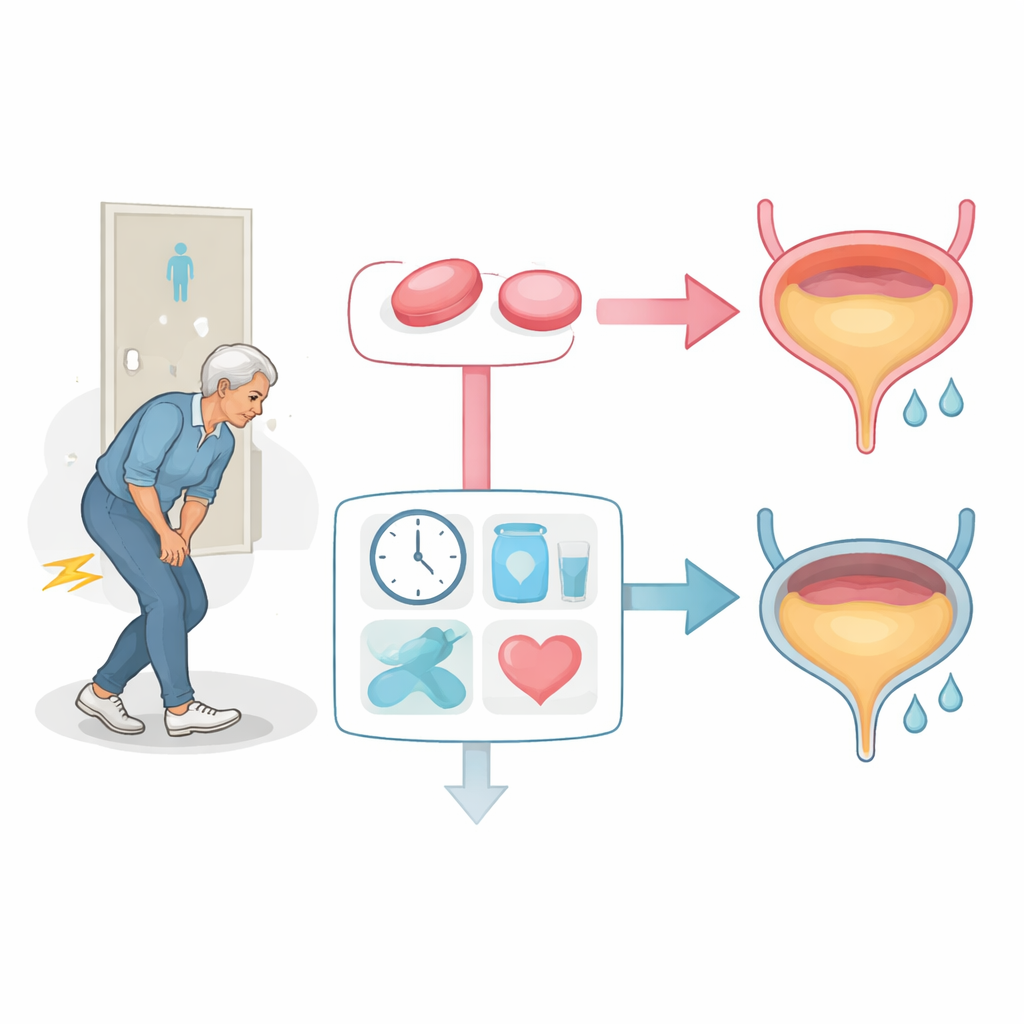
Many women find that, after menopause, their bladder seems to rebel—bringing sudden urges to urinate, leaks on the way to the bathroom, and restless nights. These problems can be embarrassing and disruptive, yet safe, effective treatments are still being refined. This study asked a focused question: can an ultra‑low dose of vaginal estrogen, given as a small tablet, ease these storage‑related bladder symptoms better than a look‑alike placebo when both groups also receive the same lifestyle guidance?
The everyday problem behind the science
The lower urinary tract—mainly the bladder and urethra—stores and releases urine. When this system misfires, people experience “storage” symptoms such as going too often, waking at night to urinate, strong urgency, and leakage with or without warning. These complaints become more common with age and are especially frequent after menopause, when natural estrogen levels drop. Because estrogen receptors sit in the bladder, urethra, vagina, and pelvic floor, doctors have long suspected that topping up estrogen locally might calm the bladder and strengthen nearby tissues without exposing the whole body to high hormone levels.
How the study was set up
Researchers in Thailand enrolled 86 postmenopausal women who had bothersome storage symptoms. All participants met strict criteria, had infections and other causes ruled out, and agreed not to use other hormone or bladder medicines. The women were randomly assigned, in a double‑blind fashion, to one of two groups: ultra‑low‑dose vaginal 17β‑estradiol tablets (10 micrograms) or identical placebo tablets. Both groups also received the same structured behavioral program, including bladder training, fluid management, and pelvic floor strategies, based on international guidelines. Over 12 weeks, the team tracked symptom scores, how troublesome the symptoms felt, quality of life, women’s own impressions of improvement, and biological markers in the urethral lining and vaginal environment.
What the researchers found
At first glance, overall symptom improvement looked similar in both groups. Using a validated questionnaire that scores night‑time trips, urgency, daytime frequency, and two types of leakage, the investigators did not find a statistically clear advantage for estrogen when all storage symptoms were considered together at 12 weeks. Both groups improved, likely reflecting the power of the behavioral program and the placebo effect. Yet a closer look at individual symptoms revealed some meaningful patterns. Urgency—the sudden, hard‑to‑hold need to pass urine—improved more in the estrogen group at four weeks, though this edge faded by week twelve. In contrast, urgency‑related leakage (urgency urinary incontinence) showed a steadier benefit: women using estrogen reported significantly less bother from this type of leakage at both four and twelve weeks compared with placebo.
Changes inside the tissues
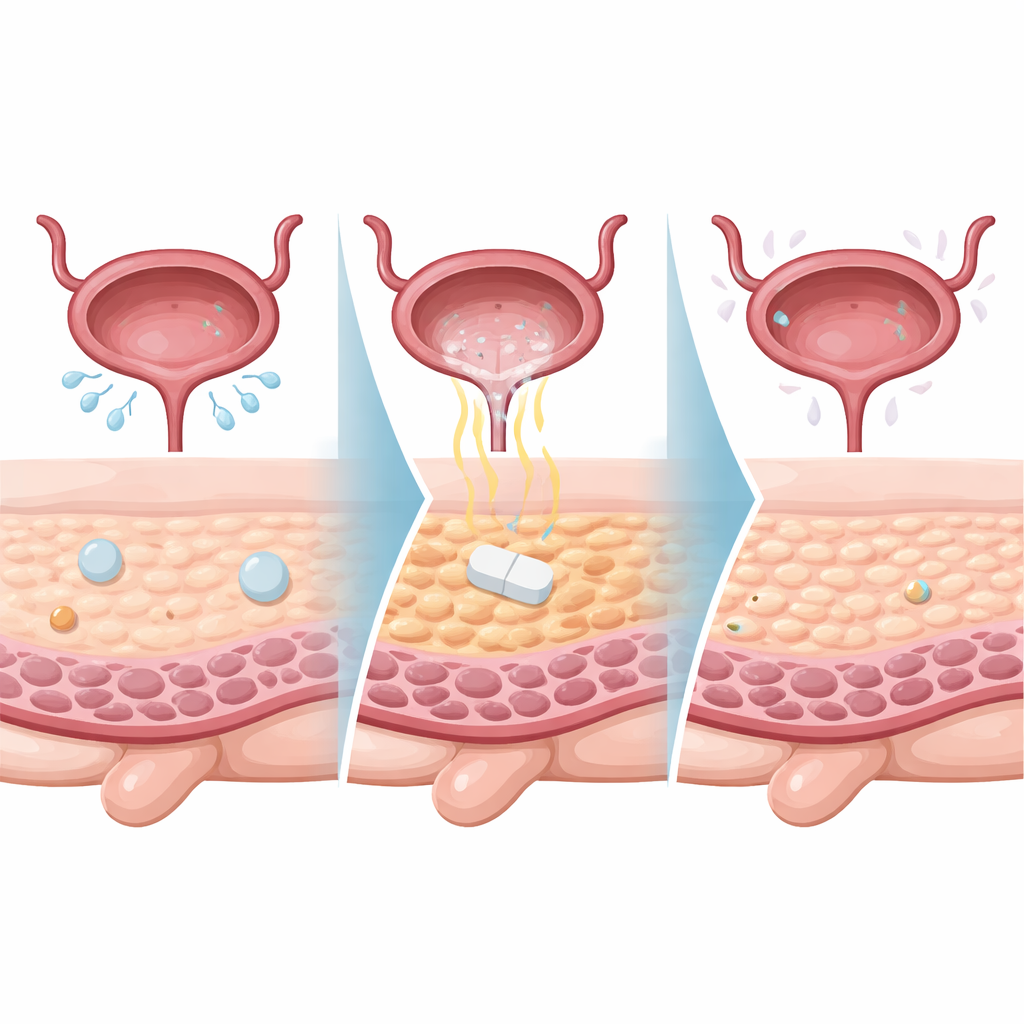
Beyond symptoms, the study explored what was happening at the tissue level. Vaginal pH, which tends to rise with menopause as tissues become thinner and drier, fell significantly in the estrogen group at both follow‑up visits, suggesting a shift toward a healthier environment. Samples gently taken from the urethral lining showed more mature surface cells and fewer immature cells in women using estrogen, especially at the four‑week mark. These microscopic changes point to a thickened, better‑protected urethral and vaginal lining, which may help explain the improvements in urgency and leakage. Importantly, side effects such as discharge, discomfort, or light bleeding were uncommon, mild, and similar between the estrogen and placebo groups, and no serious problems emerged.
What this means for women and their choices
Taken together, the findings paint a nuanced picture. Ultra‑low‑dose vaginal estrogen did not dramatically outperform placebo plus lifestyle training in overall bladder symptom scores over 12 weeks, and the observed advantage—roughly a 10% difference—was modest. However, the hormone tablets did seem to offer early relief for urgency and more sustained easing of urgency‑related leakage, while also clearly improving tissue health and vaginal pH. Because the dose is very low and safety signals were reassuring, this approach may be a reasonable option for postmenopausal women whose main complaints are urgent leaks, especially when paired with good bladder habits. At the same time, the strong improvements seen in both groups highlight that behavioral strategies alone can be powerful, and should remain a cornerstone of care for bladder storage symptoms, with or without added estrogen.
Citation: Harncharoenkul, P., Wattanayingcharoenchai, R., Pongchaikul, P. et al. Efficacy of vaginal 17β-estradiol on the urinary storage symptoms in postmenopausal women: a randomized double-blind, placebo-controlled study. Sci Rep 16, 12685 (2026). https://doi.org/10.1038/s41598-026-43359-1
Keywords: postmenopausal bladder symptoms, vaginal estrogen therapy, overactive bladder, urinary incontinence, behavioral bladder training