Clear Sky Science · en
Development and validation of a risk classification integrating the location index to predict renal function after robotic partial nephrectomy
Why saving kidney function matters
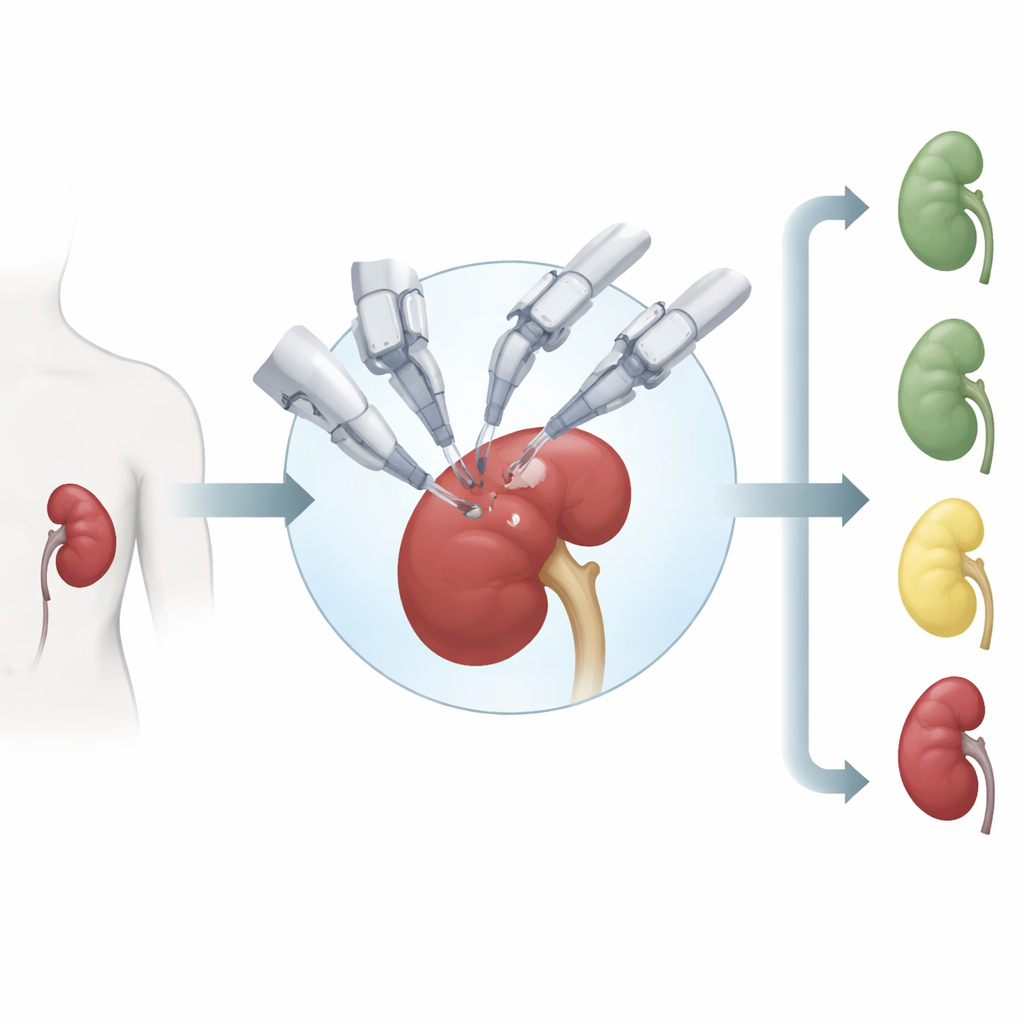
For people with small kidney tumors, modern keyhole surgery using surgical robots can remove the cancer while leaving most of the kidney in place. But not every operation affects the kidney in the same way: some patients lose much more kidney function than others, even when the surgery looks successful. This study set out to answer a simple, patient‑centered question: before a robotic partial nephrectomy, can doctors estimate how much kidney function a person is likely to lose, based only on the size and position of the tumor inside the kidney?
Looking more closely at tumor position
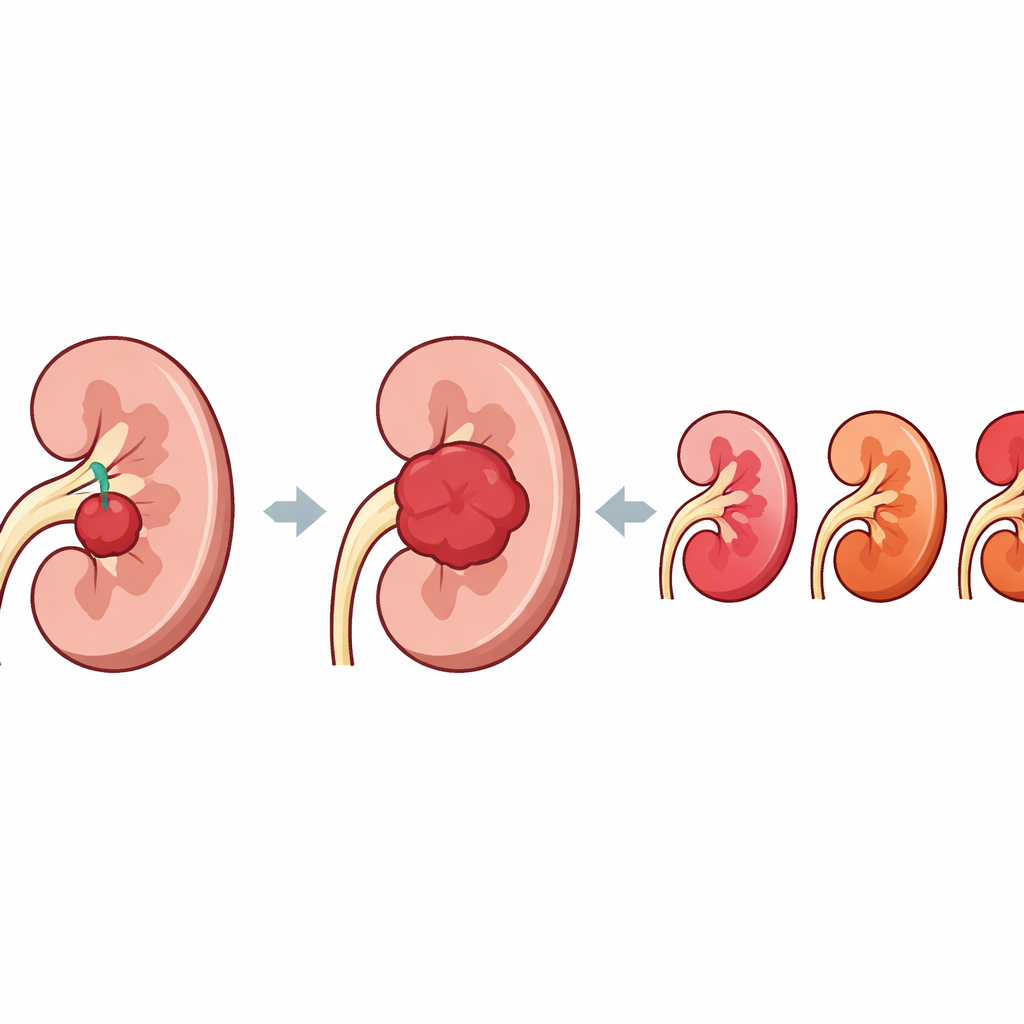
Surgeons already use scoring systems to describe how hard a kidney tumor will be to remove, taking into account its size and how deep it lies. However, these scores were built mainly to predict how complex the operation will be, not how well the kidney will work afterward. The authors of this paper noticed that two simple features seemed especially important for kidney health after surgery: how close the tumor sits to the center of the kidney and how near it is to the urine‑collecting area called the calyx. Tumors buried toward the middle of the kidney may require clamping or cutting more blood vessels, raising the risk that part of the kidney will be permanently starved of blood and stop working.
A simple number to describe where the tumor sits
To turn this idea into something practical, the team created a new measurement called the location index, or L‑index. Using standard three‑dimensional scans taken before surgery, they measured two distances: from the kidney’s midline to the center of the tumor, and from the tumor to the nearest calyx. Adding these two lengths yields the L‑index, a single number that reflects how central and how close to the inner drainage system the tumor is. A small L‑index means a tumor is deep and close to the calyx, while a large L‑index means it is more off to the side or farther from the drainage system. The researchers studied 163 patients who underwent robotic partial nephrectomy to find which L‑index cut‑off values best predicted a meaningful loss of kidney function six months after surgery.
Combining tumor size and position into a risk ladder
The scientists then combined the L‑index with tumor volume, a straightforward estimate of how much space the tumor occupies in the kidney. This produced a new three‑tiered risk tool called the LIVED classification (short for L‑index and volume for prediction of eGFR decline). Patients with small, favorably located tumors were grouped as low risk; those with either an unfavorable location or a larger tumor were classed as moderate risk; and those with both a deep, central position and larger size were classified as high risk. The key outcome was whether a person lost at least 20% of their estimated filtering capacity (eGFR) six months after surgery—a level the authors considered a clearly important decline in kidney health.
Putting the new tool to the test
To see if the LIVED system would hold up beyond the first group of patients, the team applied it to a second, later group of 127 people treated at the same hospital. They compared LIVED’s performance with several widely used kidney tumor scoring systems. LIVED did a notably better job at separating those who would lose substantial kidney function from those who would not. In the validation group, patients labeled as high risk had the largest drops in eGFR, those in the moderate‑risk group had intermediate declines, and those in the low‑risk group had the smallest changes. The difference in kidney function loss between each step of the risk ladder was statistically significant, showing that the combined measure of tumor size and location captures something very relevant for how the kidney fares after surgery.
What this means for patients and doctors
In everyday terms, this research suggests that surgeons can use simple measurements from existing scans to estimate, before a robotic partial nephrectomy, how likely a patient is to lose a substantial amount of kidney function. The LIVED classification does not change the operation itself, but it could help doctors choose between treatment options, plan how aggressively to spare kidney tissue, and give patients clearer expectations about life after surgery. While the study was done at a single expert center and will need confirmation in other settings, it points toward a future in which the placement and size of a kidney tumor can be translated into a plain‑language risk category that directly reflects what most patients care about: how well their kidney will work once the cancer is gone.
Citation: Ohsugi, H., Ikeda, J., Takayasu, K. et al. Development and validation of a risk classification integrating the location index to predict renal function after robotic partial nephrectomy. Sci Rep 16, 12938 (2026). https://doi.org/10.1038/s41598-026-43356-4
Keywords: kidney cancer, robotic surgery, kidney function, tumor location, partial nephrectomy