Clear Sky Science · en
Cold atmospheric plasma degrades methylene blue and shifts bacterial inactivation during photodynamic therapy
Light and Gentle Plasma as New Germ Fighters
As drug‑resistant infections become more common, doctors and engineers are hunting for ways to kill dangerous microbes without relying solely on antibiotics. This study explores a promising partnership between two non‑traditional tools: a special blue dye activated by red light, and a cool, electrified gas known as cold plasma. Together, they show how we might better clean wounds or medical surfaces—but also reveal why dosing and timing must be handled with care.
How Dye and Light Team Up Against Germs
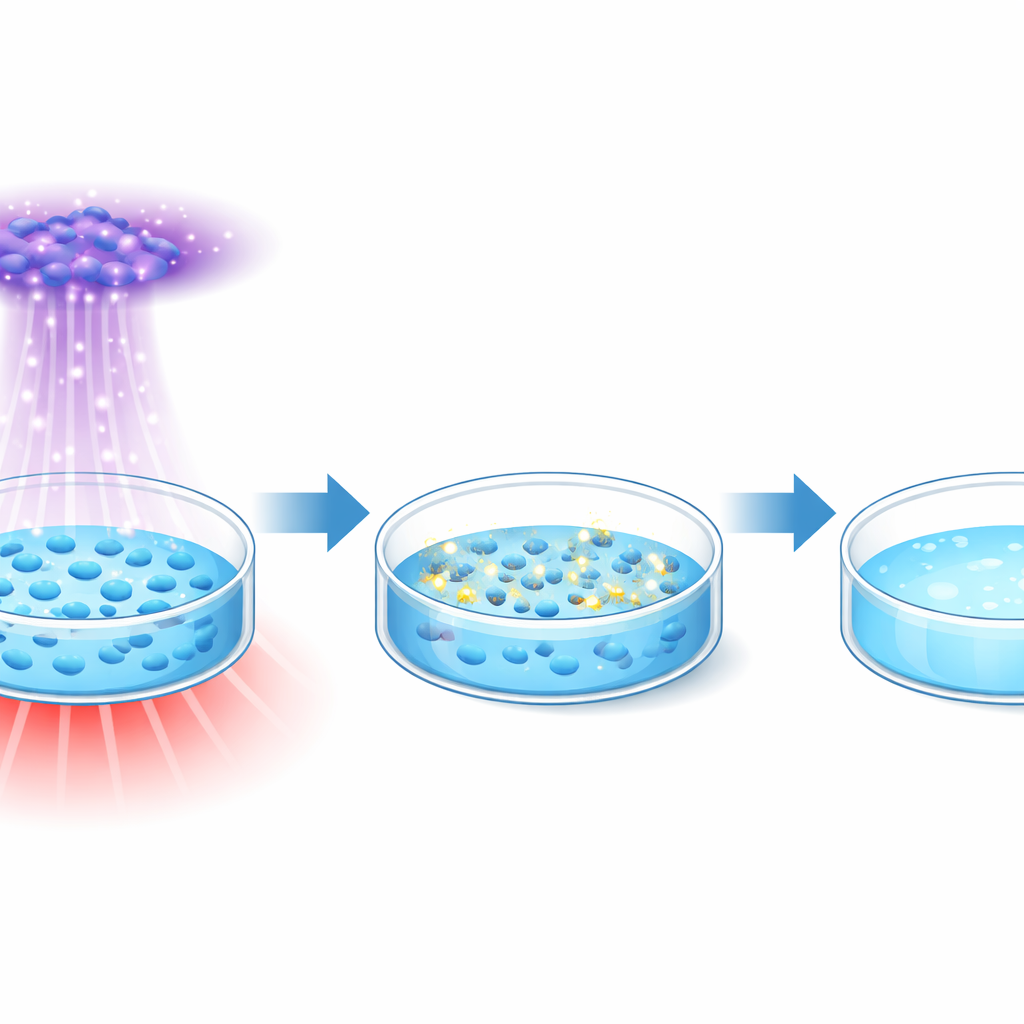
The work centers on photodynamic therapy, in which a harmless‑by‑itself dye is turned into a microbe‑killing agent when lit with the right color of light. Here the dye is methylene blue, already used in some medical settings. When bathed in red light from a thin organic light‑emitting diode (OLED), methylene blue transfers energy to the surrounding oxygen, creating highly reactive forms that damage bacterial membranes, proteins, and genetic material. In the experiments, this approach alone could significantly reduce the number of methicillin‑resistant Staphylococcus aureus—a hard‑to‑treat hospital germ—without the dye being toxic in the dark.
Plasma: A Cool Electric Mist That Makes Reactive Molecules
The second tool is cold atmospheric plasma, a partially ionized gas generated at room temperature using a device called a surface dielectric barrier discharge. Instead of heating tissue, this plasma showers the liquid surface with energetic species such as hydrogen peroxide and short‑lived radicals. These chemically aggressive particles can also attack bacteria and are already being explored for disinfection and wound care. In this study, the plasma on its own was able to wipe out S. aureus over a 20‑minute treatment, while keeping the liquid only mildly warmed and slightly more acidic.
When Two Kill Switches Interact Over Time
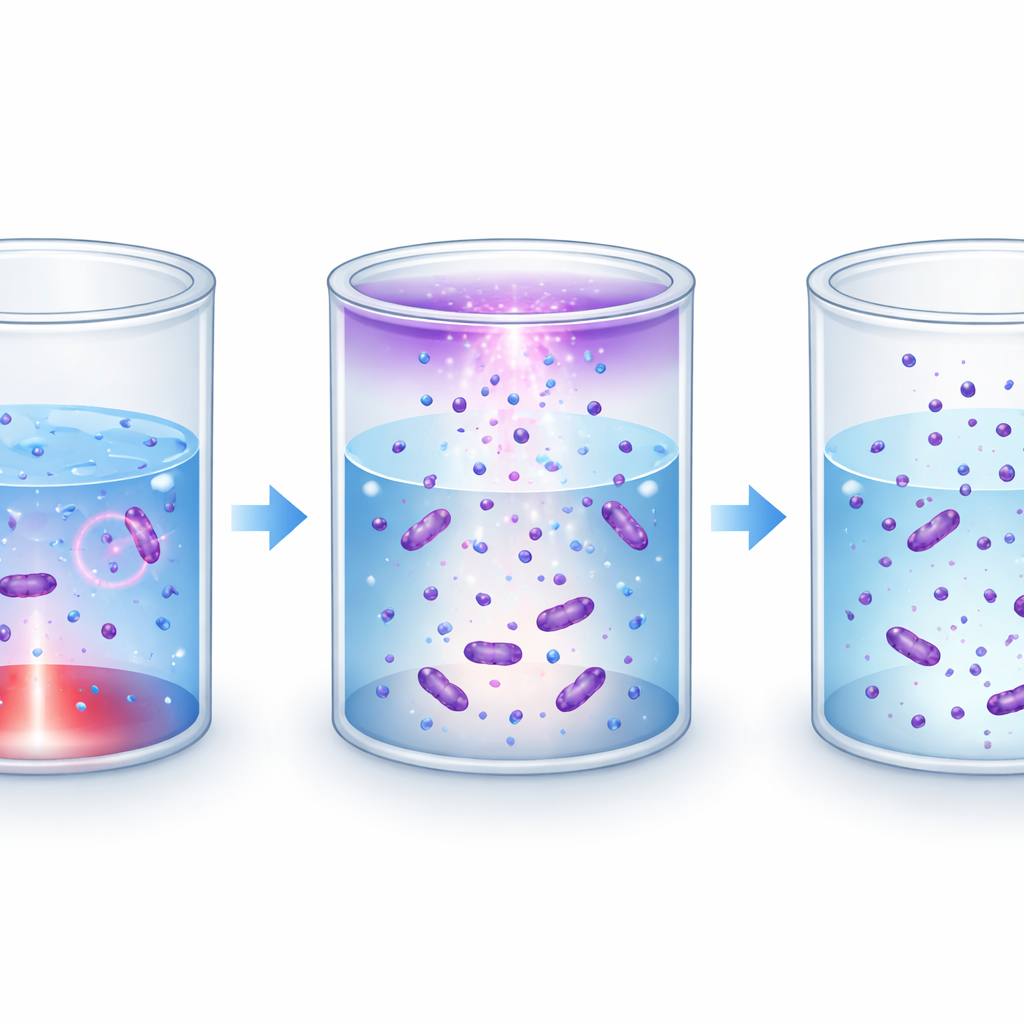
The central question was what happens when light‑driven dye therapy and plasma are applied together in the same small pool of liquid containing bacteria. At first glance, one might expect a simple “more is better” story. Instead, the team found a time‑dependent handoff between the two methods. Early in treatment, when methylene blue was still abundant, the red‑light therapy dominated: bacteria dropped quickly, and a signature signal of a particular reactive form of oxygen appeared, while plasma effects were muted. However, the plasma also began to chemically break down the dye itself. After about 20 minutes, most of the blue color had vanished, and killing was now carried mainly by the reactive species produced directly by the plasma, not by the light‑excited dye.
Hidden Chemical Traffic Behind the Scenes
To see whether shining red light might interfere with the plasma chemistry in the surrounding air, the researchers combined optical measurements with computer modeling of gas‑phase reactions. Their analysis suggested that the red OLED light barely changed the balance of ozone and nitrogen‑based oxidants created by the plasma. Instead, the key action happened in the liquid, where reactive molecules from the plasma dissolved, lowered the pH, produced longer‑lasting oxidants like hydrogen peroxide, and at the same time chewed up the methylene blue. Interestingly, the dye could also temporarily soak up some of the most aggressive radicals, slightly shielding the bacteria until the dye itself was degraded.
Balancing Germ Killing with Cell Safety
Because any future therapy must be safe for human tissue, the team also exposed mouse connective‑tissue cells to the same treatment conditions. While shorter exposures and single treatments had milder effects, longer combined treatments clearly reduced the cells’ metabolic activity, signaling stress or damage. This highlights a crucial trade‑off: the very conditions that strongly knock down bacteria can also harm healthy cells if not carefully tuned. The authors conclude that the combined approach offers a powerful, sequential one‑two punch—first from dye‑based light therapy, then from plasma chemistry—but that real‑world medical use will require fine‑tuning light intensity, plasma strength, exposure time, and dye dose to keep human tissues safe while still reaping the antimicrobial benefits.
Citation: Baek, K.H., Park, J.Y., Yoon, Yb. et al. Cold atmospheric plasma degrades methylene blue and shifts bacterial inactivation during photodynamic therapy. Sci Rep 16, 13083 (2026). https://doi.org/10.1038/s41598-026-43354-6
Keywords: photodynamic therapy, cold atmospheric plasma, methylene blue, antibiotic-resistant bacteria, nonthermal disinfection