Clear Sky Science · en
Evaluation of allelopathic potentialities of an invasive taxon, Mesosphaerum suaveolens (L.) Kuntze, and bio-assay-guided identification of the involved allelochemicals
Turning a Problem Plant into a Helpful Ally
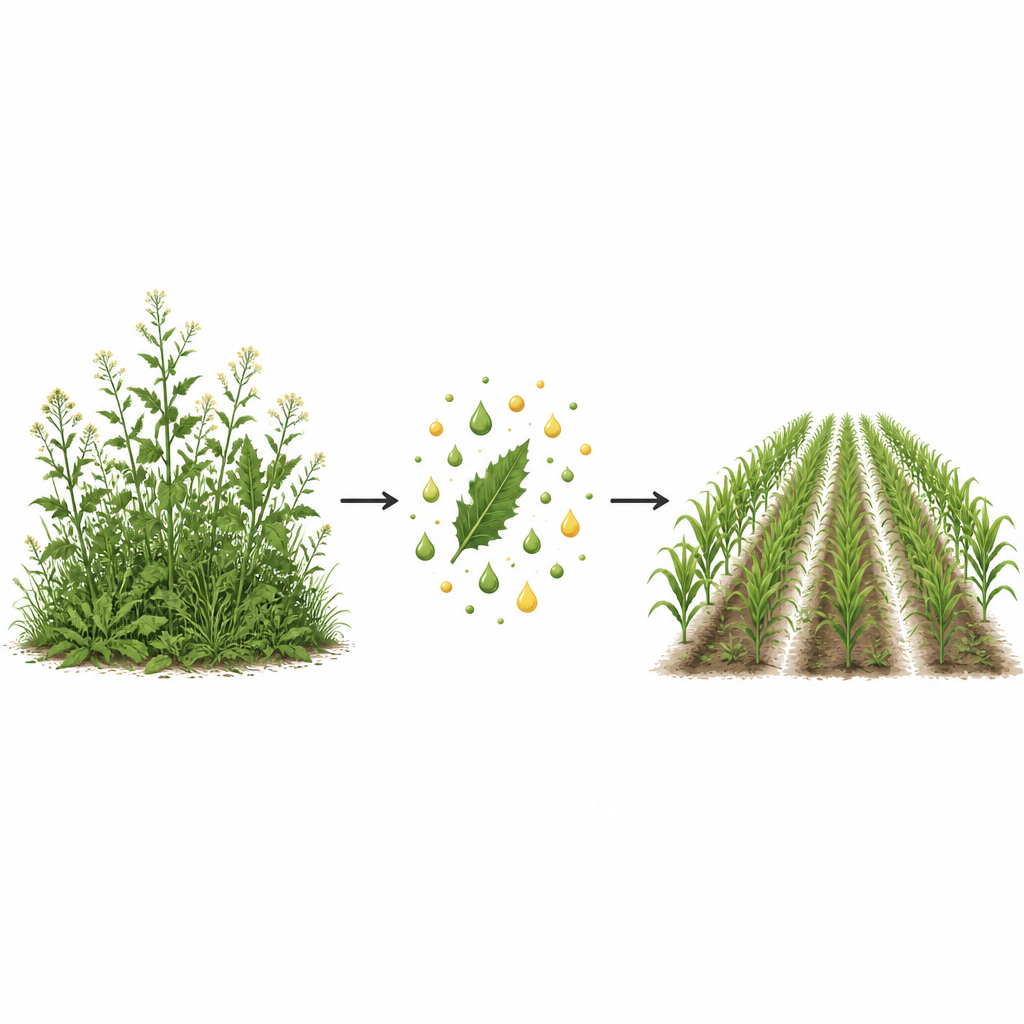
Farmers around the world struggle with weeds that steal water, light, and nutrients from crops. To fight them, agriculture has leaned heavily on chemical sprays that can linger in food, soil, and water. This study explores a very different idea: using the natural chemistry of an invasive weed, Mesosphaerum suaveolens, to tame other weeds and reduce reliance on synthetic herbicides. It asks whether a plant long viewed as a nuisance could become a source of safer, plant-based weed control.
A Weedy Mint with Hidden Strength
Mesosphaerum suaveolens, sometimes called bush mint, is a common invasive plant in tropical and subtropical regions. Like many members of the mint family, it produces a rich mix of aromatic compounds in its leaves. The researchers suspected that some of these substances act as natural herbicides, slowing or stopping the growth of neighboring plants. To test this, they prepared extracts from dried leaves using different solvents and then separated the most active portions for closer study.
Putting Natural Extracts to the Test
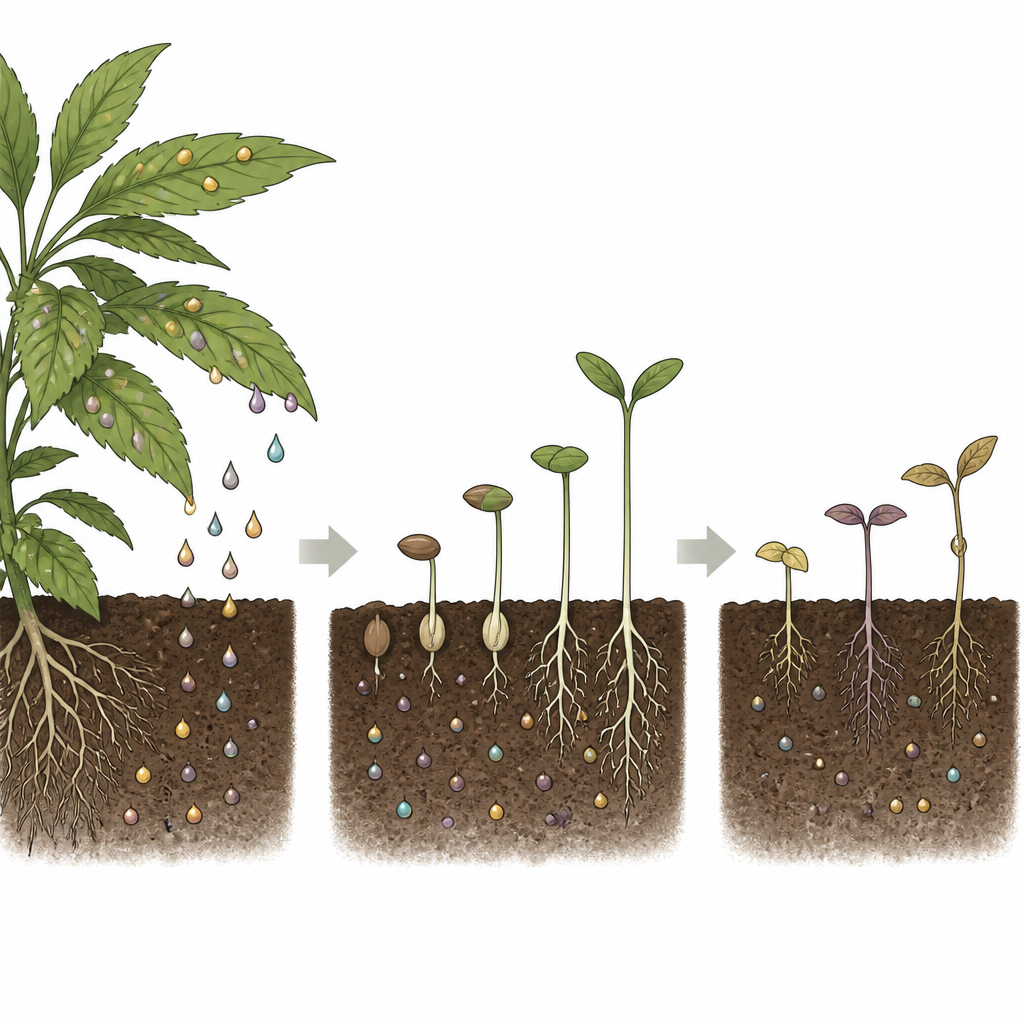
The team tested these leaf extracts on seeds and young plants of three species: mung bean, an important food and soil-enriching crop; sorghum, another key cereal; and Parthenium, a highly troublesome weed. Under controlled lab and greenhouse conditions, the most active fractions of the extract sharply reduced seed germination, root and shoot length, leaf area, and overall biomass. In mung bean, germination fell from almost complete in the untreated group to about one third in treated seeds. Seedlings exposed to the extracts showed yellowing, wilting, poor root systems, and fewer flowers and pods, clear signs that their basic life processes had been strongly disrupted.
Peering Inside Plant Cells
To understand what was happening inside these stressed plants, the researchers measured a wide range of internal markers. Treated seeds and seedlings had lower levels of key building blocks such as proteins, DNA, RNA, and insoluble carbohydrates, while free amino acids and certain soluble sugars rose, hinting at protein breakdown and emergency energy use. Important pigments that power photosynthesis, chlorophyll a and b and carotenoids, dropped sharply, which would limit the plants ability to capture light and produce food. At the same time, stress-related molecules like proline and antioxidant enzymes such as catalase, peroxidase, and superoxide dismutase all increased, along with signs of damage to cell membranes. This pattern suggests that the natural chemicals from bush mint push target plants into a state of oxidative and metabolic stress that they struggle to survive.
Finding the Active Ingredients and Their Targets
Using gas chromatography–mass spectrometry, the team identified fourteen main compounds in the most potent extract fractions. These included several plant acids and aromatic molecules, such as 3,4,5-trihydroxybenzoic acid, trans-ferulic acid, chlorogenic acid, p-coumaric acid, and sabinene monohydrate, some already known for their weed-suppressing abilities. When standard versions of six key compounds were mixed in the same proportions found in the plant, they strongly reduced germination on their own. Computer docking studies then modeled how these molecules might fit into the three-dimensional shapes of plant proteins involved in growth control and pigment production. Several compounds, especially chlorogenic acid and caryophyllene oxide, showed strong predicted binding to targets that control auxin signaling, amino acid production, and pigment pathways, offering plausible routes for the observed growth inhibition and bleaching.
What This Could Mean for Future Farming
Taken together, the results suggest that Mesosphaerum suaveolens is more than a troublesome weed: it is a promising source of natural ingredients for bioherbicides. Its leaf compounds can slow germination, stunt growth, and disrupt internal chemistry in both crops and weeds, with especially strong effects on problem species like Parthenium. When combined with lower doses of a standard glyphosate formulation, these plant extracts produced even stronger weed-suppressing effects, hinting at a way to reduce chemical use rather than simply replace it. The authors emphasize that field trials, safety checks, and studies on soil life are still needed, but their work points toward a future in which some invasive plants might be repurposed to support more sustainable, lower-impact weed management.
Citation: Pattanayak, A., Maiti, P. Evaluation of allelopathic potentialities of an invasive taxon, Mesosphaerum suaveolens (L.) Kuntze, and bio-assay-guided identification of the involved allelochemicals. Sci Rep 16, 15152 (2026). https://doi.org/10.1038/s41598-026-43350-w
Keywords: bioherbicide, allelopathy, invasive plants, weed control, crop science