Clear Sky Science · en
Federated deep blockchain-based system for secure verification of academic transcripts and matching study plans in Saudi universities
Why your college records still matter after graduation
Whenever a student applies for a new university or a job, someone has to check that their grades and degree are real. Today this often means emailing offices, stamping papers, and waiting days or weeks for answers. This paper explores a new way to handle that familiar headache: a secure digital system that lets students control their academic records, helps universities trust them instantly, and even compares different study plans to guide transfers between Saudi universities.
The trouble with paper trails and scattered systems
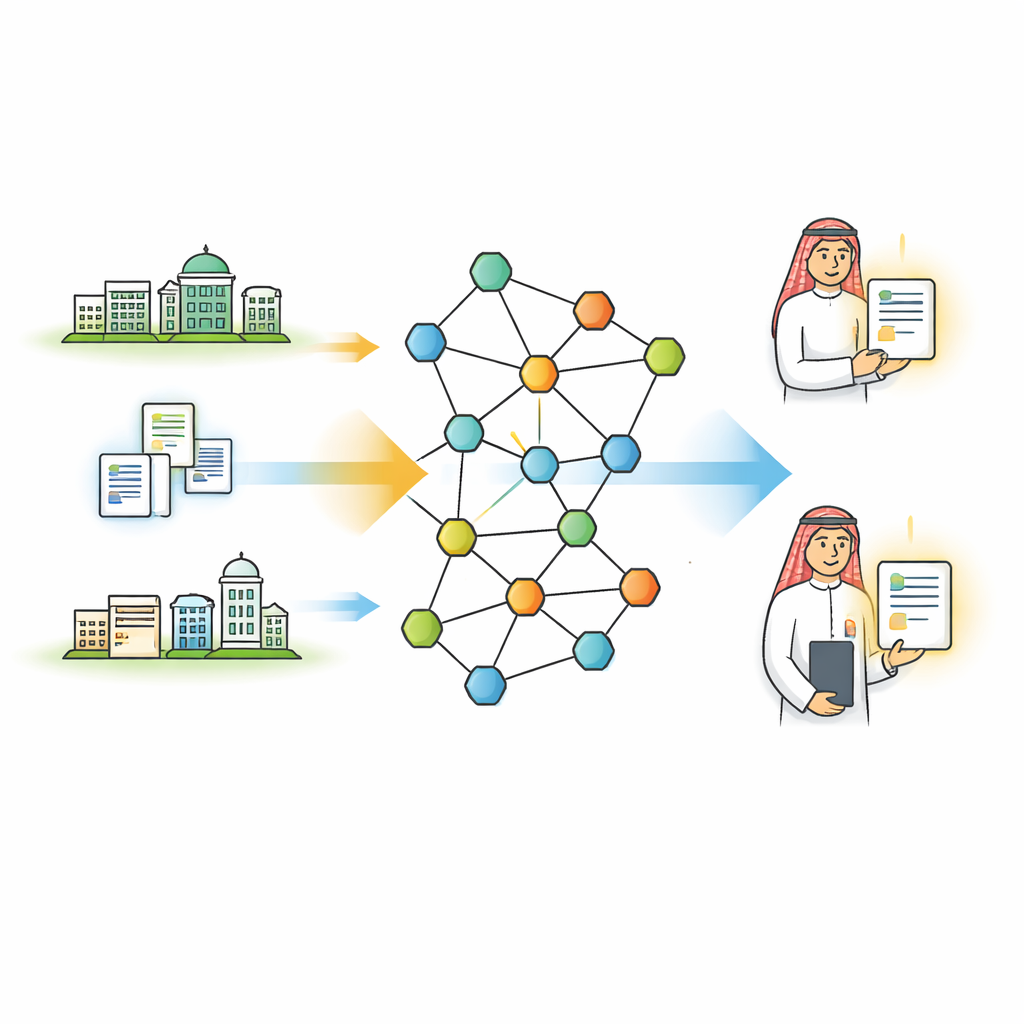
Academic transcripts and study plans sit at the heart of higher education. They describe what a student studied, how well they performed, and what they are prepared to learn next. Yet verifying those records is still largely a manual, one‑to‑one process between institutions. Hard‑copy documents can be forged, and even digital files can be tampered with or lost. When a student wants to move to another university, staff must also decipher course titles and content from different places to decide which credits count. The result is slow, error‑prone, and stressful for both students and administrators.
Turning transcripts into trusted digital tokens
The authors propose a shared digital network that connects Saudi universities so they can exchange and verify transcripts in minutes rather than days. In this design, a transcript is turned into a secure digital token and placed on a blockchain, a special kind of database where every change is recorded and cannot easily be altered. A student can receive ownership of this token when they graduate and then pass it to another university when they apply to transfer or continue their studies. The receiving university can instantly check that the token is genuine by consulting the shared network, without calling or emailing the original institution, while the student retains strong control over who sees their information.
Teaching computers to understand study plans
Beyond simply proving that a document is real, the system also aims to understand what is inside study plans and course lists. To do this, the authors use a powerful language model called ARABBERTV2 that has been trained on billions of Arabic words. This model turns the text of study plans into numerical fingerprints that capture their meaning. Because these fingerprints are very large, a mathematical technique shrinks them down while keeping the most important information. Classic pattern‑recognition methods then learn to recognize which university a plan comes from and how similar different plans are. In tests on 629 real study plans from Saudi universities, this approach correctly identified the source university more than 98% of the time.
Learning together without sharing secrets
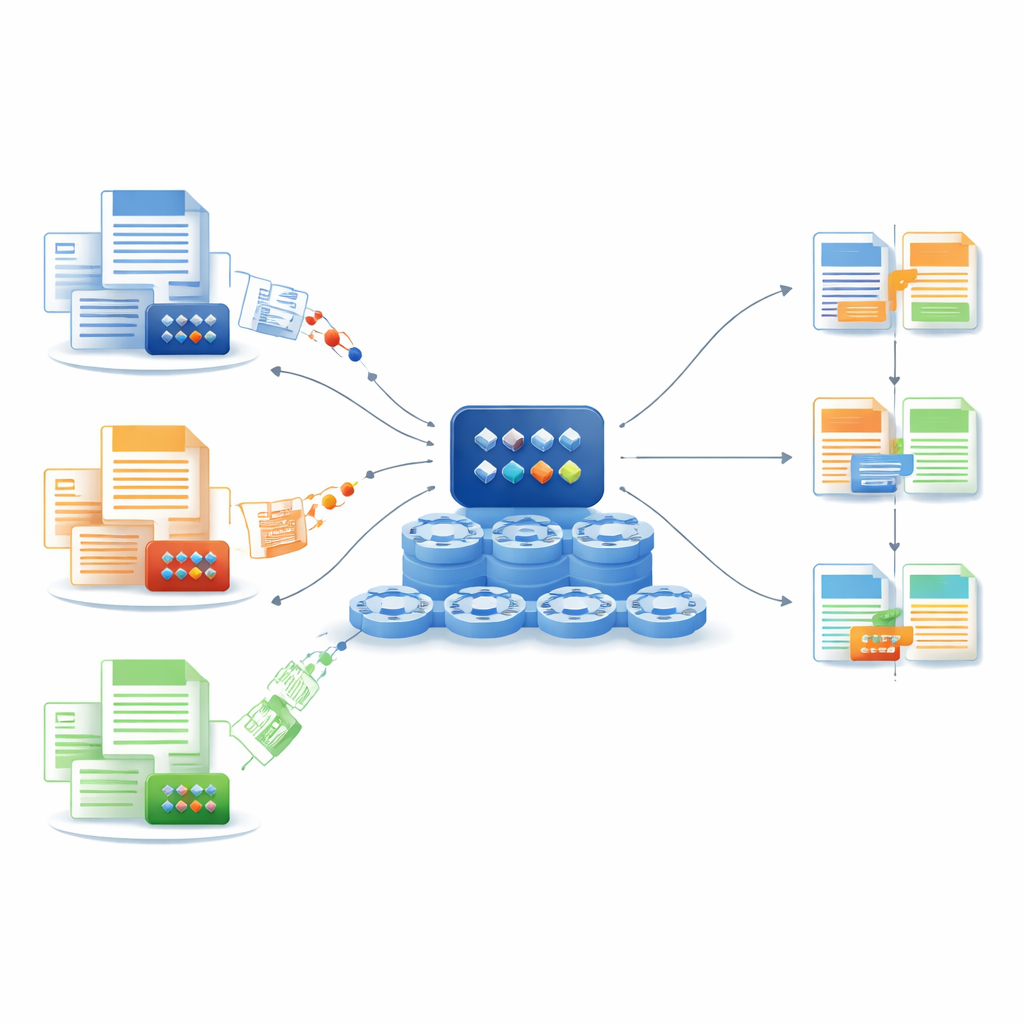
A key challenge is privacy: universities are rightly reluctant to send raw student records to a central server. To solve this, the system uses a method called federated learning. Each university keeps its own data on site and trains part of the model locally. Only the learned adjustments, not the original transcripts, are sent out and combined into a stronger shared model. The blockchain coordinates this cooperative training by recording which universities took part, what rounds of training were completed, and cryptographic summaries of their updates. This mix of technologies reduces performance gaps between universities, especially those with fewer records, and speeds up training while preserving confidentiality.
What the results say about real‑world use
When the authors compared their full system to a simpler, non‑collaborative one, they found that the federated version was more accurate, more stable from one university to another, and faster to reach its best performance. It improved both the average correctness of decisions and the ability to tell matching courses from non‑matching ones. The analysis also showed that Saudi universities often design quite different study plans even within the same major, underscoring the need for careful, intelligent matching rather than simple name‑based comparisons. Despite remaining challenges such as regulations and technical coordination, the experiments suggest that a nationwide, secure, and largely automated framework for transcript verification and study‑plan matching is within reach.
From paperwork to trusted digital pathways
In plain terms, this work shows how combining secure digital ledgers, advanced language understanding, and cooperative learning between institutions could replace today’s slow, paper‑heavy transcript checks. Students would gain portable, trusted records under their own control, universities could admit transfers with greater confidence, and employers could quickly verify qualifications. For Saudi Arabia, the system offers a concrete step toward national digital credentials and smoother academic mobility; more broadly, it hints at how future education systems worldwide might move from stacks of paper to shared, tamper‑resistant digital pathways.
Citation: Alghamdi, M., Mnasri, S., Hassanat, A. et al. Federated deep blockchain-based system for secure verification of academic transcripts and matching study plans in Saudi universities. Sci Rep 16, 13845 (2026). https://doi.org/10.1038/s41598-026-43328-8
Keywords: academic transcript verification, blockchain in education, federated learning, study plan matching, Arabic language models