Clear Sky Science · en
Knockdown of RNA editing proteins reshapes the HepaRG transcriptome and pharmacogene expression
Why this liver study matters for everyday medicine
When you swallow a pill, your liver quietly decides how much of that drug actually reaches your bloodstream and how long it lasts there. This study explores two little-known proteins, ADAR and ADARB1, that tweak RNA messages inside liver cells. By dialing these proteins down in a human liver–like cell line, the researchers discovered that they can reshape the activity of hundreds of genes involved in drug handling, immunity, and basic liver health. The work hints that targeting these proteins—for example in cancer therapy—could unexpectedly change how people process many medications.
Guardians of RNA in liver cells
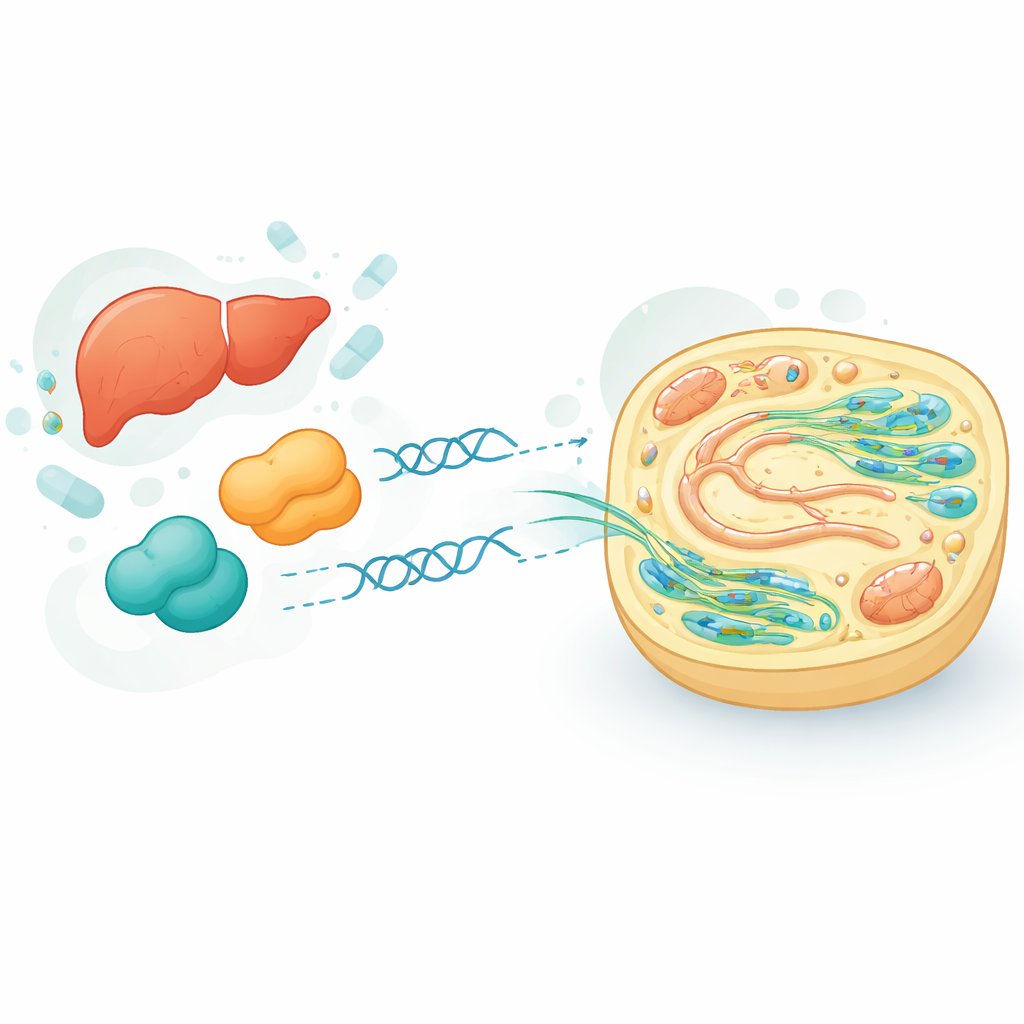
ADAR and ADARB1 are enzymes that modify RNA, the working copy of genetic information. They convert one RNA building block (adenosine) into another (inosine), a form of “editing” that can alter how RNAs fold, are spliced, or are read by the cell’s machinery. Beyond this chemistry, these proteins also act as sentries: they mark double-stranded RNA as harmless so that the cell’s antiviral defenses do not mistake its own RNA for an invader. Although their roles in the brain and immune system are well known, their full impact on liver function and drug-processing genes had not been mapped in detail.
Switching off RNA editors in liver-like cells
The team used HepaRG cells, a human liver–derived cell line that expresses many of the same drug-processing genes found in real livers. They reduced ADAR or ADARB1 levels with small interfering RNAs and then sequenced all RNA in the cells. Turning down ADAR had a striking effect: more than 1,400 genes changed their activity, while ADARB1 knockdown altered under 200. Many of the affected genes were “pharmacogenes” that help determine how drugs are metabolized, transported, and cleared. Over half of roughly 1,600 detected pharmacogenes shifted in at least one treatment, and about 70 percent of a curated set of 302 key drug-related genes were affected, mostly showing reduced activity.
Drug-handling genes and their control networks
Among the most affected genes were members of the cytochrome P450 family, which perform the bulk of chemical transformations on drugs, hormones, and fats. Almost all major drug-metabolizing P450s changed their expression, with some increasing and many decreasing. Enzymes that add or remove chemical groups (phase II enzymes), alcohol and aldehyde processing enzymes, and detoxifying enzymes such as carboxylesterases and glutathione-related enzymes were also widely altered. Transporter proteins that move drugs and other small molecules into and out of cells showed strong changes as well, including both uptake carriers and efflux pumps. On top of this, many liver-enriched transcription factors—master switches that control large sets of downstream genes—were dialed down, helping explain the broad ripple effects across the drug-handling network.
Splicing changes and a surprising independence from direct RNA edits
The researchers also examined how RNA messages were spliced, the process by which segments are cut and stitched to create different versions of a gene’s transcript. They found thousands of splicing changes in both ADAR and ADARB1 knockdowns, with some pharmacogenes producing different transcript versions than in control cells. Two notable examples after ADAR knockdown were HNF4A, a key liver regulator, and CYP2C9, an important drug-metabolizing enzyme, both of which shifted toward alternate RNA isoforms. However, when the team looked for a direct link between locations of RNA editing and changes in gene activity, the overlap was weak. Many edited regions sat in repetitive elements, and genes that changed expression were only slightly more likely to carry editing changes than genes that did not, suggesting that most of the observed gene expression shifts did not stem from specific editing events.
Immune alarms, inflammation blockers, and what really drives change
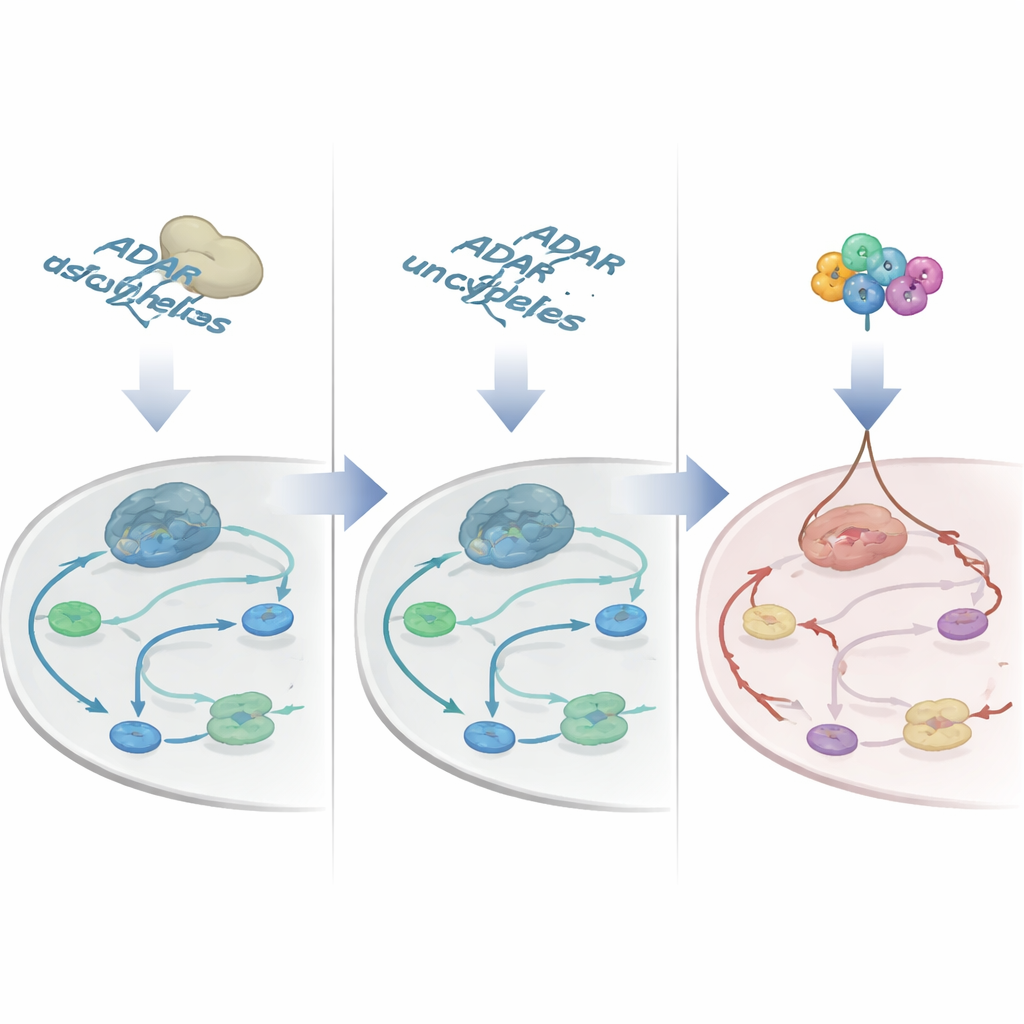
Knocking down ADAR is known to unleash the cell’s antiviral alarm system by allowing double-stranded RNA to build up and activate type I interferon signaling. To test how much this immune response explains the liver changes, the authors treated cells with interferon-alpha alone and compared the results to ADAR knockdown. Both conditions activated immune pathways, but they largely affected different sets of genes and pharmacogenes. Next, they used BX795, a drug that blocks a key interferon-activating step. While BX795 itself caused wide gene expression shifts, co-treating ADAR-depleted cells with BX795 dampened about 70 percent of the changes originally seen with ADAR knockdown. This points to immune activation—both interferon-dependent and interferon-independent branches—as a major driver of the transcriptome remodeling that follows loss of ADAR.
What this means for drugs and liver health
In plain terms, this study shows that ADAR and ADARB1 help keep liver cells’ drug-processing toolkit and immune system in balance. When these RNA-editing proteins are suppressed, liver-like cells turn many important drug-metabolizing genes down or up, switch to alternative transcript versions, and activate immune pathways that further reshape gene activity. Because inhibiting ADAR is being considered in cancer treatment to boost anti-tumor immunity, these findings raise a caution: blocking ADAR in patients could significantly change how their livers handle other medications, with consequences for dosing and safety. The work underscores that these quiet RNA editors are central to liver homeostasis, and that future therapies will need to account for their far-reaching effects on drug metabolism.
Citation: Collins, J.M., Yu, F., Zhang, Y. et al. Knockdown of RNA editing proteins reshapes the HepaRG transcriptome and pharmacogene expression. Sci Rep 16, 13095 (2026). https://doi.org/10.1038/s41598-026-43323-z
Keywords: RNA editing, liver pharmacogenes, drug metabolism, ADAR enzymes, interferon response