Clear Sky Science · en
Art therapy-oriented space design for pediatric dental clinics: a Kano-AHP-FCE framework
Turning Scary Dental Visits into Calmer Experiences
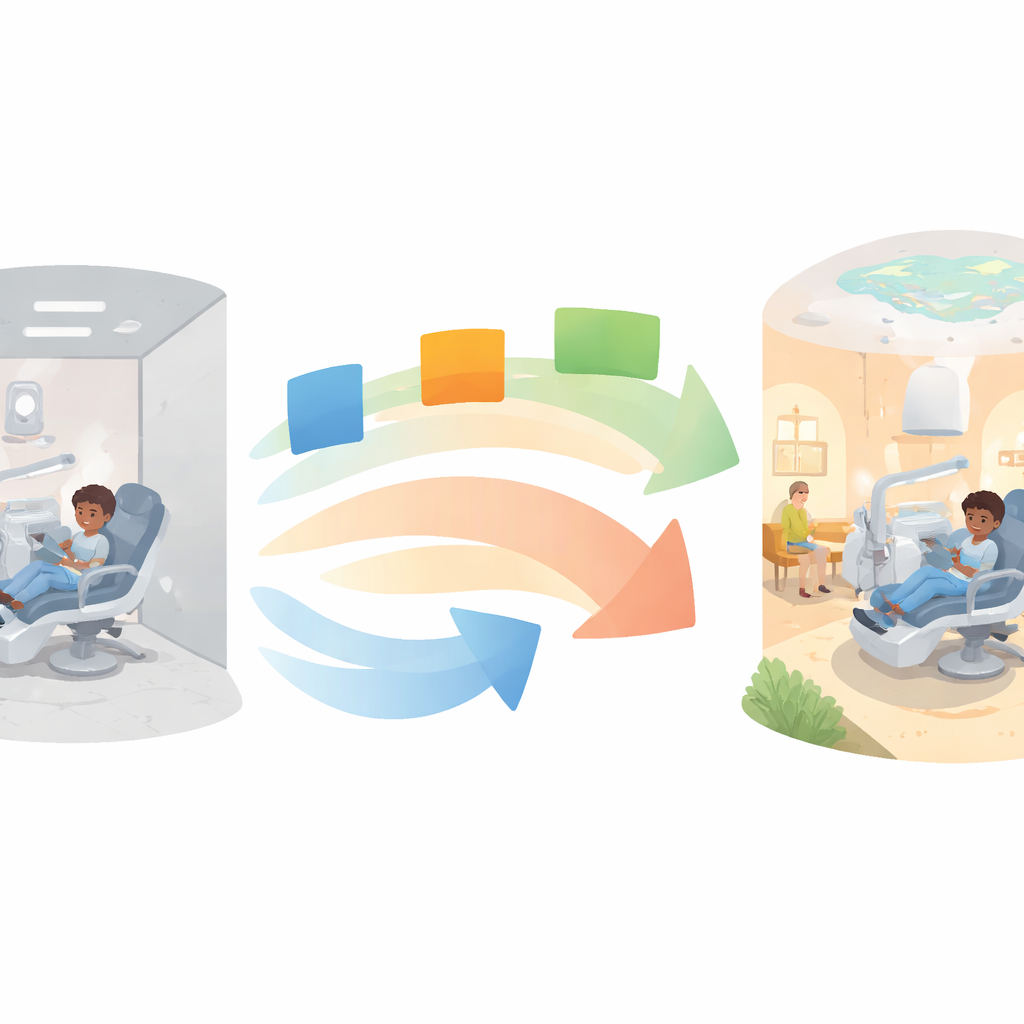
For many children, a trip to the dentist means racing hearts, sweaty palms, and tears before they even sit in the chair. This study explores a hopeful idea: what if changing the look and feel of the dental clinic itself could ease that fear? By carefully reshaping colors, lighting, layout, and playful features, the authors show how design inspired by art therapy can help children feel safer, more engaged, and more willing to cooperate during dental treatment.
Why the Dental Chair Feels So Frightening
To understand the problem, the researchers start with a simple fact: tooth decay is extremely common in childhood, and successful treatment depends heavily on a child’s ability to sit still and cooperate. Yet dental clinics are full of sights, sounds, and smells that can be overwhelming—bright lights, gleaming metal tools, chemical odors, and unfamiliar rooms. Previous work has shown that small fixes, like softer colors or music, can reduce anxiety. But most clinics still use scattered, intuitive changes rather than a systematic approach that links children’s emotions to specific design decisions.
Listening to Children, Parents, and Staff
The team studied four kinds of pediatric dental settings, from large children’s hospitals to community clinics. They surveyed 213 people—children, their caregivers, and dental staff—and conducted in‑depth interviews and focus groups. Across all groups, the same themes appeared: cramped or poorly arranged rooms disrupted work and made visits feel chaotic; parents often had nowhere suitable to sit near their child; spaces felt either dull or overstimulating; and clinics lacked engaging, child‑friendly elements. From these responses the researchers distilled 18 key design needs, ranging from basic safety (such as non‑slip floors) to more playful ideas (like interactive ceilings and themed walls).
From Wish List to Evidence-Based Design
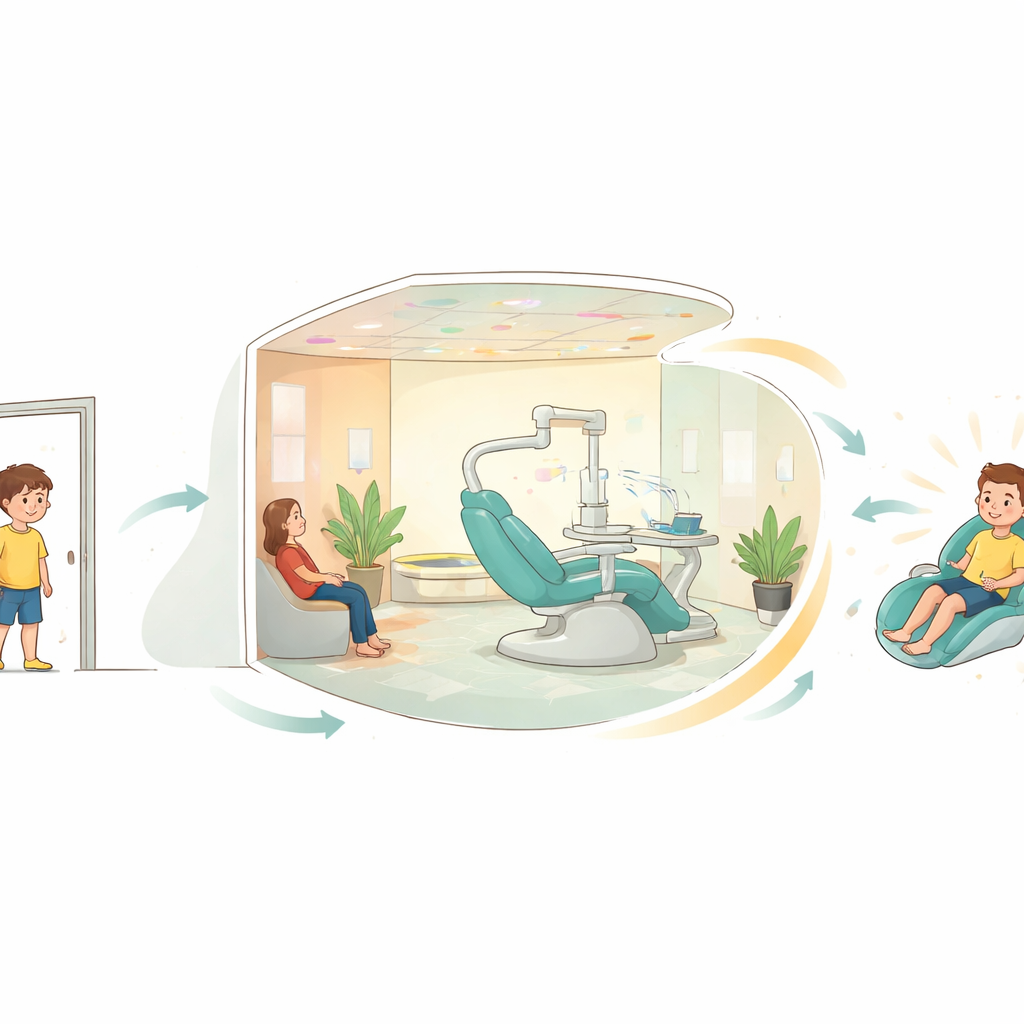
To turn this wish list into a practical plan, the authors combined three decision tools. First, they used a satisfaction model to sort each requirement into types: basic “must‑haves” (for example, a place for parents to sit within the child’s view, safe flooring, gentle lighting), straightforward quality boosters (rich but not overpowering color schemes, warm tones, nature‑inspired decorations, consistent materials), and delightful extras (overhead projections, playful floor patterns, background music, interactive media, child‑safe corner shaping). Next, they asked an expert panel of dentists, designers, and art‑therapy specialists to rank how important each feature was. Finally, they wove the highest‑priority items into a new clinic concept that blends safety, comfort, and playful distraction in an art‑therapy spirit—soft hues and curves, clear but visually connected caregiver and treatment zones, soothing sound and light, and immersive yet gentle visuals on the ceiling.
Testing a Child-Friendly Clinic in Practice
The new design was then compared with an existing clinic environment using a structured scoring method that can handle fuzzy, human judgments. Fifty‑seven participants—including children, caregivers, dentists, and designers—rated both spaces on how well they met the identified needs. The optimized clinic scored 26.58% higher overall than the original. Features related to emotional safety (seeing a parent while being treated), visual and material comfort (warm, low‑saturation colors; non‑slip antibacterial floors; rounded corners), and engaging distractions (overhead interactive projection, gentle music, audio‑visual games) all contributed to higher feelings of comfort and reduced tension. Statistical tests confirmed that these differences were unlikely to be due to chance alone.
What This Means for Families and Clinics
For families, the message is reassuring: a well‑designed dental clinic can do more than look nice—it can actively help children stay calmer and cooperate better, making visits less traumatic and care more effective. For clinics and hospital planners, the study offers a roadmap rather than a collection of random decor tips. By combining structured surveys, expert judgment, and careful evaluation, the authors show how to translate children’s psychological needs into concrete design moves that are both practical and healing‑oriented. While larger and more diverse studies are still needed, this work demonstrates that child‑centered, art‑informed spaces can transform dental treatment from something merely endured into an experience that supports emotional well‑being.
Citation: Zhu, H., Li, Y. & Ye, Y. Art therapy-oriented space design for pediatric dental clinics: a Kano-AHP-FCE framework. Sci Rep 16, 12909 (2026). https://doi.org/10.1038/s41598-026-43322-0
Keywords: pediatric dental design, healing environments, art therapy, child dental anxiety, clinic architecture