Clear Sky Science · en
Sex and BMI as predictors of pill residue in dysphagia: a multivariate analysis
Why swallowing pills can be risky for some people
Many older adults and people with health problems struggle to swallow not just food and drink, but also the pills they need every day. When tablets get stuck in the throat instead of sliding smoothly down to the stomach, they can cause choking, discomfort, or even lead to serious lung infections. This study looked closely at where pills tend to get stuck in people with swallowing difficulties and asked a simple but important question: do sex and body weight influence who is most at risk?
How the researchers watched pills go down
To investigate, dentists and swallowing specialists in Tokyo reviewed records from 70 patients with dysphagia, a condition that makes swallowing hard or unsafe. These patients, most in their late seventies, underwent a special X-ray test called a videofluoroscopic swallowing study, which creates a moving picture of the swallow from mouth to upper chest. The team used barium-coated mock pills and thickened liquid so the path of each tablet could be seen in real time. They checked three key spots where pills might linger: the mouth, a small pocket just behind the tongue (the epiglottic vallecula), and side pockets lower in the throat (the piriform sinuses). They also recorded each patient’s sex, body mass index (BMI), eating ability, and medical history to see which factors lined up with leftover pills.
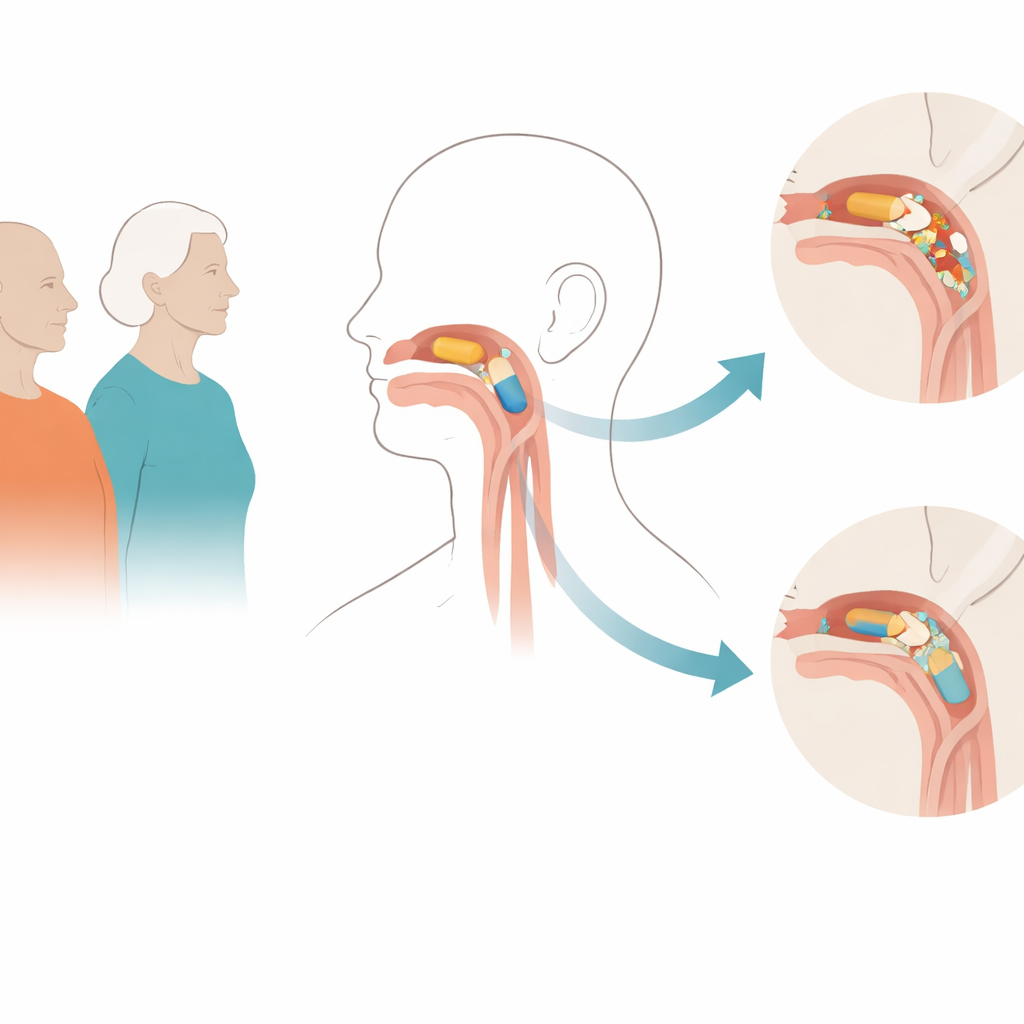
Where pills most often get stuck
The moving X-rays showed that pills did not usually go down perfectly in this fragile group. Almost one in five patients had pill residue somewhere in the examined areas. The most common trouble spot was the pocket behind the tongue, where 17% of patients retained a pill. About 10% had residue in the lower side pockets of the throat, and 9% had tablets left in the mouth. Even though no one actually inhaled a pill into the airway during testing, almost one in five did inhale some of the contrast liquid, underscoring how vulnerable these patients are when swallowing anything by mouth.
Role of sex and body build
When the researchers compared people with and without pill residue, simple differences like age or main complaint did not clearly separate the groups. However, more detailed statistical analysis revealed two strong patterns. First, being male was linked with a much higher chance that a pill would get stuck in the pocket behind the tongue. The authors suggest that men, who generally start out with stronger swallowing muscles, may experience a sharper decline with age or disease, especially given their typically larger throat structures. Second, having a low BMI (below 18.5, a common cutoff for undernutrition) strongly predicted pills getting caught in the lower side pockets of the throat. A thinner, undernourished body often means weaker muscles throughout, including those needed to move a solid tablet safely through the throat.
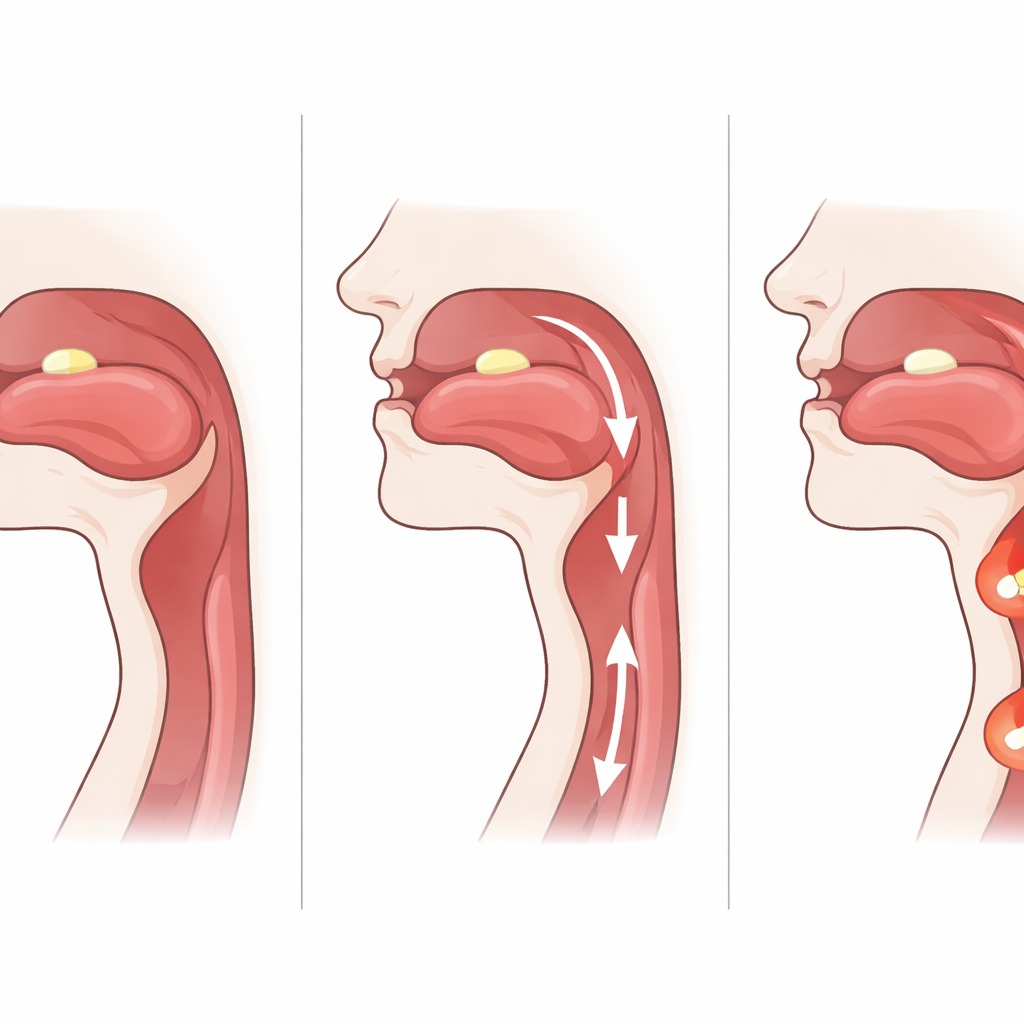
What this means for everyday care
These results point to practical steps that doctors, dentists, and caregivers can take. For older male patients, especially those already known to have swallowing issues, clinicians may want to look carefully at how tablets move past the tongue during imaging tests and consider extra coaching, swallowing exercises, or alternative pill forms. For patients who are underweight, improving nutrition and muscle strength could make swallowing safer, but in the meantime, changing the form of medicines—from standard tablets to liquids, powders, sprays, or pills that dissolve in the mouth—may reduce the risk that medication lingers in the throat.
Take‑home message for patients and families
The study concludes that sex and body weight meaningfully shape how safely people with dysphagia can swallow pills: men and those who are underweight face a higher risk that tablets will remain stuck in the throat. For families and patients, the message is clear and reassuring—if pills feel hard to swallow, it is not just in your head, and it is not something you must simply endure. By recognizing who is at risk and adjusting medication type, diet, and swallowing support, health teams can make treatment safer and more comfortable, while lowering the danger of chest infections and hospital stays.
Citation: Nakane, A., Ando, M., Yoshizumi, Y. et al. Sex and BMI as predictors of pill residue in dysphagia: a multivariate analysis. Sci Rep 16, 12604 (2026). https://doi.org/10.1038/s41598-026-43307-z
Keywords: dysphagia, pill swallowing, body mass index, older adults, aspiration risk