Clear Sky Science · en
Integrative metabolomic and transcriptomic profiling deciphers flavonoid biosynthesis of bulbs in Lilium brownii var. Viridulum
Lilies on the Dinner Table and in the Medicine Cabinet
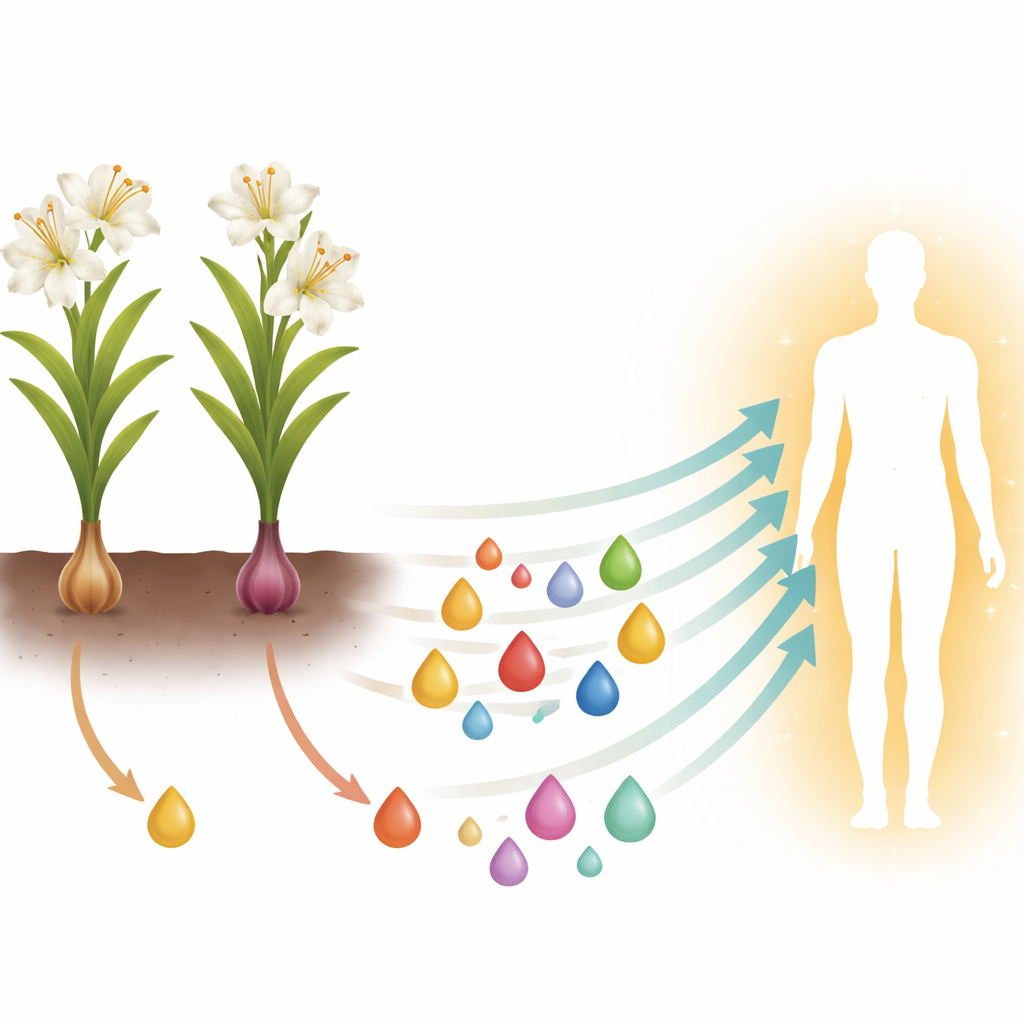
Lily bulbs have long been eaten and prescribed in traditional Chinese medicine for calming the mind, easing coughs, and supporting overall health. This study looks inside the bulbs of two closely related lily varieties to understand why one of them, a newly selected line called Xuefeng, seems hardier and richer in helpful plant chemicals. By mapping both the small molecules and the active genes in these bulbs, the researchers uncover how this new variety builds more flavonoids—plant compounds linked to antioxidant, anti-inflammatory, and other protective effects—than the traditional Longya lily.
Two Cousin Lilies with Different Strengths
Lilium brownii var. viridulum, known locally as Longya, is an important food and medicinal crop in parts of Hunan Province, China. Recently, growers selected a new line, Xuefeng, from wild mountain plants because it stood out for its strong disease resistance. Yet nobody had clearly shown how its internal chemistry compares with that of Longya. Since flavonoids from plants are key components of a healthy human diet and cannot be made by our own bodies, the team set out to see whether Xuefeng bulbs hold greater stores of these compounds and to identify the genetic switches that might explain the difference.
Taking a Chemical Census of the Bulbs
The scientists first dried and ground bulb samples from both lilies and used a powerful form of liquid chromatography–mass spectrometry to survey thousands of molecules at once. They detected 1,454 distinct metabolites, with flavonoids and related phenolic acids dominating the chemical landscape. When they compared the two varieties, Xuefeng stood out: hundreds of compounds were more abundant in this line, and every single detectable flavonoid was higher in Xuefeng than in Longya. Among 85 standout flavonoids, almost half were flavonols—molecules often associated with antioxidant capacity—along with flavones, flavanones, anthocyanins, and other subtypes. Direct measurements confirmed that total flavonoid content in Xuefeng bulbs clearly exceeded that in Longya, suggesting stronger potential health benefits.
Reading the Genetic Control Panel
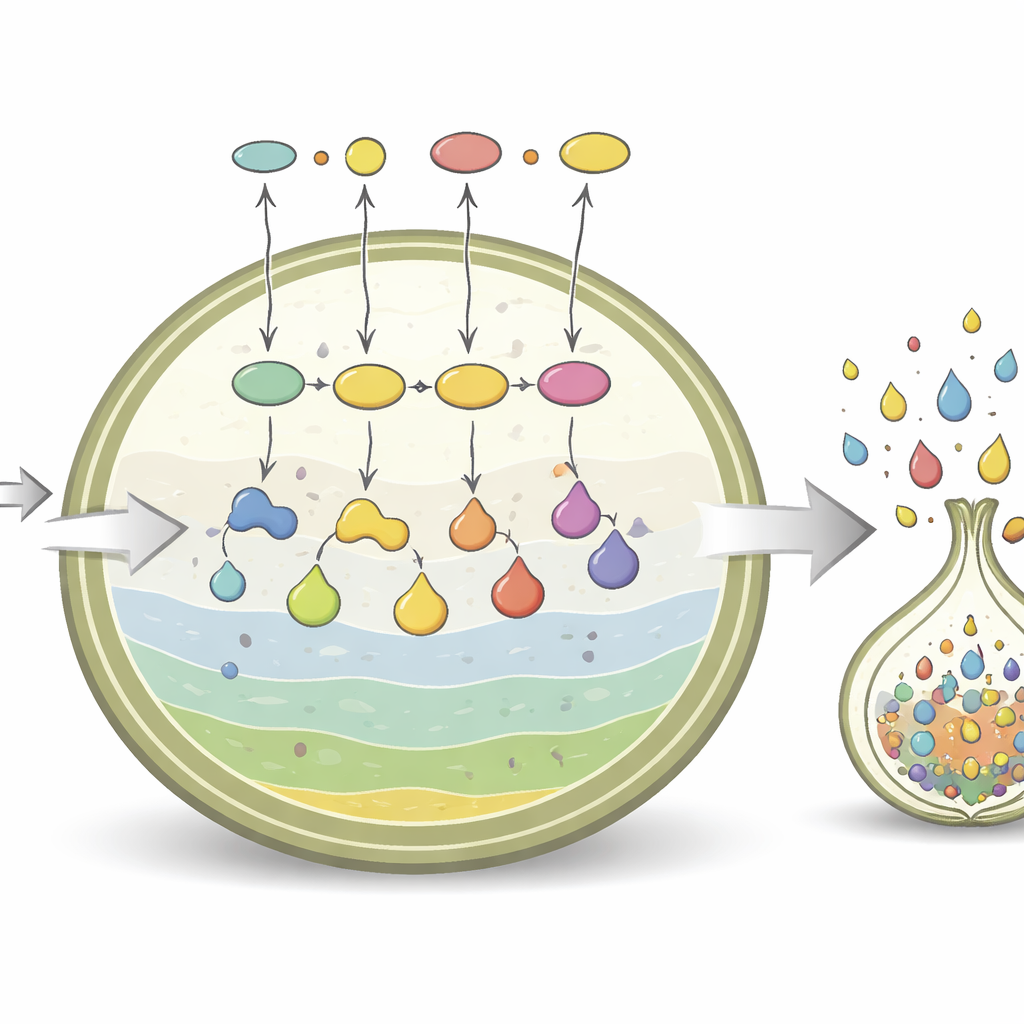
Chemical differences alone do not explain why one bulb makes more flavonoids, so the researchers also read the bulbs’ RNA, a snapshot of which genes are switched on. They found nearly 16,000 genes expressed at different levels between the two lilies. Many of these genes clustered in well-known pathways that build flavonoids from the amino acid phenylalanine. Key enzyme genes, such as those coding for chalcone synthase, flavonol synthase, and others that drive later steps in the pathway, were generally more active in Xuefeng. The team matched gene activity to metabolite levels and saw strong positive correlations: when specific enzyme genes were more highly expressed, their downstream flavonoid products tended to accumulate, reinforcing the idea that these genes help power Xuefeng’s chemical richness.
Master Switches for Colorful Plant Compounds
Beyond the enzymes that do the chemical work, plants rely on transcription factors—regulatory proteins that act like master switches—to dial entire pathways up or down. The researchers focused on two well-known families, MYB and bHLH, which often cooperate to activate anthocyanins and other flavonoids in many species. In Xuefeng bulbs, dozens of MYB and bHLH genes linked to flavonoid production were turned up compared with Longya. A deeper evolutionary and correlation analysis singled out one MYB and four bHLH candidates that appear especially important for promoting anthocyanin and flavonol formation, likely by boosting the expression of core pathway enzymes. Follow-up experiments with quantitative PCR confirmed that both these regulatory genes and their target enzymes show consistently higher activity in Xuefeng.
What This Means for Future Lilies and Foods
Together, the chemical and genetic evidence paint a clear picture: the Xuefeng lily bulb has rewired its internal machinery to funnel more building blocks into flavonoid production than the traditional Longya type. This makes Xuefeng a promising source of natural antioxidants and other bioactive compounds for functional foods, herbal medicines, and possibly even cosmetic products. By pinpointing the key enzymes and master switches behind this boost, the study provides practical targets for breeders and biotechnologists who want to develop new lily lines with enhanced health value, better disease resistance, and more consistent quality from field to table.
Citation: Wang, PT., Xue, YJ., Liu, F. et al. Integrative metabolomic and transcriptomic profiling deciphers flavonoid biosynthesis of bulbs in Lilium brownii var. Viridulum. Sci Rep 16, 13814 (2026). https://doi.org/10.1038/s41598-026-43274-5
Keywords: lily bulbs, flavonoids, medicinal plants, metabolomics, plant breeding