Clear Sky Science · en
Improving engineering properties of laterite soil using eco-friendly biopolymers: a study on strength and compressibility
Building on Safer Ground
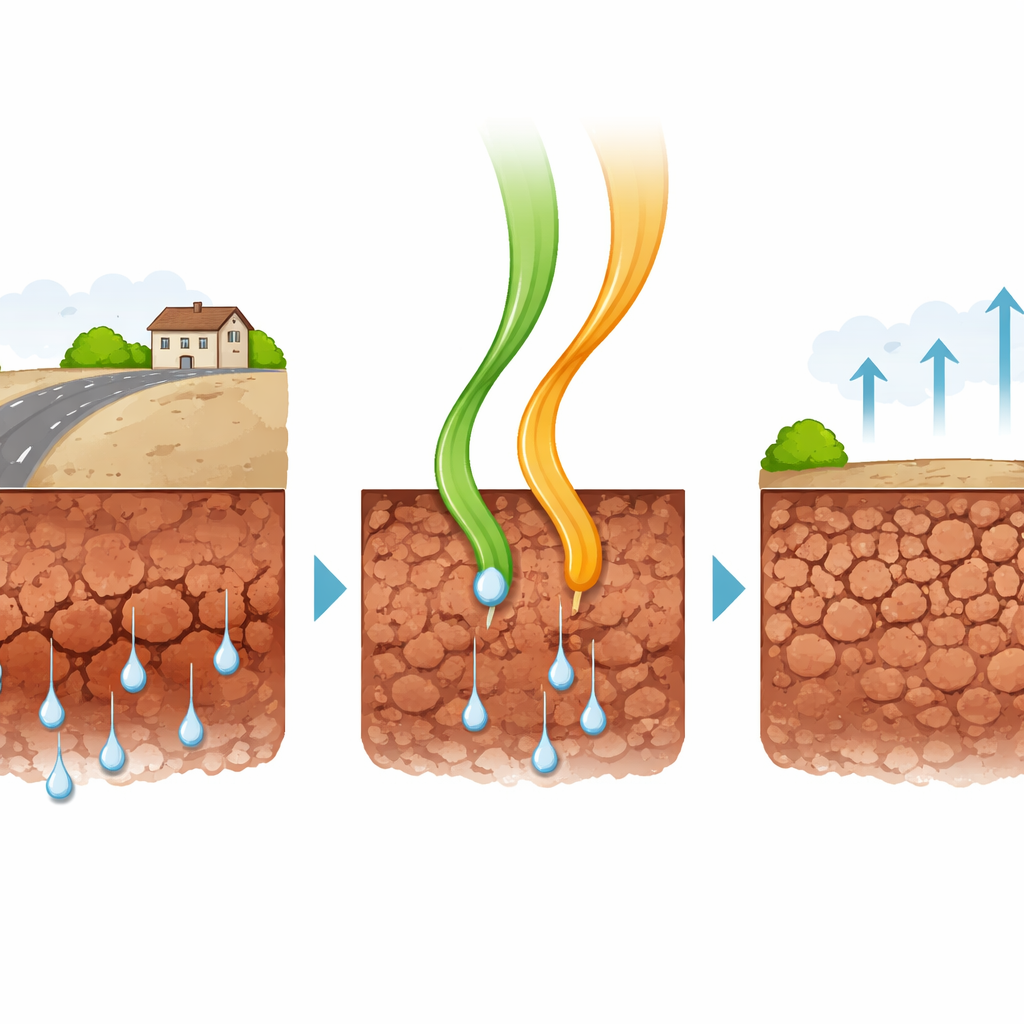
Roads, homes, and small bridges in many tropical regions often sit on laterite soil—a reddish earth that can turn soft, crack, or let too much water through. Engineers usually tame such problem soils with cement or lime, but these come with a hefty climate cost. This study explores whether two plant- and microbe-based gums, xanthan and guar, can safely toughen laterite soil while cutting down on pollution from conventional stabilizers.
Why This Soil Matters
Laterite soil covers large swaths of countries such as India and is widely used beneath pavements and embankments. On its own, though, it does not always carry heavy loads well and can deform when wet or under long-term pressure. Traditional fixes rely on cement or lime, which are energy-intensive to make and contribute several percent of global carbon dioxide emissions. Finding greener ways to strengthen laterite could therefore improve local infrastructure while aligning with worldwide climate and sustainability goals.
Nature-Derived Helpers
The researchers focused on two "biopolymers" already common in food and industry: xanthan gum, made by bacteria, and guar gum, milled from guar plant seeds. Both form thick gels in water and can cling to mineral particles. In the lab, the team mixed carefully measured amounts of these gums into laterite soil—up to 4% xanthan and 3% guar by dry weight—then compacted and sealed the samples. Over curing periods of up to 28 days, they tested how strong the treated soil became, how easily water could pass through it, and how much it compressed under steady pressure. Microscopic imaging and mineral scans helped reveal what was happening inside.
Stronger, Tighter, and Less Leaky Ground
The treated soils showed striking gains. At the best doses—3% xanthan and 2% guar—the ability of the soil to resist squeezing and breaking improved by roughly two- to three-fold after 28 days compared with untreated soil. Tests that mimic the pressure of vehicle wheels showed that the soil’s bearing capacity also jumped, especially at those same gum levels, before dropping slightly at higher doses where excess gel acted more like a lubricant. Water flow through the soil plummeted: permeability dropped by about 93% with optimal xanthan and nearly 97% with optimal guar, as the gels filled and narrowed the pathways between grains. Measures of internal voids confirmed that the soil fabric became denser and better consolidated.
A Peek Inside the Soil
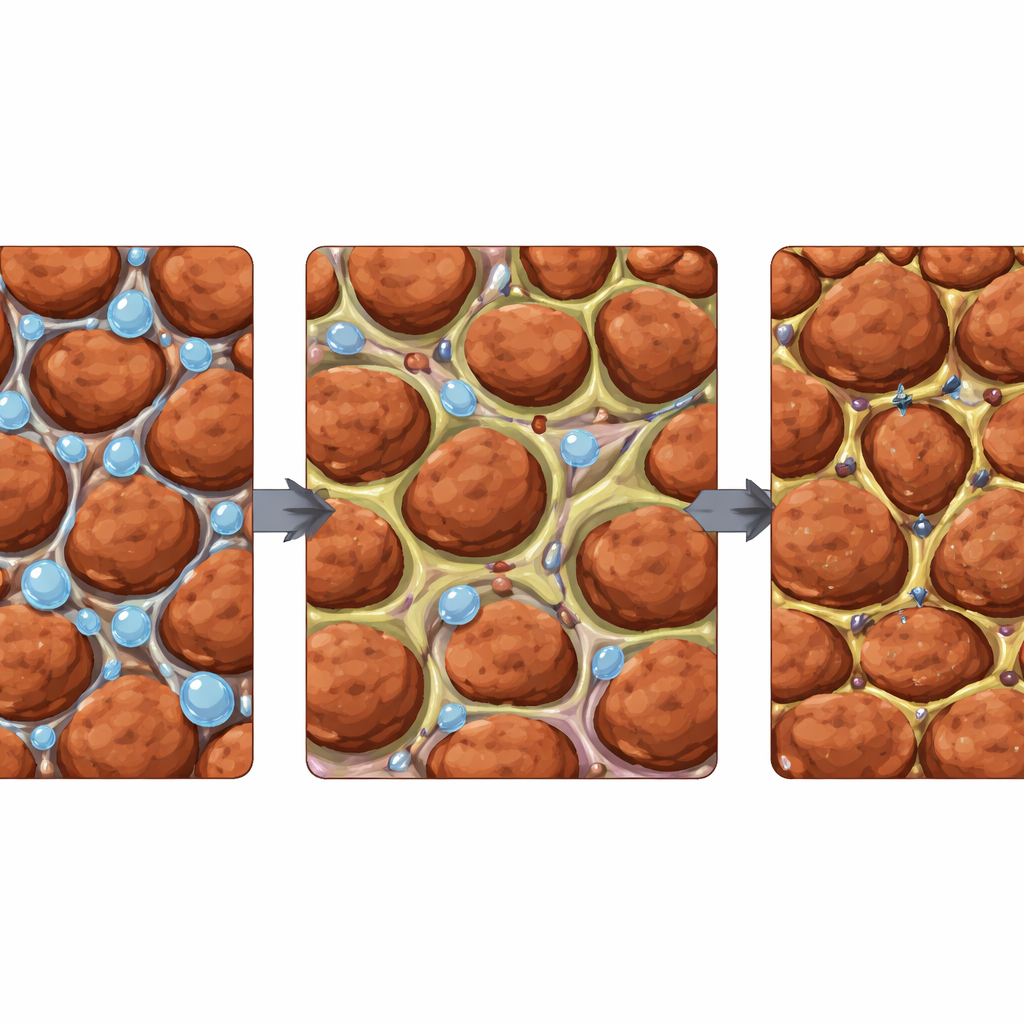
Microscope images and X-ray diffraction patterns helped explain these improvements. In untreated laterite, grains appeared rough and loosely packed, with many open gaps. After adding the gums, the researchers observed smooth, gel-like films and bridges binding particles together and plugging pores. These "cement-like" networks increased contact between grains, reduced empty space, and created a more continuous matrix. The changes were strongest at the same optimal doses that produced the best mechanical results, supporting the idea that the gums were reorganizing the soil structure rather than simply coating it.
Greener Paths for Roads and Foundations
Overall, the study shows that modest amounts of xanthan and guar gum can turn a relatively weak, leaky laterite into a stronger, tighter, and more water-resistant ground layer. Because these gums are biodegradable and derived from biological sources, they offer a promising step toward lower-carbon foundations for roads, embankments, and containment barriers in regions rich in laterite soil. The authors suggest that future field trials and long-term monitoring could help translate these lab-scale gains into real-world, climate-friendlier infrastructure.
Citation: Ebid, A.M., Banne, S., Bobade, S.U. et al. Improving engineering properties of laterite soil using eco-friendly biopolymers: a study on strength and compressibility. Sci Rep 16, 10484 (2026). https://doi.org/10.1038/s41598-026-43269-2
Keywords: laterite soil, biopolymer stabilization, xanthan gum, guar gum, sustainable geotechnics