Clear Sky Science · en
Low-dose chronic exposure to hemin and kynurenine enhances metabolic adaptation in a colorectal cancer cell model
Why this research matters to everyday life
Many of us have heard that eating a lot of red and processed meat can raise the risk of colorectal cancer, but the reasons behind this link are still being uncovered. This study looks beyond DNA damage and asks a different question: do small molecules formed when we digest red meat quietly train cancer cells to cope better with a harsh, low-nutrient environment inside tumors? By following how these molecules steer the “fuel choices” of colon cancer cells, the work helps explain how diet might influence how aggressive a tumor can become.
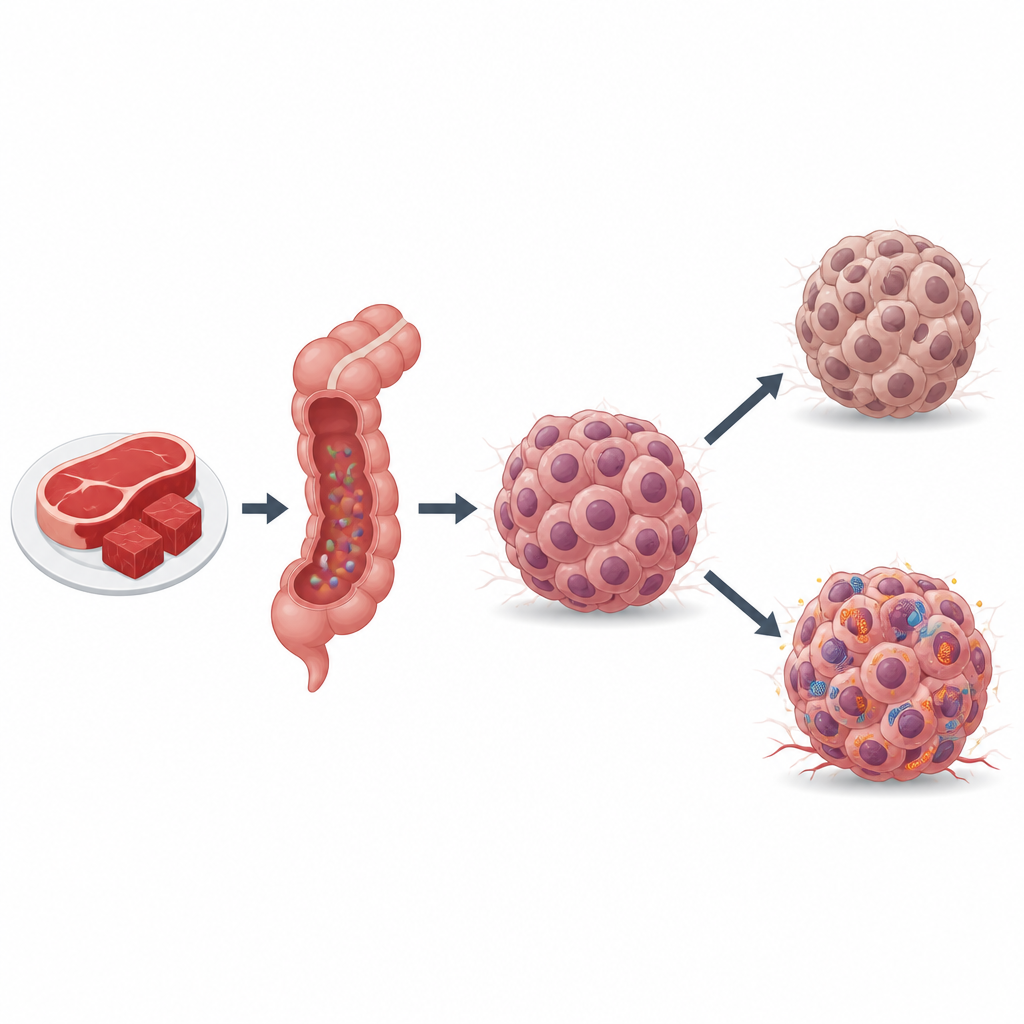
From steak on the plate to chemicals in the gut
When we eat red meat, digestion and gut microbes break it down into a variety of smaller compounds. Two of them stand out in this study. One is hemin, a stable form of heme, the iron-rich pigment that gives red meat its color and is already known to damage colon cells at high doses. The other is kynurenine, a product of tryptophan breakdown that can affect immune cells and cell growth. The researchers reasoned that, in real life, colon tumor cells are not hit once with a large, toxic dose of these molecules. Instead, they see low levels again and again over long periods as meat regularly passes through the gut.
Building a tiny tumor to watch energy use
To mimic this situation, the team grew three-dimensional clumps of human colorectal cancer cells, called spheroids, which resemble small tumors more closely than a flat cell layer. These spheroids were repeatedly exposed for more than a week to low, non-toxic doses of hemin, kynurenine, both together, or to butyrate, a short-chain fatty acid produced from dietary fiber that is often considered protective. They then challenged the spheroids by placing them in media lacking key nutrients such as glucose, glutamine, or fatty acids. Using specialized instruments, they tracked how much oxygen the cells used and how much acid they released, readouts that reveal whether cells rely more on sugar burning, fat burning, or other fuel sources. In parallel, they examined changes in gene activity and measured how much fat and glycogen the cells stored.
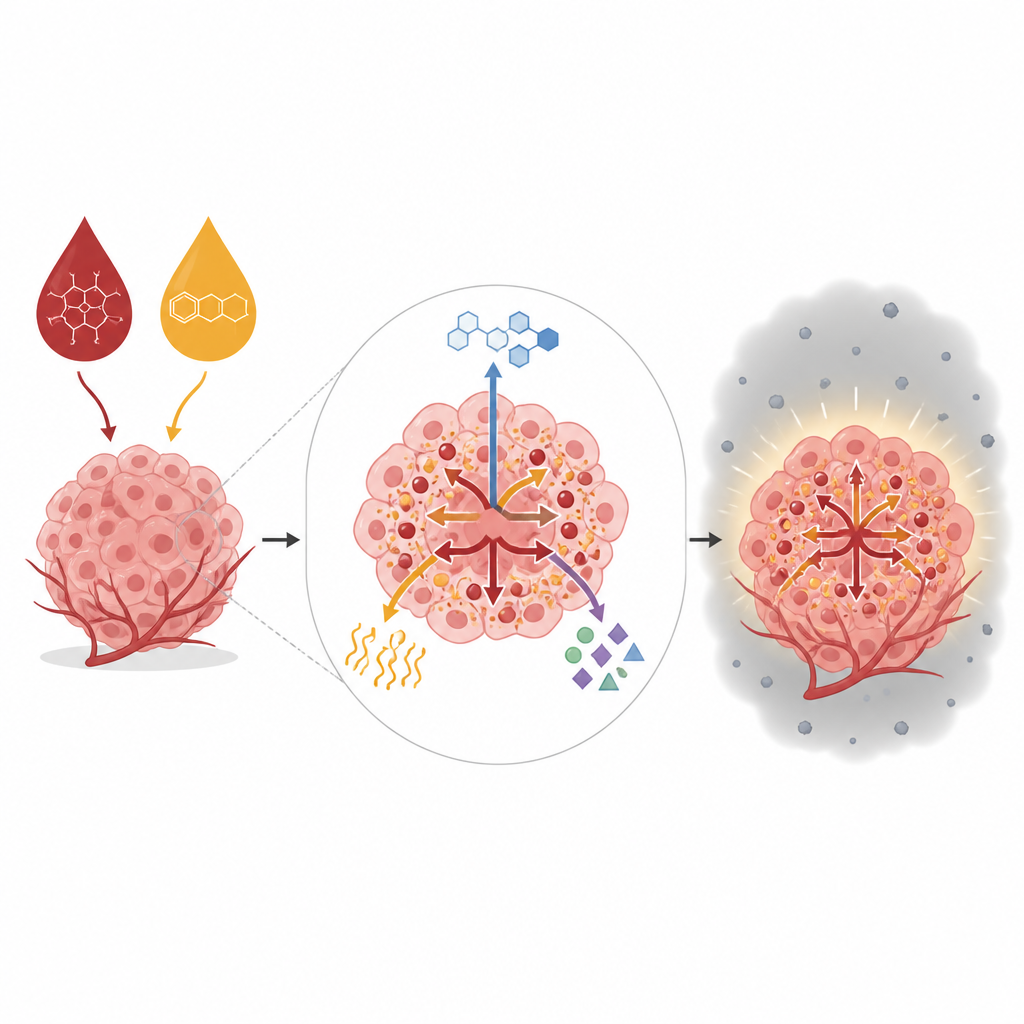
How single meat molecules reshape cancer cell fuel choices
Hemin and kynurenine each pushed the cancer cells toward different energy strategies. With repeated hemin exposure, cells showed a shift toward a more malignancy-like profile, with stronger use of sugar breakdown and a flexible ability to keep their power stations active when glucose was blocked. Gene data suggested that hemin preconditioning helped cells tap glutamine and fatty acids as back-up fuels and altered key steps in sugar handling and energy pathways. In contrast, kynurenine primed cells to rely more on oxidative metabolism. Under nutrient stress, kynurenine-exposed spheroids maintained higher mitochondrial activity, drew more heavily on glutamine and fats, and built up larger internal fat stores, creating a reserve tank they could tap when outside nutrients ran low.
When hemin and kynurenine team up
The most striking changes appeared when both metabolites were present together, as they would be after a meat-heavy meal. Spheroids exposed to the combination became highly energetic and remarkably adaptable. Even when glucose uptake, glutamine use, or fat burning were experimentally blocked, these cells maintained both oxygen use and acid production better than untreated cells. They stored more lipids, adjusted key energy genes, and appeared able to reroute amino acids into pyruvate, feeding both sugar-like and oxidative pathways at once. This combination also boosted the activity of transporters that bring in nutrients and kynurenine-related molecules, hinting at a feedback loop that could lock cells into this flexible, hard-to-starve state.
What it means and what comes next
Put simply, this study suggests that certain compounds produced from red meat do more than damage DNA: over time, they can train colorectal cancer cells to become metabolic “survival experts.” Hemin and kynurenine nudge tumor cells to store more fuel and to switch smoothly between different energy sources when nutrients are scarce, a situation typical inside growing tumors. This added flexibility may help cancer cells endure stress, invade new tissue, and resist treatment. The experiments were done in one cell model and in a dish, not in patients, so they do not prove what happens in every person. Still, they offer a plausible biological link between meat-rich diets and tumor progression and strengthen the idea that eating more fiber-rich foods, which generate protective metabolites like butyrate instead, could help tip the balance toward less adaptable, more vulnerable cancer cells.
Citation: Alderweireldt, E., Grootaert, C., Luca, S. et al. Low-dose chronic exposure to hemin and kynurenine enhances metabolic adaptation in a colorectal cancer cell model. Sci Rep 16, 15586 (2026). https://doi.org/10.1038/s41598-026-43267-4
Keywords: colorectal cancer, red meat, cell metabolism, hemin, kynurenine