Clear Sky Science · en
Validation, quantification, and molecular docking of isolated eupalitin 3-O-β-D-galactopyranoside in Boerhavia diffusa Linn for hepatoprotective and immunomodulatory activity
How a Traditional Herb May Help Protect the Liver
Liver diseases are rising worldwide, driven by alcohol, medications, infections, and modern lifestyles. At the same time, people are turning back to traditional remedies in search of gentler, plant-based support. This study looks closely at Boerhavia diffusa, a herb long used in Ayurveda for liver troubles and weak immunity, and zooms in on one of its key ingredients to ask a simple question: can a single purified plant molecule really help shield the liver and nudge the immune system in helpful ways?
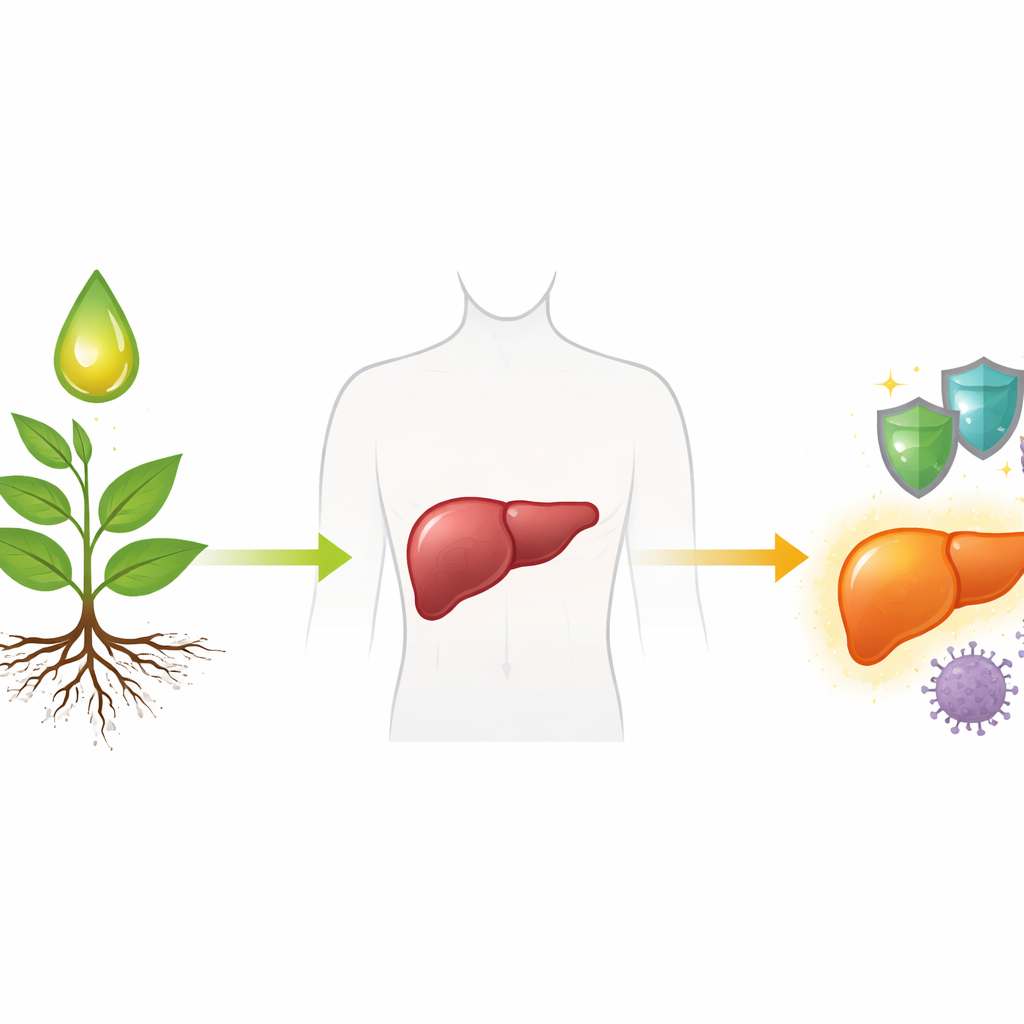
A Healing Plant Under the Microscope
Boerhavia diffusa, also called Punarnava, has been used for generations to treat jaundice, swelling, and other liver and immune problems. Its leaves and roots are packed with many different natural chemicals, including a group known as flavonoids, which are often linked to anti-inflammatory and antioxidant effects. Among these, the researchers focused on a compound called eupalitin-3-O-β-D-galactopyranoside (EGP), suspected to play a major role in the plant’s liver-protecting properties. Instead of studying a crude herbal mixture, they set out to isolate EGP, prove its identity with modern instruments, and then test whether this single component could explain some of the plant’s traditional benefits.
Pinpointing and Measuring the Key Ingredient
To extract EGP, the team collected Boerhavia diffusa leaves, prepared an alcohol-based extract, and separated it into several parts. They then used biological tests to see which fraction best protected liver cells and supported immune activity; the ethyl acetate fraction came out on top. From this portion they purified EGP and confirmed its structure using a series of advanced tools that measure how molecules absorb light, vibrate, and break apart. Next, they developed a high-performance liquid chromatography (HPLC) method to measure exactly how much EGP is present in plant samples. This method produced a single, sharp peak for EGP, showed excellent repeatability, and could detect amounts as low as a few billionths of a gram, giving scientists a reliable way to standardize future extracts and doses.
Computer Models and Animal Tests of Liver Protection
The researchers then asked how EGP might work inside the body. Using computer docking simulations, they modeled how EGP could fit into two protein systems that help control cellular stress and immune responses: one linked to the NRF2 pathway, often involved in antioxidant defenses, and another tied to NF-κB, a central switch in inflammation and immunity. EGP showed favorable binding in these models, suggesting it might influence both liver protection and immune balance. To test this idea in living organisms, they gave rats EGP by mouth for a week and then exposed them to D-galactosamine, a chemical that reliably injures the liver. Animals pretreated with EGP had much lower levels of blood enzymes and bilirubin that normally shoot up when liver cells are damaged, and their antioxidant defenses inside the liver rebounded strongly. Under the microscope, livers from EGP-treated rats kept much of their normal structure, with far less cell death and inflammation than untreated animals.
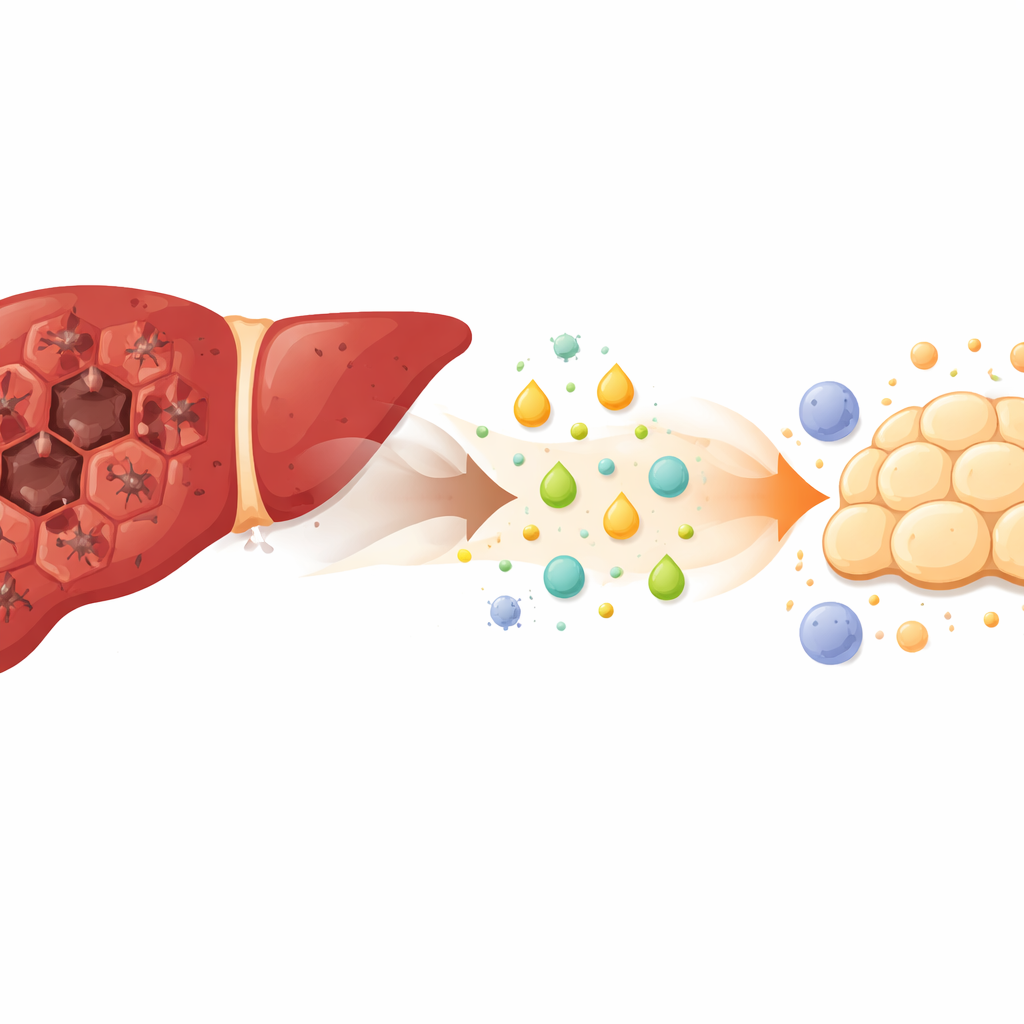
Cell Studies and Immune Effects
Beyond the animal model, the team explored how EGP behaved in isolated cells. In liver cells exposed to carbon tetrachloride, a toxin that triggers oxidative damage, EGP helped preserve cell survival in a dose-dependent fashion, performing comparably to silymarin, a well-known liver-supporting compound from milk thistle. In immune cells called RAW 264.7 macrophages, EGP boosted the production of nitric oxide when the cells were challenged with a bacterial component. This response can be a sign of heightened defensive activity, hinting that EGP may act as an immunostimulant, though the authors note that too much activation could also be harmful and will need careful mapping in future work.
What This Could Mean for Future Remedies
Overall, the study shows that EGP is a clearly measurable component of Boerhavia diffusa that can protect the liver and influence immune activity across computer models, cell cultures, and animal experiments. For non-specialists, the main takeaway is that at least part of the plant’s traditional reputation now rests on a specific, well-characterized molecule rather than folklore alone. However, this is still early-stage science: the compound’s behavior in humans, its long-term safety, and the exact pathways it tweaks inside cells remain to be clarified. If future studies confirm these findings, EGP could help guide the design of more consistent herbal preparations or even new liver-supporting drugs inspired by this age-old medicinal plant.
Citation: Aldawsari, H.M., Ameena, K., Thasneem, C. et al. Validation, quantification, and molecular docking of isolated eupalitin 3-O-β-D-galactopyranoside in Boerhavia diffusa Linn for hepatoprotective and immunomodulatory activity. Sci Rep 16, 10578 (2026). https://doi.org/10.1038/s41598-026-43266-5
Keywords: liver protection, Boerhavia diffusa, natural compounds, flavonoids, immune modulation