Clear Sky Science · en
Phonological complexity, speech style, and individual differences influence ASR performance for Tarifit
Why this matters for everyday speech technology
Voice assistants and automatic captions are becoming part of everyday life, but they work far better for some languages and accents than others. This article explores what happens when a speech recognition system trained on a well-resourced language, Arabic, is used on Tarifit, an Amazigh language spoken in northern Morocco. By looking closely at which Tarifit words the system handles well—and where it fails—the researchers shed light on hidden biases in current technology and on how the sounds of a language shape what machines (and by extension, listeners) can easily understand.
A language at the edge of today’s speech technology
Tarifit is a striking test case because its sound patterns are quite different from those found in many major languages that dominate technology. While many languages prefer simple syllables like “CV” (a consonant followed by a vowel), Tarifit comfortably uses more complex beginnings: two consonants in a row that can either rise, stay flat, or even fall in “sonority” (roughly, how loud and resonant a sound is). It also allows words to start with a “geminate,” a long doubled consonant. These patterns are rare across the world’s languages and are mostly absent in Arabic, even though the two languages share many individual sounds. That makes Tarifit ideal for testing how well a system trained on a common language can cope with less familiar sound structures—and what this tells us about fairness and coverage in speech technology.
How the study tested clear and casual speech
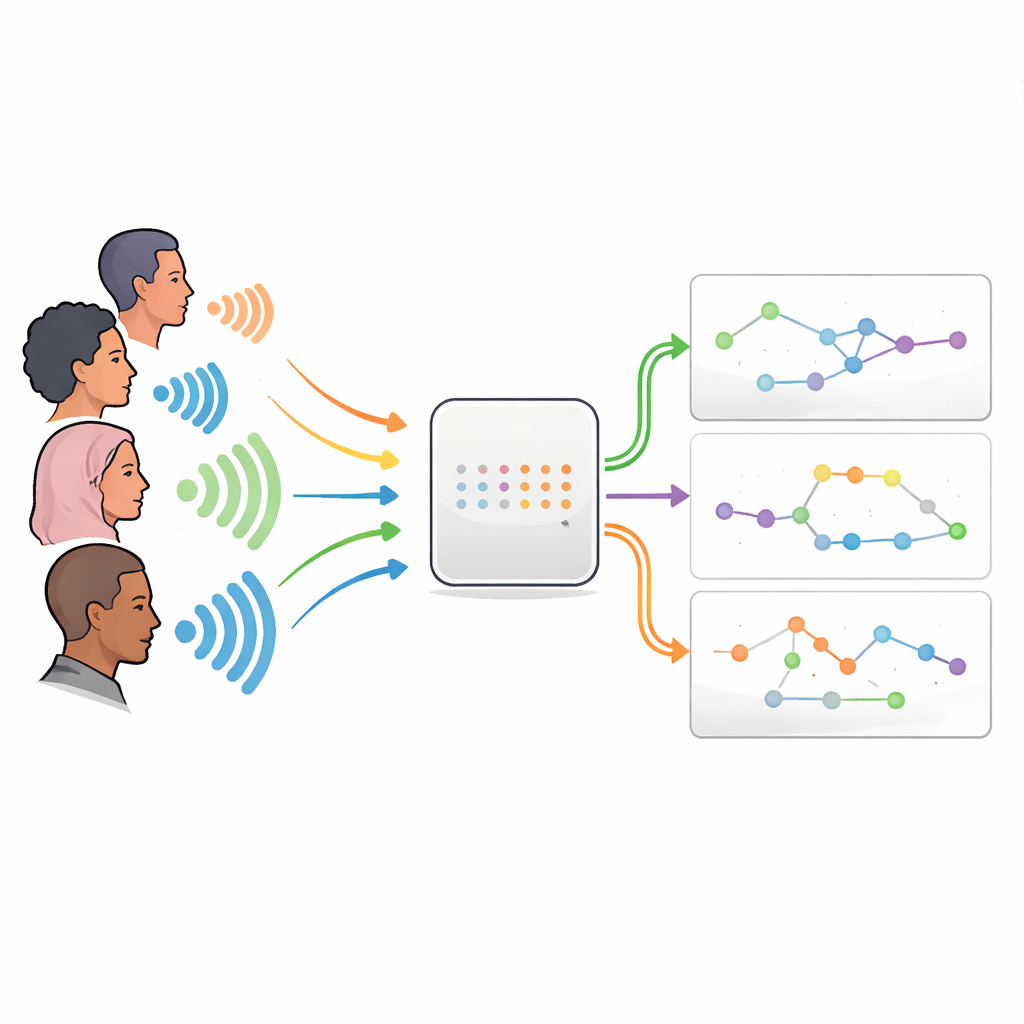
The researchers recorded 37 native Tarifit speakers from the city of Nador. Each person read 80 target words embedded in a simple carrier sentence, once in a careful, “clear” style—as if talking to someone who struggles to hear—and once in a faster, casual style, as if chatting with a close friend. The word list was designed to stress-test the system: some items began with rising, plateauing, or falling two-consonant clusters, while others contrasted single versus long (geminate) starting consonants. All recordings were run through a commercial Arabic speech recognizer, and the team compared the machine’s output to the correct forms, using both a strict accuracy score (right or wrong) and a “distance” measure that counts how many character changes it would take to fix an error.
What the machine got right—and where it stumbled
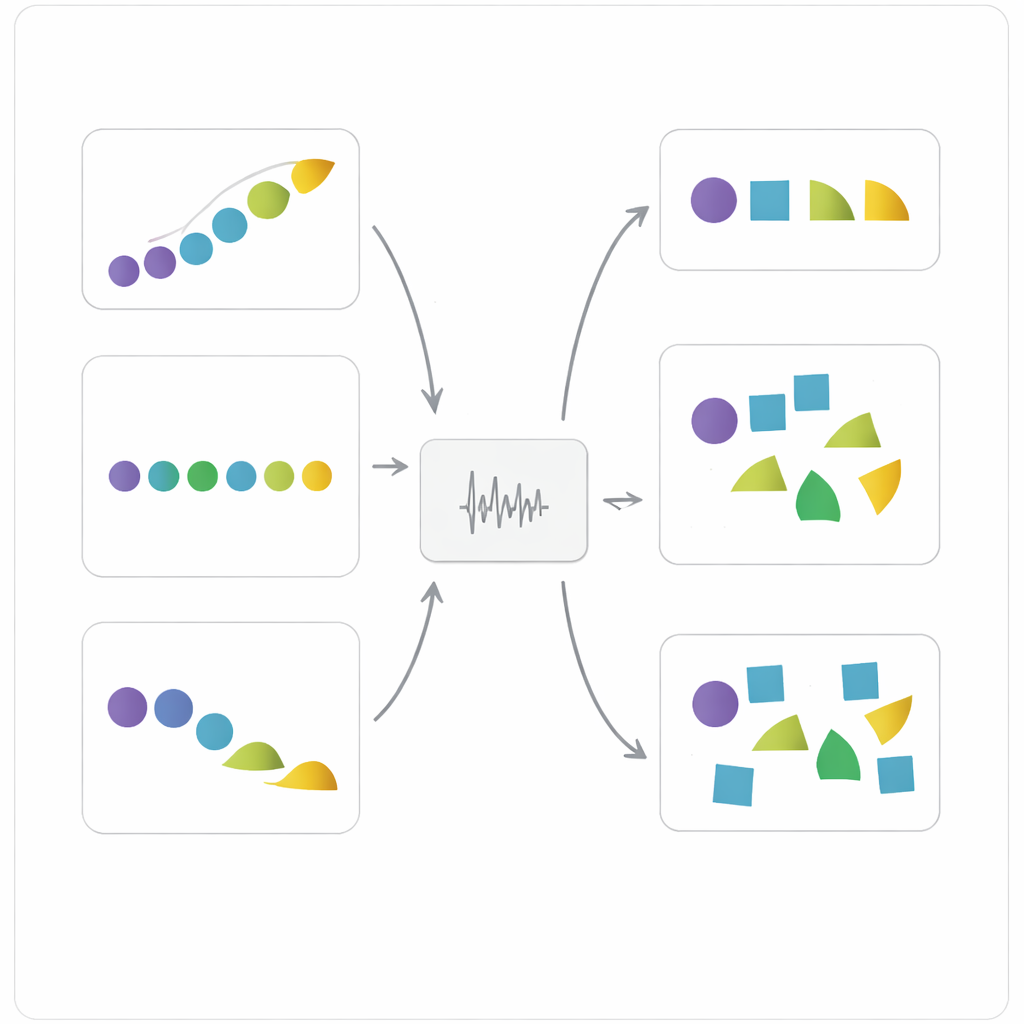
Across the board, Tarifit was hard for the Arabic system, but speaking style and sound structure made a clear difference. When speakers used clear speech, the recognizer did noticeably better: it produced more exact matches and fewer complete “wrong word” guesses, and even its mistakes tended to be smaller tweaks rather than total misfires. Words starting with rising clusters—where the sounds move from less to more sonorous—were recognized more accurately and with fewer edits than words with flat or falling patterns. In contrast, words beginning with falling clusters and those starting with long doubled consonants consistently generated more errors, even when spoken carefully. These results suggest that certain rare sound shapes are inherently harder for a system trained on a more typical pattern of syllables.
Differences between speakers without social bias
Another key question was whether some speakers were treated more “fairly” by the system than others. The study found large differences between individual speakers: some people’s words were recognized much more accurately than others’. However, these differences were not explained by age or gender. Younger and older speakers, men and women, all showed broadly similar patterns once the sound structure and speaking style of the words were taken into account. Instead, the most important drivers of performance were the types of clusters, the presence of geminates, and whether speech was clear or casual. This suggests that, in this setting, the trouble lies less in who is speaking and more in how the language’s sound patterns line up—or clash—with what the system has been trained to expect.
What this means for fairer and smarter voice tools
For a general reader, the takeaway is twofold. First, speaking clearly really does help machines understand, especially for languages that technology has largely ignored; encouraging clear speech can be a low-cost way to improve everyday interactions with voice systems. Second, not all sounds cause equal trouble: rare patterns like falling clusters and initial doubled consonants remain hard for current systems, even when pronounced slowly and carefully. This means that simply reusing models built for big, well-studied languages will not be enough for equitable access. Instead, future systems will need to build in knowledge about a wider range of sound structures and adapt to the ways real speakers produce them. In doing so, they can both treat speakers of underrepresented languages more fairly and offer new insights into how human hearing itself copes with complex patterns in speech.
Citation: Afkir, M., Zellou, G. Phonological complexity, speech style, and individual differences influence ASR performance for Tarifit. Sci Rep 16, 13879 (2026). https://doi.org/10.1038/s41598-026-43245-w
Keywords: automatic speech recognition, Tarifit language, clear speech, phonological complexity, low-resource languages