Clear Sky Science · en
The efficacy of disease-modifying therapies in patients with clinically isolated syndrome: a systematic review and network meta-analysis
Why early warning signs of MS matter
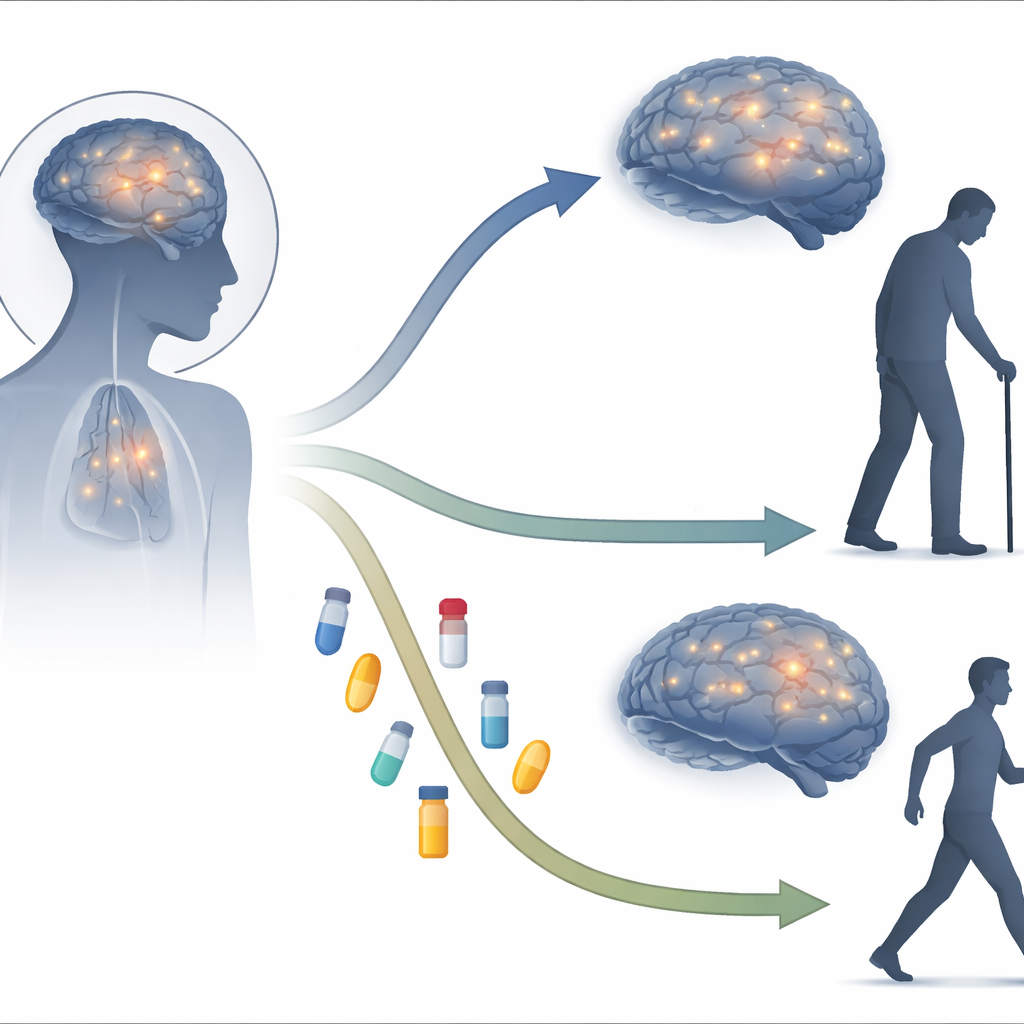
Imagine experiencing sudden vision loss, numbness, or weakness that eventually improves, but doctors tell you it might be the first hint of multiple sclerosis (MS). This early phase is called clinically isolated syndrome (CIS). Not everyone with CIS will go on to develop full-blown MS, but many do. This study asks a question with real-life consequences: if we start MS-style medications right after CIS, can we meaningfully cut the chances of developing definite MS and protect long-term function?
Looking for answers in past clinical trials
To tackle this, the researchers systematically combed through medical databases up to March 2024 in search of rigorous clinical trials in adults with CIS. They focused on studies in which people with CIS were randomly assigned to receive an MS drug or a placebo, and then followed over time. In total, they found nine suitable studies, covering 3,339 patients with an average age in their early 30s and a follow-up of about three years. The team concentrated on “disease‑modifying therapies” (DMTs)—immune‑targeting drugs already used in MS care—including interferon beta‑1a, interferon beta‑1b, glatiramer acetate, teriflunomide, and cladribine.
Comparing treatments without direct head‑to‑head trials
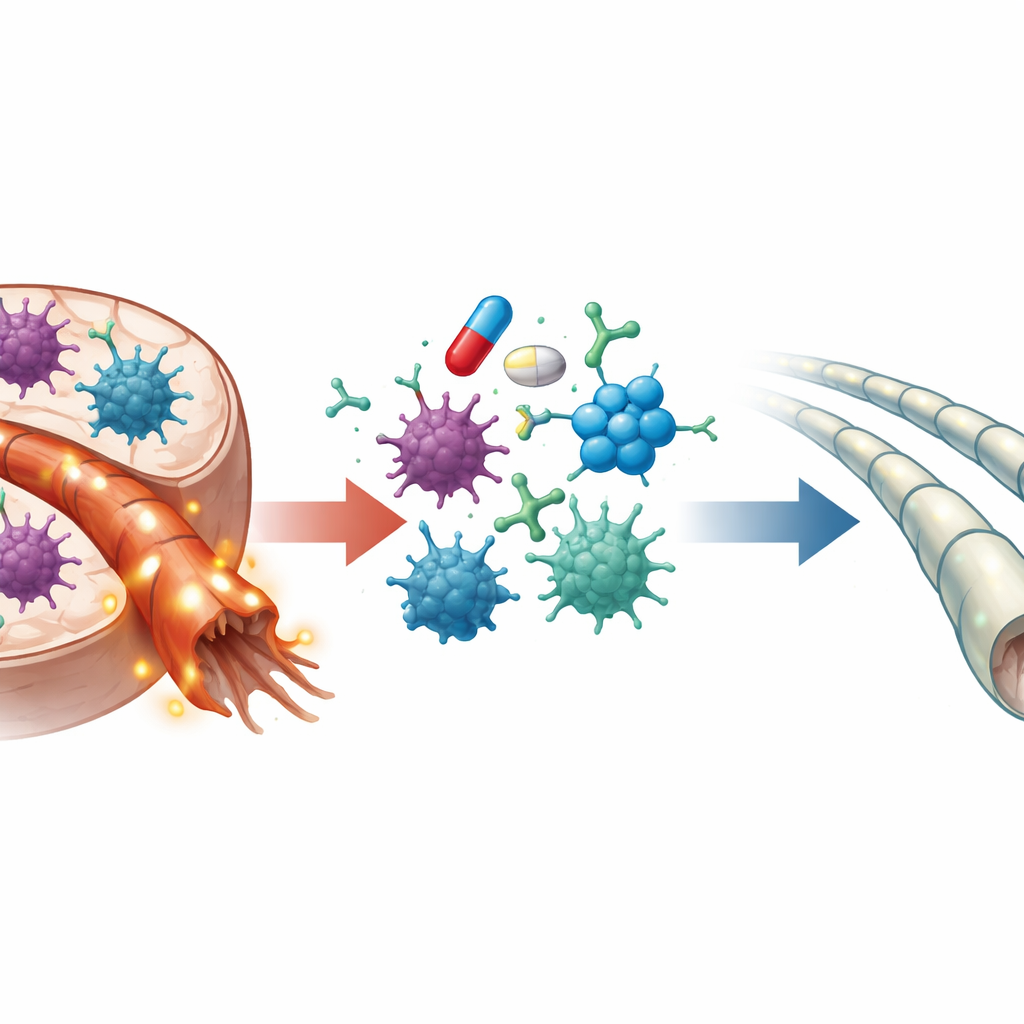
Because most trials tested only one drug against placebo rather than comparing drugs directly with each other, the authors used a technique called a network meta‑analysis. This allowed them to weave together direct and indirect evidence across trials and rank how well each drug performed on several key outcomes. The main yardstick was whether people with CIS went on to develop clinically definite multiple sclerosis (CDMS), an earlier gold‑standard diagnosis based on repeated attacks and neurological findings. They also examined changes in disability scores and MRI markers of brain inflammation, such as gadolinium‑enhancing and T2‑weighted lesions, which flag active and accumulated damage in the nervous system.
Which medicines best delay definite MS?
Across seven trials and 2,690 patients, all five DMTs lowered the risk of converting from CIS to definite MS compared with placebo. Cladribine emerged as the most promising, associated with roughly a two‑thirds reduction in risk. Glatiramer acetate also performed strongly, followed by interferon beta‑1b, teriflunomide, and interferon beta‑1a. While these rankings are based on statistical probabilities rather than perfect head‑to‑head comparisons, they suggest that starting one of these therapies soon after the first neurological episode can meaningfully delay the transition to more established MS, a key goal for both patients and clinicians.
What brain scans and disability scores reveal
Beyond the headline question of who develops definite MS, the team asked whether early treatment slows disability or quiets visible inflammation in the brain and spinal cord. Here the evidence was thinner. Only three studies, covering fewer than 800 patients, examined disability progression in detail, and none of the drugs showed a clear, statistically firm advantage over placebo, although interferon beta‑1a and teriflunomide were more likely than placebo to look beneficial. For MRI outcomes, interferon beta‑1a showed the strongest effect in reducing new T2‑weighted lesions, a sign of fewer new or growing damage spots, while cladribine and interferon beta‑1b also appeared favorable. However, the low number of MRI events in some trials—especially with cladribine, where new lesions were rare—made it difficult to measure the true size of the effect.
What this means for people at risk of MS
For someone who has just experienced a first demyelinating attack and is worried about the future, this study offers cautious reassurance that early treatment can matter. The analysis indicates that several existing MS drugs, especially cladribine and glatiramer acetate, substantially reduce the likelihood that CIS will progress to definite MS over the next few years. At the same time, the evidence is less clear about how much these drugs slow disability or long‑term changes on brain scans, and the results come from studies that differ in inclusion criteria, dosing, and patient populations. Even so, the overall message is straightforward: starting effective immune‑modulating therapy soon after CIS may buy valuable time, help preserve nerve function, and delay the point at which MS becomes firmly established.
Citation: Chumpangern, Y., Seawsirikul, Y., Keatbundit, P. et al. The efficacy of disease-modifying therapies in patients with clinically isolated syndrome: a systematic review and network meta-analysis. Sci Rep 16, 13087 (2026). https://doi.org/10.1038/s41598-026-43240-1
Keywords: clinically isolated syndrome, multiple sclerosis, disease-modifying therapy, cladribine, glatiramer acetate