Clear Sky Science · en
Statistical optimization for removal of basic dyes from aqueous solutions using chitosan-assembled zinc oxide nanocomposite
Why cleaner colored water matters
Bright synthetic dyes make our clothes vivid and our printed materials sharp, but once they wash down factory drains they can linger in rivers and lakes for years. Two such dyes, known as Basic Blue 41 and Basic Red 46, are especially stubborn and can harm aquatic life and potentially human health. This study explores a low-cost, reusable material that can strip these dyes out of water quickly and efficiently, offering a practical tool for cleaning up colored wastewater before it reaches the environment. 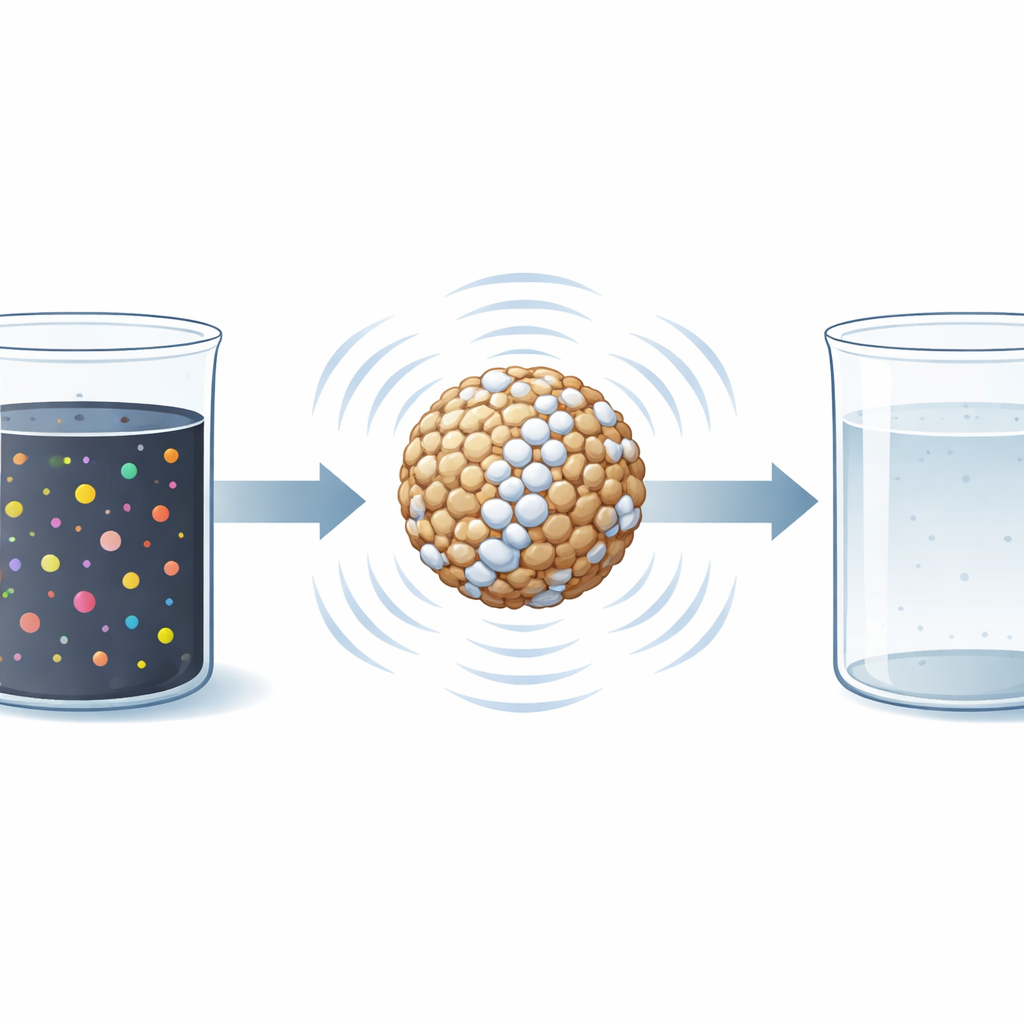
A new sponge made from shells and mineral powder
The researchers built their dye-catching material by combining chitosan—a substance derived from the shells of shrimp and other crustaceans—with tiny particles of zinc oxide. Chitosan brings plenty of chemical “hooks” that can grab charged pollutants, while zinc oxide adds a large reactive surface and good stability. Together they form a porous nanocomposite, meaning a sponge-like solid built from particles on the billionth-of-a-meter scale. Microscopic and spectroscopic tests showed that this composite has a rough, hole-filled surface and stable crystal structure, making it well-suited for trapping relatively bulky dye molecules as water flows around it.
Using sound waves to speed up cleanup
Simply mixing this composite with dyed water is not the whole story. The team used ultrasound—high-frequency sound waves produced in a small bath—to shake the suspension during treatment. These sound waves create tiny bubbles that rapidly form and collapse, stirring the liquid and helping dye molecules reach the composite’s surface more quickly. As a result, the dyes attach faster and more completely than in a quiet mixture. The process works best near neutral pH, similar to many natural waters, where the surface charge of the composite and the positive charge of the dyes favor strong attraction.
Finding the sweet spot with statistics
Because many factors influence how well dyes are removed—such as how much composite is used, how acidic or basic the water is, how concentrated the dyes are, and how long the ultrasound runs—the researchers did not test these one by one. Instead, they used a statistical design that varies all four at once in a carefully planned set of experiments. They then fit the results to mathematical surfaces that predict dye removal under any combination within the tested ranges. This approach revealed the best compromise: a modest amount of composite, neutral pH, moderate initial dye concentration, and just over half an hour of ultrasonic treatment. Under these conditions, the process removed about 96% of Basic Blue 41 and 92% of Basic Red 46 from water, in close agreement with the model’s predictions. 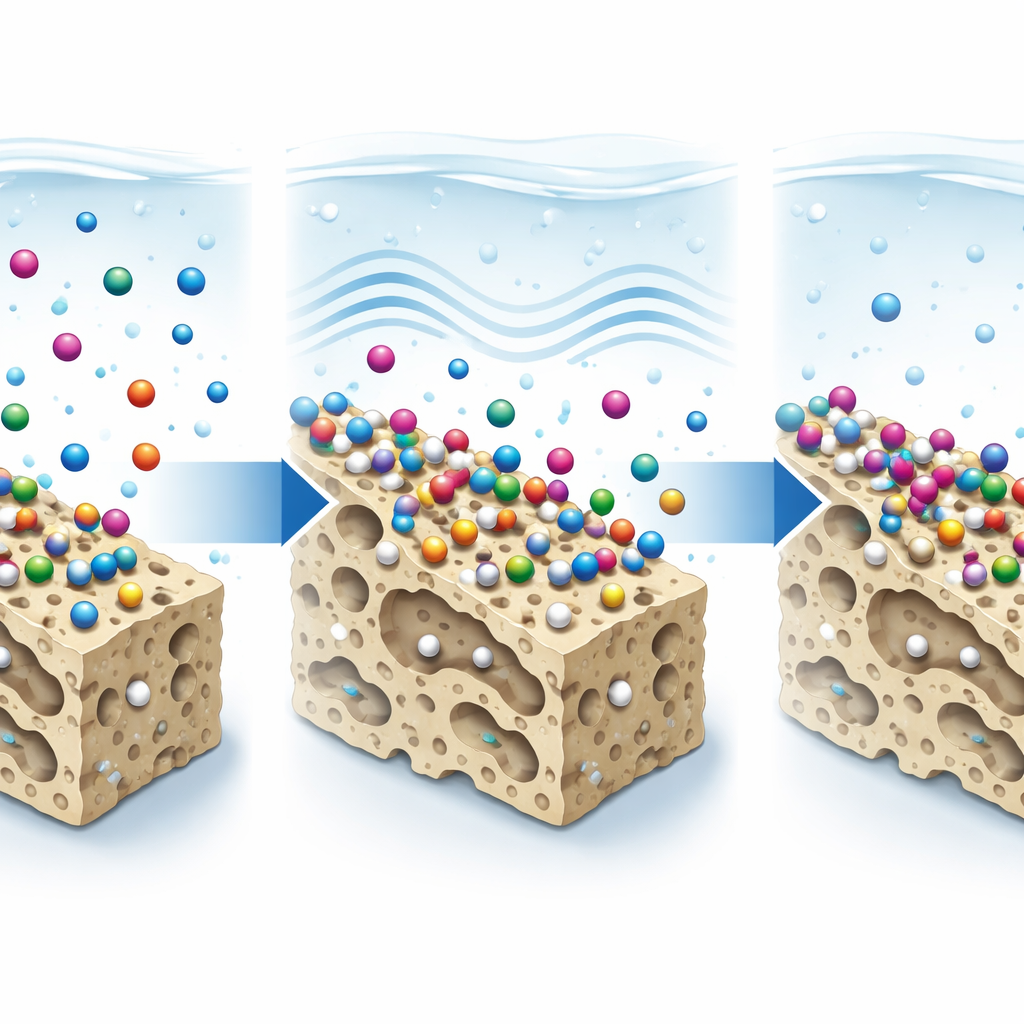
Reusing the dye catcher and testing real waters
A practical cleanup material must work more than once. To regenerate their composite, the authors washed it with different simple liquids and found that a mild acid rinse knocked most of the attached dyes back into solution, restoring much of its capacity. After four cycles of use and regeneration, the material still removed more than 60% as much dye as in the first run, showing reasonable durability. The team also tried the method on real tap, river, and wastewater samples that had been spiked with the dyes. Even in these more complex waters, which contain competing ions and natural organic matter, the composite removed about 82–96% of the dyes, only slightly less than in pure laboratory water.
What this means for everyday water safety
For non-specialists, the key message is that a simple, bio-based material helped by sound waves can scrub strong industrial colors from water under gentle, near-neutral conditions. The chitosan–zinc oxide composite acts like a reusable microscopic sponge, attracting and holding dye molecules until they are washed off in a controlled way. By carefully tuning how much material is used, how long the sound waves run, and the starting dye levels, the researchers achieved high removal with relatively little effort and cost. While further testing in real industrial streams and larger treatment units is still needed, this work points toward practical, scalable tools that could make brightly colored effluents far less damaging to rivers, lakes, and the people who rely on them.
Citation: Li, X., Fang, Y. & Tang, X. Statistical optimization for removal of basic dyes from aqueous solutions using chitosan-assembled zinc oxide nanocomposite. Sci Rep 16, 13306 (2026). https://doi.org/10.1038/s41598-026-43229-w
Keywords: wastewater treatment, dye removal, chitosan zinc oxide, ultrasound-assisted adsorption, nanocomposite adsorbent