Clear Sky Science · en
Association study of optineurin gene polymorphisms T34T and M98K with normal tension glaucoma in a Turkish cohort
Why this matters for everyday vision
Glaucoma is one of the leading causes of blindness worldwide, and a puzzling form called normal tension glaucoma can quietly damage the optic nerve even when eye pressure is normal. Many people with this condition never realize they are at risk until vision is permanently lost. This study asked a simple but important question: are two specific genetic changes in a nerve-protecting protein linked to this form of glaucoma in people living in Türkiye?
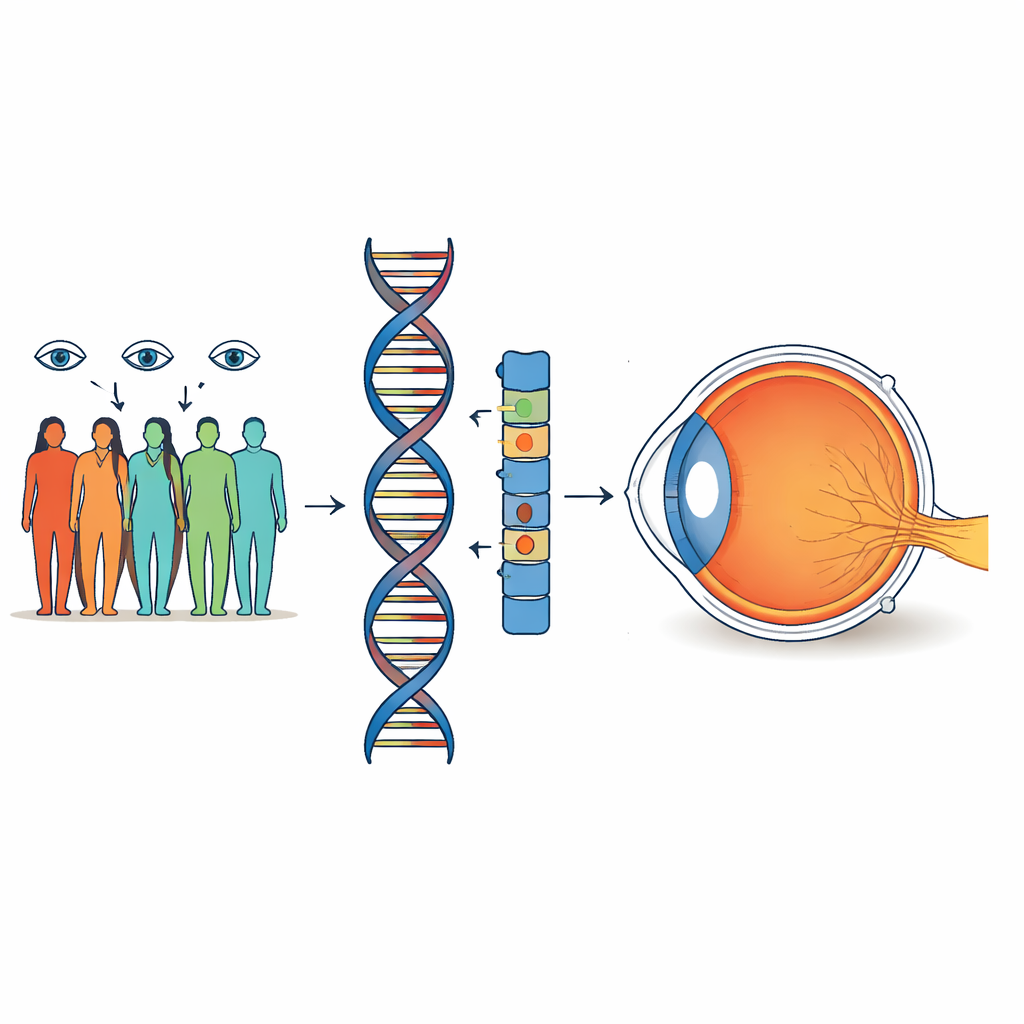
A silent eye disease with a family link
Normal tension glaucoma harms the optic nerve, the cable that carries images from the eye to the brain, without the alarm bell of high eye pressure. Large population studies suggest that about half of all glaucoma cases may fall into this “normal pressure” range. Because glaucoma often runs in families, scientists suspect that hidden differences in our DNA help determine who is vulnerable. One gene in the spotlight is optineurin, which is active in several eye tissues and is thought to help protect nerve cells from damage.
A closer look at a nerve-protecting gene
Earlier work in different countries suggested that two tiny changes in the optineurin gene, called T34T and M98K, might raise the risk of normal tension glaucoma. These changes are examples of single-letter swaps in DNA, known as polymorphisms, which can subtly alter how a protein behaves or is controlled. Some studies, especially in East Asian and Indian populations, reported that one or both of these variants appeared more often in people with the disease than in healthy volunteers. Other studies, however, found no difference, leaving the field with mixed and sometimes conflicting results.
What the Turkish study actually tested
To test whether these two gene variants matter in a Turkish population, the researchers compared 72 adults with normal tension glaucoma to 100 adults without glaucoma, all examined at a major eye hospital in Ankara. Everyone received a detailed eye check-up to confirm who truly had disease and who did not, and a blood sample was taken from each participant. Using highly sensitive laboratory methods, the team read the optineurin gene at the positions of T34T and M98K and counted how often the normal, mixed, and altered versions appeared in each group.
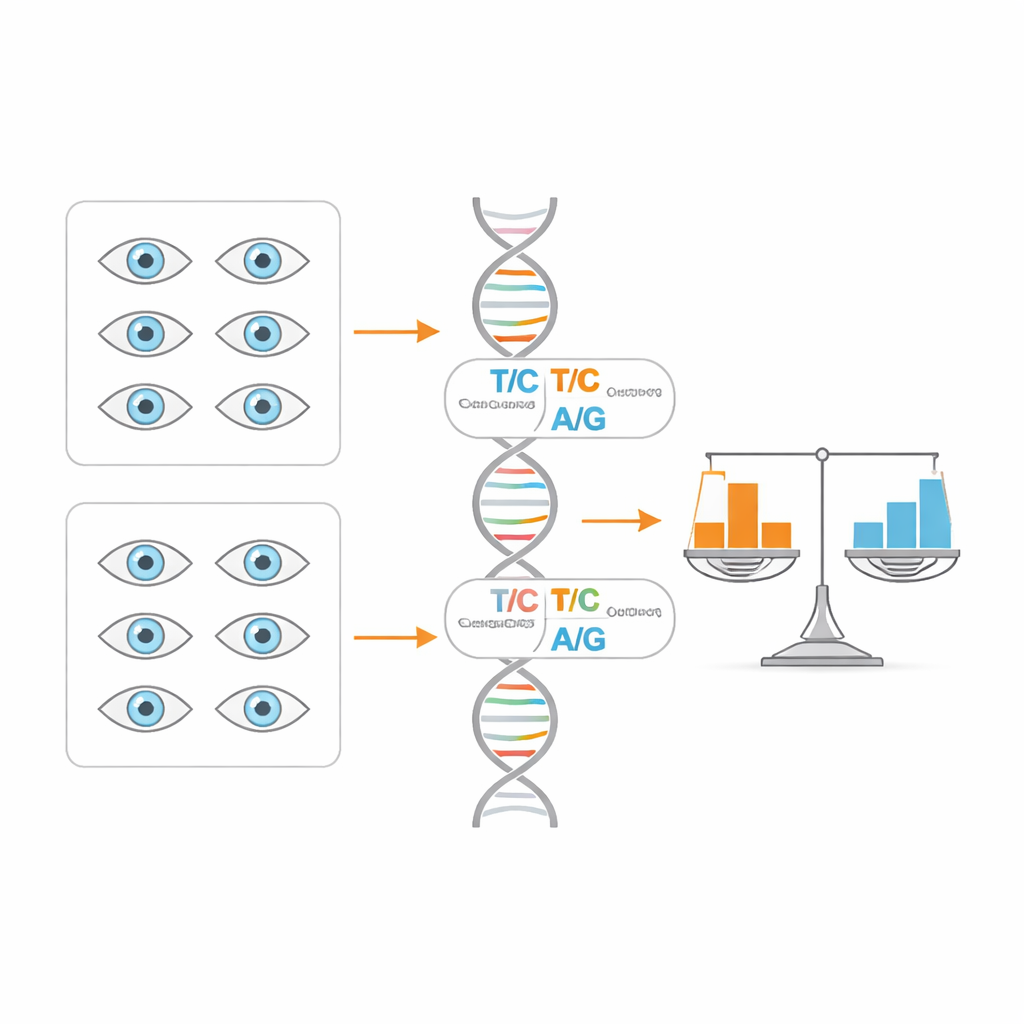
What the numbers revealed
The team found that both gene variants were present at low to moderate levels in the population, but the pattern was strikingly similar in people with and without normal tension glaucoma. For T34T, roughly one in ten participants in each group carried two copies of the altered version, and about half carried a mix of normal and altered copies. For M98K, the fully altered version was extremely rare: it appeared in only one person with glaucoma and one person in the comparison group. Standard statistical tests showed that none of these differences were meaningful, suggesting that, in this group, carrying T34T or M98K does not noticeably change a person’s odds of having the disease.
How this fits into the global picture
When the authors compared their results with similar studies from Canada, Germany, Australia, the United States, and several Asian countries, a complex picture emerged. Some studies in Japan, China, and India had pointed to a stronger link between one of these variants and normal tension glaucoma, while others, including the Turkish study, did not. This patchwork of findings hints that inherited risk for this eye disease may depend on many genes acting together and may differ from one ethnic background to another. It also suggests that focusing on just two variants may miss other important changes in the optineurin gene or elsewhere in the genome.
What this means for patients and families
For people in Türkiye worried about glaucoma, these results offer a cautious reassurance: the two best-known optineurin variants, T34T and M98K, do not appear to be major culprits for normal tension glaucoma in this population. That does not mean genes are unimportant—only that the story is more complicated than a single switch. The authors emphasize that larger studies and broader genetic scans are still needed to uncover the full set of inherited factors that make some optic nerves more fragile than others. Until then, regular eye examinations, especially for those with a family history of glaucoma, remain the most reliable way to catch this silent thief of sight before it steals vision.
Citation: Erdoğdu, Y.İ., Çavdarlı, C., Çavdarlı, B. et al. Association study of optineurin gene polymorphisms T34T and M98K with normal tension glaucoma in a Turkish cohort. Sci Rep 16, 12550 (2026). https://doi.org/10.1038/s41598-026-43217-0
Keywords: normal tension glaucoma, optineurin gene, genetic risk, optic nerve, eye disease