Clear Sky Science · en
CAPPR-Wallet: a context-aware and recoverable wallet architecture with privacy-preserving rules for trustless blockchain ecosystems
Why Smarter Crypto Wallets Matter
For anyone who has ever worried about losing a crypto seed phrase, clicking a suspicious link, or having their transactions tracked, this research tackles those fears head-on. The paper introduces CAPPR-Wallet, a new kind of digital wallet for cryptocurrencies and NFTs that tries to be both safer and easier to live with. It borrows ideas from online banking security and cutting-edge cryptography to create a wallet that can sense risky behavior in real time, adapt how it checks your identity, hide who you are trading with, and still let you recover your funds if you lose access—all without trusting a central company.
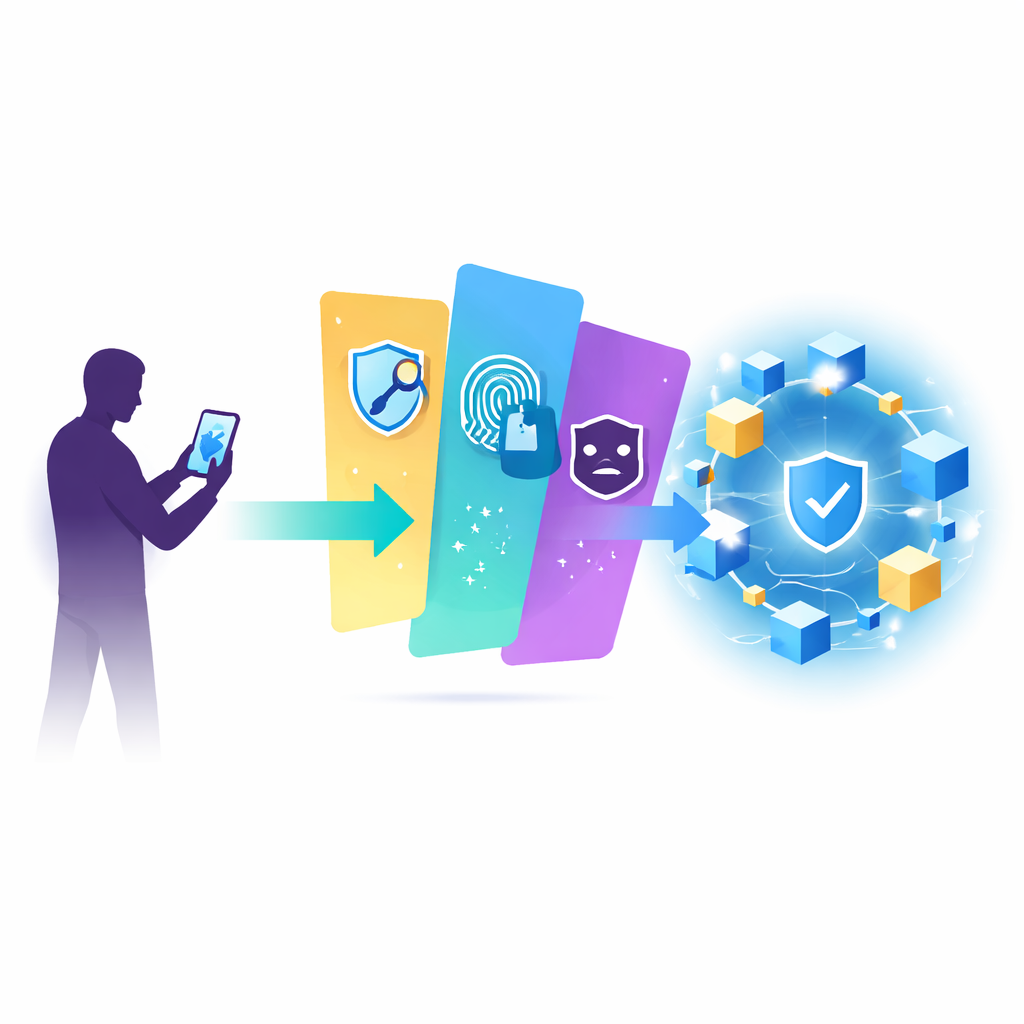
The Problem with Today’s Crypto Wallets
Most popular wallets today act like simple key holders: if you click “sign,” they sign—no questions asked. They treat a tiny in-game purchase on your home computer the same as a million-dollar transfer from a new phone in another country. If a thief tricks you into signing, the wallet will usually go along. On top of that, almost all of them rely on a single secret phrase that cannot be recovered if it is lost, and they leave transaction trails that make it easy for others to map who is paying whom. Users often face a harsh choice: accept this fragility or hand control to centralized exchanges and cloud services that can themselves be hacked or censored.
A Wallet That Understands Its Surroundings
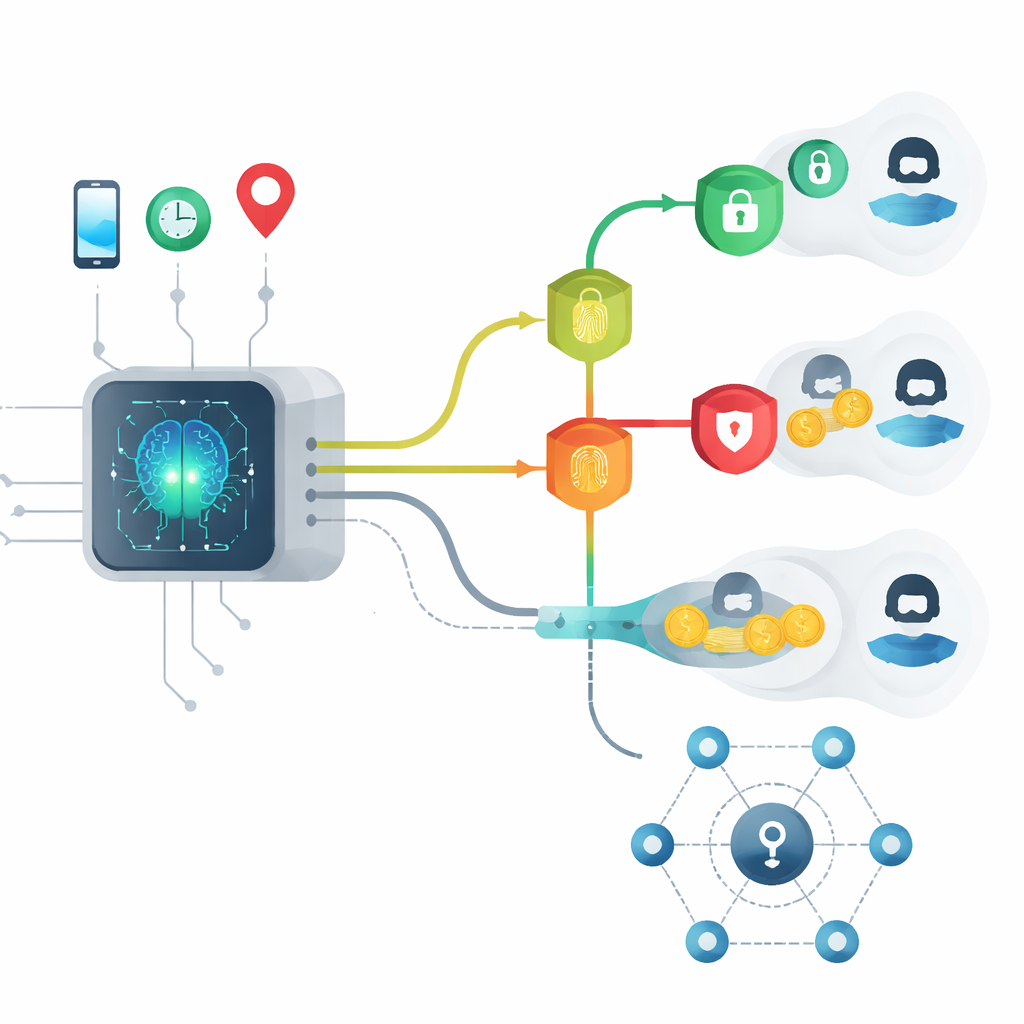
CAPPR-Wallet tries to make the wallet “situationally aware.” Before a transaction is sent, the software quietly looks at clues like the device being used, the rough location, the time of day, and recent activity. A small machine-learning model running locally on the user’s phone or browser combines these signals into a risk score—without ever sending the raw data off the device. If everything looks normal, the wallet stays out of the way. If something seems off—such as an impossible jump between countries or a sudden burst of high-value transfers—it flags the action as suspicious. This turns the wallet from a passive signer into an active gatekeeper that can catch many attacks before money moves.
Security That Adapts Instead of Annoys
Rather than forcing every action through the same rigid checks, CAPPR-Wallet changes how strongly it challenges the user based on that risk score and the amount involved. Low-risk everyday actions may go through with no extra steps. Slightly unusual ones might require a one-time code from an authenticator app. Truly worrying cases demand both a code and a biometric check such as a fingerprint or face scan—or are blocked altogether. Behind the scenes, a programmable policy engine turns human-readable rules like “tighten checks for new devices or large transfers” into automatic decisions that are enforced by smart contracts. Tests using realistic synthetic data show that the risk model can correctly spot anomalous sessions with about 93.6% accuracy while keeping false alarms relatively low.
Recovering Keys and Hiding Transaction Trails
To fix the seed-phrase nightmare, the wallet splits a user’s secret key into pieces and distributes them across a group of independent guardians organized as a decentralized voting body. A set threshold of these guardians must cooperate to help restore access, so no single party can seize control. As a faster alternative, users can prove who they are with a compact mathematical proof that reveals nothing about their identity but convinces the system that the right person is asking to recover the wallet. In experiments, this cut average recovery time from more than a day in earlier systems to just seconds, even when simulating realistic network delays. For privacy, CAPPR-Wallet lets users move tokens through a special “shielded” path that bundles deposits into a shared pool and uses zero-knowledge proofs and one-time receiving addresses, making it very hard for outside observers to link senders and receivers on the public ledger.
What This Means for Everyday Users
For non-experts, the main takeaway is that you should not have to choose between strong safety, privacy, and personal control over your digital assets. CAPPR-Wallet shows that a wallet can watch for unusual behavior in real time, step up security only when needed, hide who you are trading with, and still let you get back in if you lose access—all without trusting a bank-style middleman. While the current results come from controlled tests and simulated data, the design points toward a future where using self-custody wallets feels less like handling explosives and more like using a modern banking app, but with the added benefits of decentralization.
Citation: Liu, M., Li, H., Muqtadir, A. et al. CAPPR-Wallet: a context-aware and recoverable wallet architecture with privacy-preserving rules for trustless blockchain ecosystems. Sci Rep 16, 13310 (2026). https://doi.org/10.1038/s41598-026-43214-3
Keywords: blockchain wallet, self-custody, zero-knowledge privacy, key recovery, risk-based authentication