Clear Sky Science · en
Amplifying performance, combustion, and emission characteristics of a CRDI engine using diesel-WCO methyl ester-dyglyme ternary fuel blends with carbon nanotubes
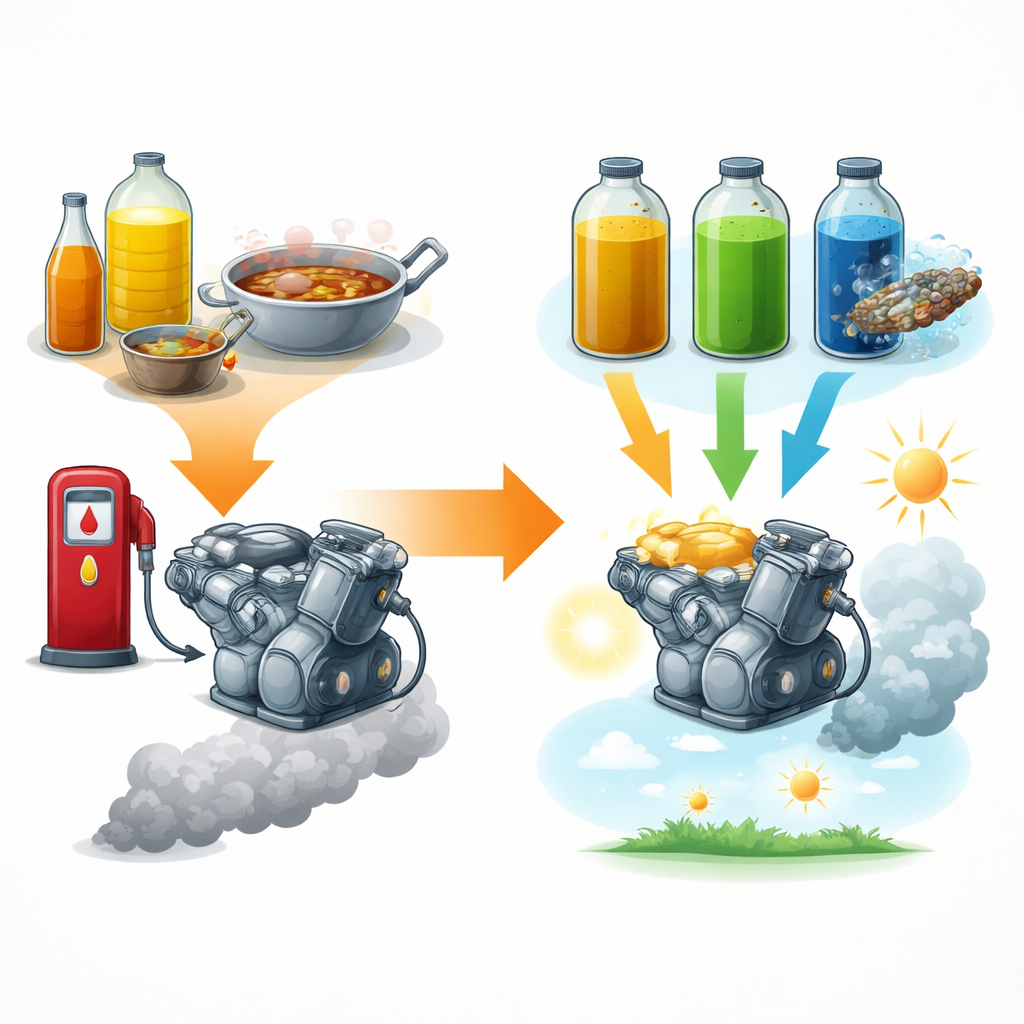
Turning Kitchen Waste into Cleaner Engine Power
As the world searches for ways to cut pollution without scrapping millions of existing diesel engines, one promising idea is to rethink what goes into the fuel tank. This study explores an inventive recipe that turns dirty waste cooking oil into a key ingredient for a new, cleaner diesel fuel—then supercharges it with an oxygen-rich solvent and microscopic carbon nanotubes. The result is a fuel that not only keeps engines running strongly, but also cuts harmful exhaust gases, pointing to a practical route toward greener transport and power generation.
From Frying Pan to Fuel Tank
The researchers start with a familiar environmental headache: used cooking oil from restaurants. Instead of letting this degraded oil become waste, they convert it into biodiesel through a standard chemical process that turns the oil’s long, sticky molecules into shorter, more engine-friendly ones. This biodiesel is then blended with regular diesel to form a base fuel. On top of that, they add a carefully chosen oxygen-rich liquid called diglyme, which helps the fuel evaporate and burn more cleanly inside the engine. The final blend—diesel, waste cooking oil biodiesel, and diglyme—forms what the authors call a ternary fuel, designed to work in modern high-pressure diesel systems without modifying the engine.
Adding Tiny Tubes for a Big Boost
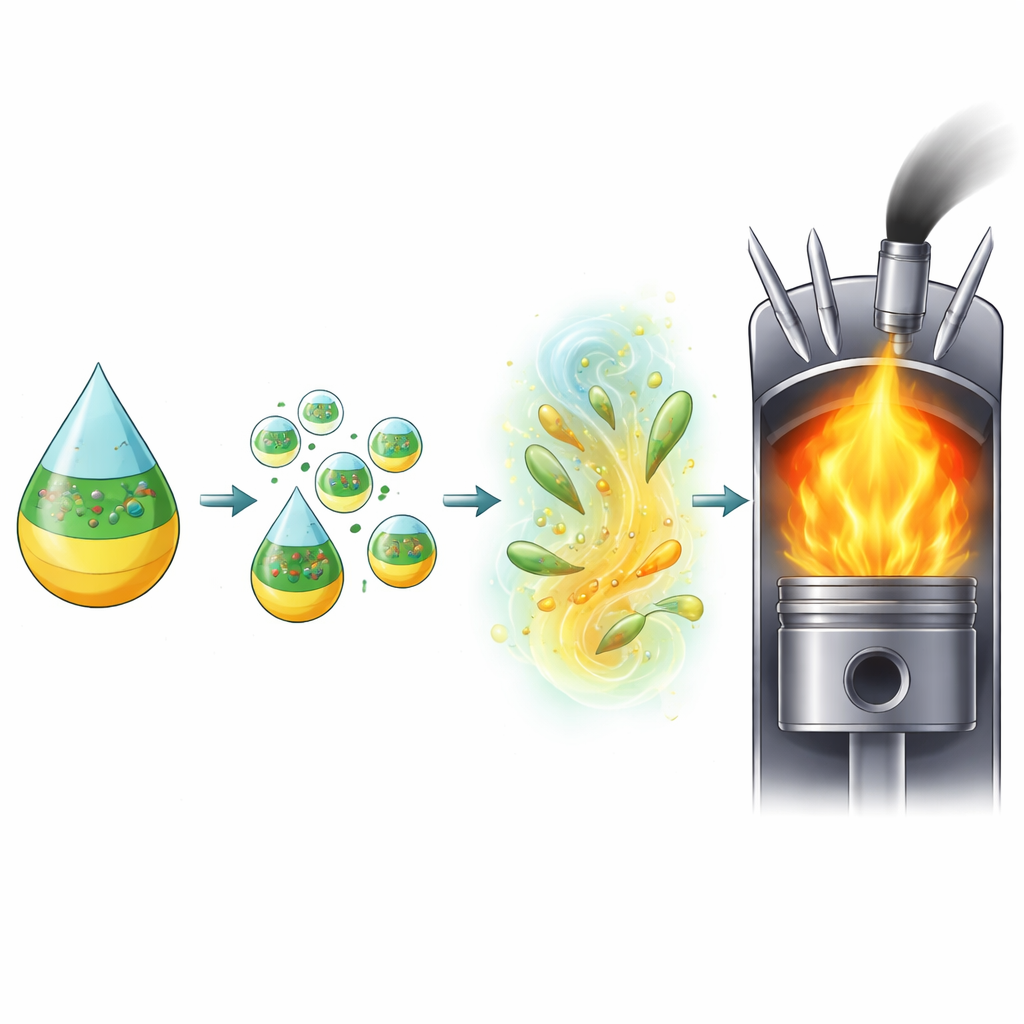
To push performance even further, the team introduces carbon nanotubes—hollow, tube-shaped particles thousands of times thinner than a human hair. After coating these nanotubes with a surfactant so they stay evenly dispersed, they mix them into the ternary fuel at three low concentrations. These particles have exceptional thermal and catalytic properties: they move heat quickly, provide large reactive surfaces, and help break up fuel droplets into finer sprays. In the test engine, this combination improves how the fuel and air mix, shortens the time between injection and ignition, and promotes more complete burning of each droplet.
How the Engine Responds
The team runs a twin‑cylinder common‑rail diesel engine at different loads using plain diesel, a simple biodiesel blend, the ternary fuel, and the nanotube‑enhanced versions. With the best-performing mixture, which contains a moderate dose of nanotubes, the engine’s useful power output per unit of fuel rises by about 15%, while the fuel needed for each kilowatt of power drops by roughly 16%. Inside the cylinders, peak pressure and heat‑release patterns show that combustion starts more promptly and proceeds more smoothly. Indicators such as the fraction of fuel burned and the total heat released confirm that the nanotube‑assisted ternary fuel burns more completely than either plain diesel or the basic biodiesel blend.
Cleaning Up the Exhaust
Better burning pays dividends at the tailpipe. Compared with standard diesel, the optimized fuel blend cuts carbon monoxide and unburned hydrocarbons—both signs of incomplete combustion—by around one fifth. Despite containing waste cooking oil, it also lowers nitrogen oxide emissions by roughly a quarter, thanks to cooler and more uniform flame temperatures shaped by the diglyme and the nanotubes’ heat-spreading role. Even carbon dioxide per unit of useful work shifts upward in a way that signals more of the carbon in the fuel is being fully burned rather than escaping as more toxic intermediates. Overall, the exhaust becomes cleaner without sacrificing, and in fact improving, engine efficiency.
What This Means for Everyday Engines
For non‑specialists, the message of this work is that we may not need radical new engines to make meaningful progress on emissions. By carefully tailoring what goes into current diesel tanks—recycling waste cooking oil, adding a smart oxygen‑rich fluid, and sprinkling in advanced nano‑scale additives—this study shows it is possible to get more power from the same engine while sending fewer harmful gases into the air. Among the options tested, the blend with a moderate level of carbon nanotubes stands out as a practical candidate that existing common‑rail diesel engines could use without redesign, offering a realistic step toward cleaner, more sustainable fuel use.
Citation: Jajimoggala, S., Narra, M., Shabana, S. et al. Amplifying performance, combustion, and emission characteristics of a CRDI engine using diesel-WCO methyl ester-dyglyme ternary fuel blends with carbon nanotubes. Sci Rep 16, 12555 (2026). https://doi.org/10.1038/s41598-026-43211-6
Keywords: waste cooking oil biodiesel, diesel engine emissions, carbon nanotube additives, oxygenated ternary fuels, sustainable transportation fuels