Clear Sky Science · en
The role of red blood cell distribution width in prognosis prediction among critically ill patients with obstructive sleep apnea: Insights from the MIMIC-IV database
Why this matters for people with sleep and heart problems
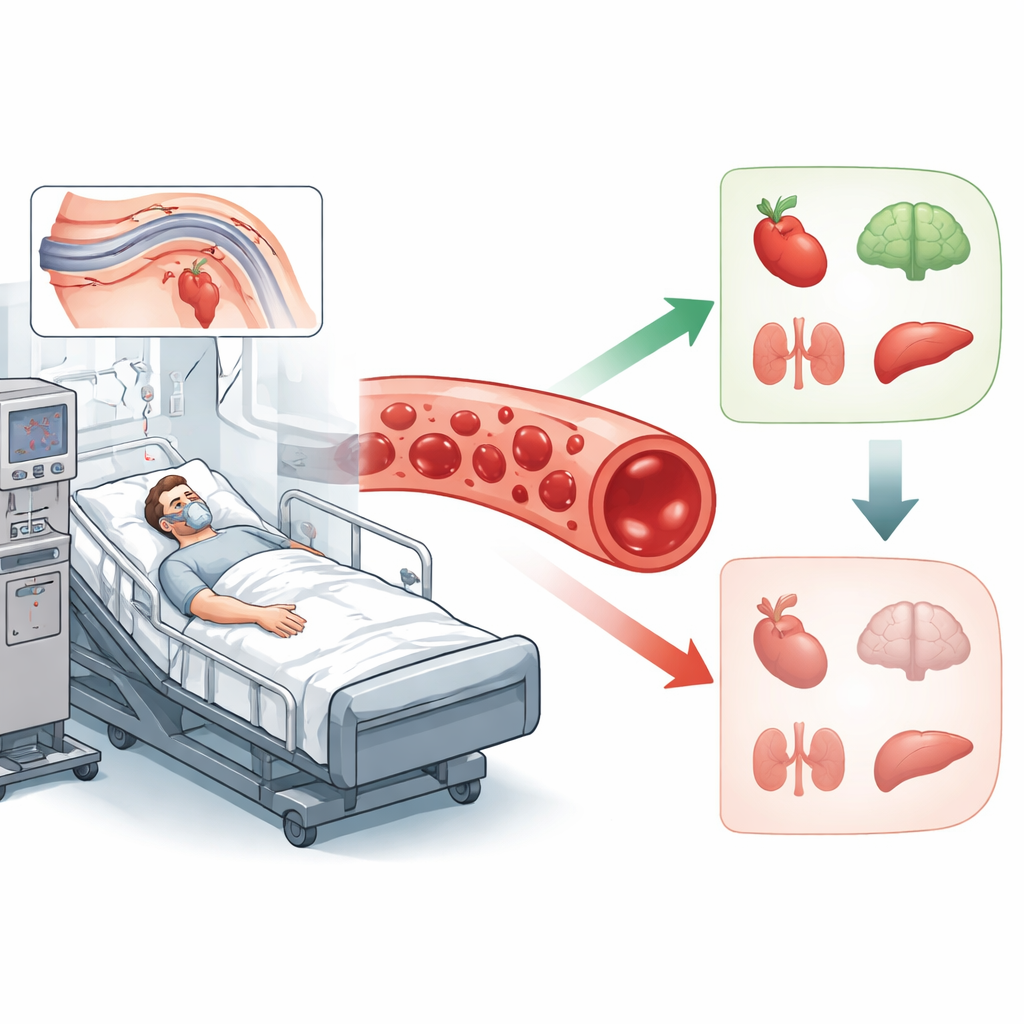
Many people live with obstructive sleep apnea, a condition where the airway repeatedly closes during sleep. When these patients become critically ill and land in an intensive care unit (ICU), doctors urgently need simple ways to tell who is at highest risk of dying. This study asks whether a routine part of a standard blood test—the variation in the size of red blood cells—can help flag which ICU patients with sleep apnea are more likely to have serious, even fatal, outcomes over the coming days and months.
A common sleep problem meets critical illness
Obstructive sleep apnea causes repeated pauses in breathing at night, leading to drops in blood oxygen, disrupted sleep, and stress on the heart and blood vessels. It is becoming more common as obesity rates rise, and many people with sleep apnea end up in the ICU because of heart disease, infections, or surgery. In this tense setting, clinicians rely on complex scoring systems to estimate the risk of death, but these tools require many measurements and calculations. A simple lab value that is already collected, yet often overlooked, could make risk assessment faster and easier.
A simple number hiding in a routine blood test
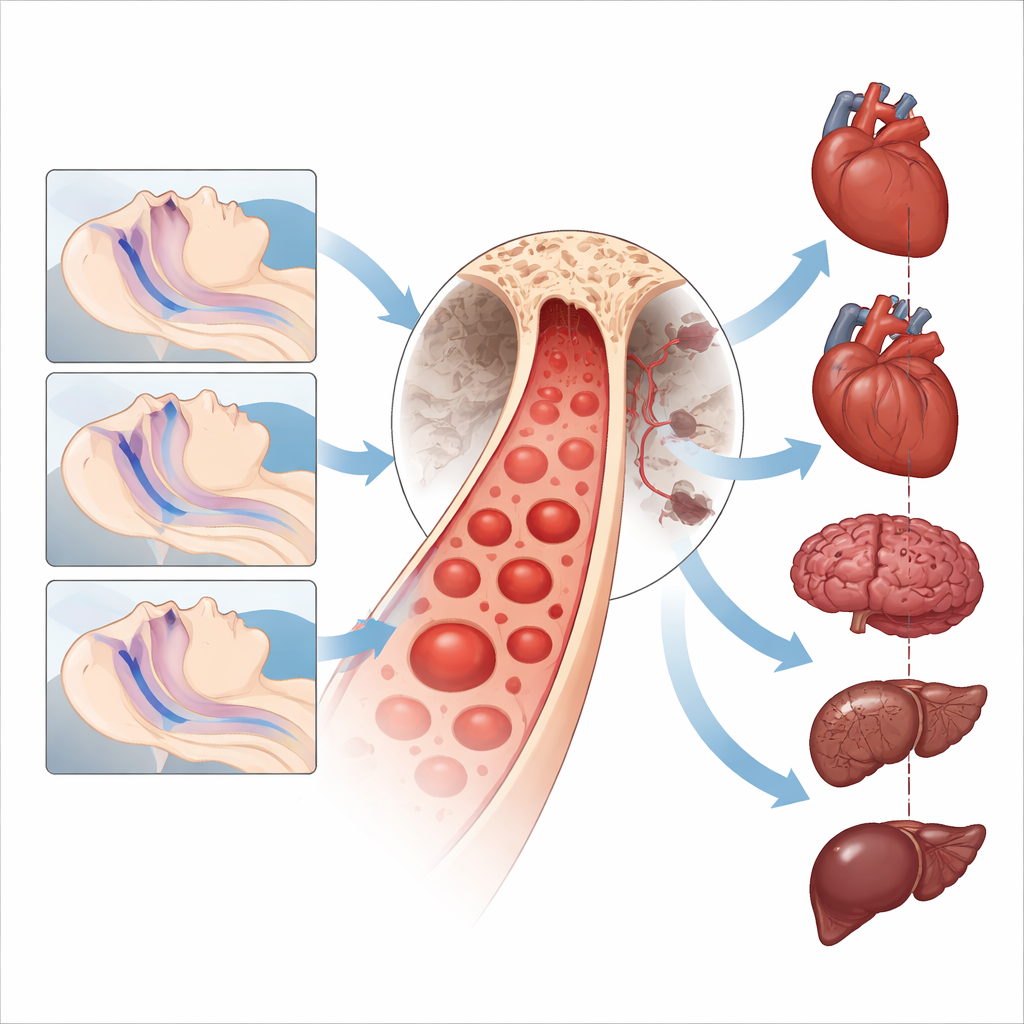
The researchers focused on red blood cell distribution width (RDW), which reflects how uneven in size a person’s red blood cells are. Normally, these cells are fairly uniform, but chronic inflammation, low oxygen levels, poor nutrition, or disturbed blood cell production can make them more varied. Higher RDW has been linked to worse outcomes in heart failure, infections, and other serious illnesses. The team wondered whether, in ICU patients with obstructive sleep apnea, RDW measured at admission would track with the chances of dying within 30 days and within one year.
What the large ICU database revealed
Using the large, publicly available MIMIC-IV database, the authors identified 1,950 adults with sleep apnea admitted to the ICU between 2008 and 2019. They divided patients into four groups based on their RDW at admission, from lowest to highest. Deaths within 30 days and one year rose sharply across these groups: patients in the highest RDW group had about seven times the unadjusted risk of dying within a year compared with those in the lowest group. Even after taking into account age, sex, weight, oxygen levels, other illnesses, and severity scores, higher RDW remained strongly linked to both short- and long-term death.
Looking deeper at patterns and patient subgroups
Statistical models showed that each step up in RDW came with a higher risk of dying, and for one-year outcomes the relationship curved upward at higher values, suggesting particularly poor outlook once RDW becomes markedly elevated. This pattern held true across most subgroups, including men and women and younger and older patients. The link seemed somewhat stronger in non-white patients and in those with severe obesity, who often experience more intense and frequent drops in nighttime oxygen. When the researchers compared RDW with established ICU risk scores, this single blood measure predicted death better than oxygen saturation and some widely used scoring systems, and nearly as well as more complex tools.
What this could mean for everyday care
The study supports the idea that RDW, an inexpensive and routinely reported lab value, captures the overall biological strain that obstructive sleep apnea and critical illness place on the body. For ICU teams, a high RDW at admission could act as an early warning sign that a patient with sleep apnea is at elevated risk and may benefit from closer monitoring or more aggressive treatment. While the work is based on one hospital’s database and relies on a single RDW snapshot, it suggests that something as simple as the spread in red blood cell size may help guide decisions and, ultimately, improve outcomes in this vulnerable group of patients.
Citation: Zhang, C., Xiao, J., Gao, X. et al. The role of red blood cell distribution width in prognosis prediction among critically ill patients with obstructive sleep apnea: Insights from the MIMIC-IV database. Sci Rep 16, 12126 (2026). https://doi.org/10.1038/s41598-026-43197-1
Keywords: obstructive sleep apnea, intensive care, red blood cells, mortality risk, prognostic marker