Clear Sky Science · en
Association of ALDH2 rs671 Polymorphism with chronic kidney disease incidence in a population-based Korean cohort
Why this study matters for everyday health
Many people wonder whether their genes and drinking habits quietly damage their kidneys over time. This study looked closely at a common gene variant that affects how the body clears alcohol-related toxins, and asked a simple but important question: does this variant, together with how much people drink, actually change the chances of developing chronic kidney disease in real life?
A common gene difference and how we handle alcohol
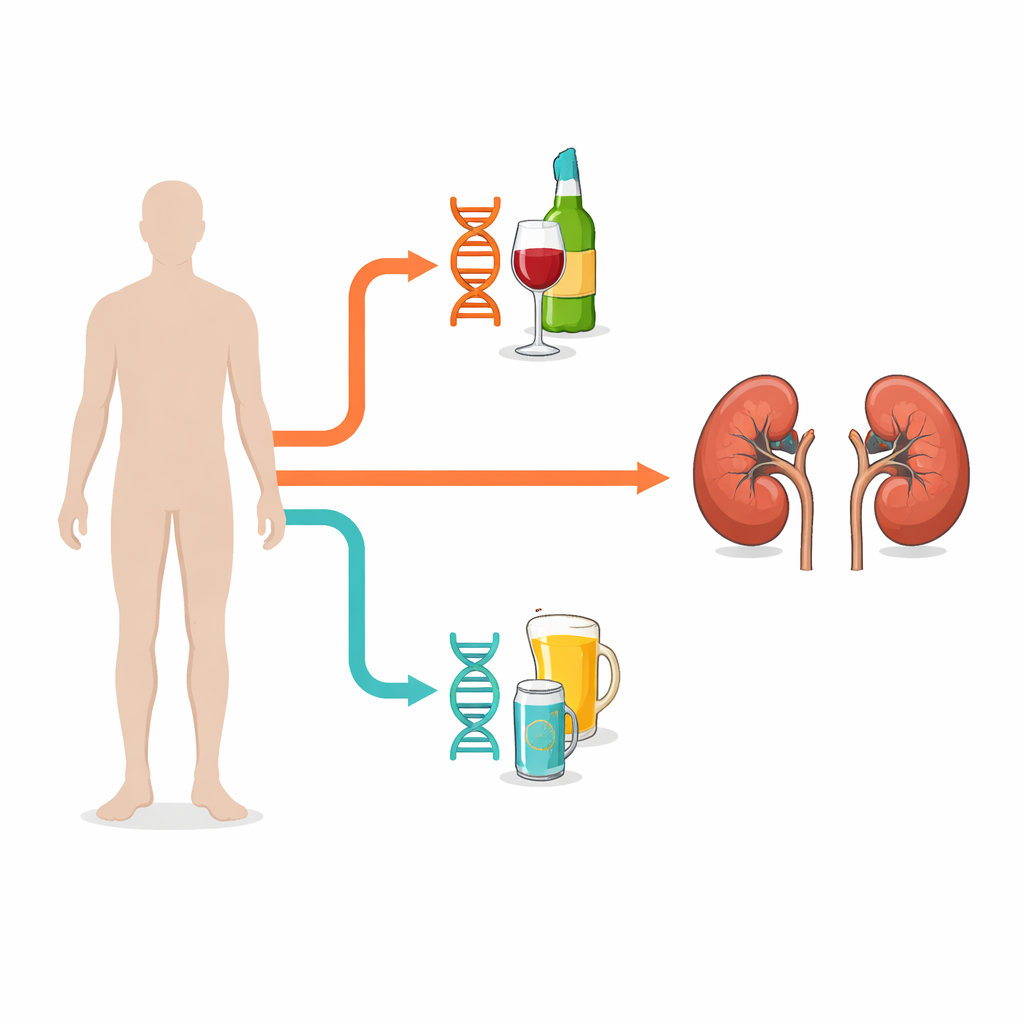
When we drink alcohol, the body breaks it down into acetaldehyde, a highly reactive compound that can harm cells. An enzyme called ALDH2 helps clear this substance. In many East Asians, a common change in the ALDH2 gene (called rs671) makes this clean-up system less efficient. People with this variant often feel flushed and uncomfortable after drinking and tend to drink less. Earlier laboratory and genetic studies suggested that this impaired clean-up might be linked to heart and kidney problems, but it was unclear whether it actually raises the risk of developing chronic kidney disease in the general population.
Following thousands of adults over nearly two decades
To explore this, researchers analyzed data from more than 5,300 Korean adults aged 40 to 69 who did not have chronic kidney disease at the start of the study. All participants were part of a large national project that has followed them every two years since the early 2000s, recording their health, lifestyle, and genetic information. The team grouped people by their ALDH2 gene type and by how much alcohol they typically drank, ranging from none to high intake. They then tracked who went on to develop chronic kidney disease, defined by a substantial drop in kidney filtering ability or the appearance of protein in the urine.
What the numbers revealed about genes, drinking, and kidney risk
Over an average of almost 12 years, about one in four participants developed chronic kidney disease. Surprisingly, the chances of developing the disease were very similar whether or not people carried the ALDH2 rs671 variant. At first glance, moderate-to-high drinkers seemed less likely to develop kidney disease than those who drank little or not at all. But once the researchers took into account age, sex, blood pressure, diabetes, cholesterol levels, smoking, physical activity, income, education, and starting kidney function, this apparent benefit of drinking disappeared. In other words, neither the gene variant nor alcohol intake meaningfully changed the long-term risk of getting chronic kidney disease in this group.
Looking closer for hidden patterns
The team also checked whether the story changed within specific subgroups. They repeated the analyses separately for people with and without the ALDH2 variant, and for men and women. The results were consistent: drinking more or less did not clearly alter kidney disease risk in any of these groups once other health factors were considered. Additional tests that looked at a steady decline in kidney function or the new appearance of protein in urine, analyzed separately, showed the same pattern. This suggests that any influence of the ALDH2 gene or usual drinking levels on the start of kidney disease is, at most, very small.
What this means for patients and the public
For middle-aged Korean adults in this study, having the ALDH2 rs671 variant did not, by itself, make it more likely to develop chronic kidney disease, and usual levels of alcohol consumption did not meaningfully change that risk. The findings fit with laboratory work suggesting that this gene may matter more for how kidney disease worsens once damage has already begun than for triggering the first signs of disease. For everyday readers, the message is that classic risk factors such as high blood pressure, diabetes, and unhealthy lifestyles remain far more important drivers of kidney trouble than this single gene or typical drinking habits. Future research will need to examine whether ALDH2 influences how quickly existing kidney disease progresses, but for now, its role in starting the disease appears limited.
Citation: Lee, H.J., Noh, J., Jeong, S. et al. Association of ALDH2 rs671 Polymorphism with chronic kidney disease incidence in a population-based Korean cohort. Sci Rep 16, 13563 (2026). https://doi.org/10.1038/s41598-026-43186-4
Keywords: chronic kidney disease, ALDH2 gene, alcohol metabolism, genetic risk, Korean cohort study