Clear Sky Science · en
A data-driven framework for measuring multimodal transport success in smart cities: the case of Dubai
Why city travel needs a smarter scorecard
Getting around a modern city rarely involves just one vehicle. You might walk to a bus, switch to the metro, finish by scooter or taxi, and check all of it on your phone. City leaders say this “multimodal” way of moving is key to cleaner, more livable places. But how do we know if such complex transport systems are truly working well for people and the environment? This study builds and tests a clear, data-driven way to measure success, using Dubai as a real-world laboratory.
Bringing many travel pieces into one picture
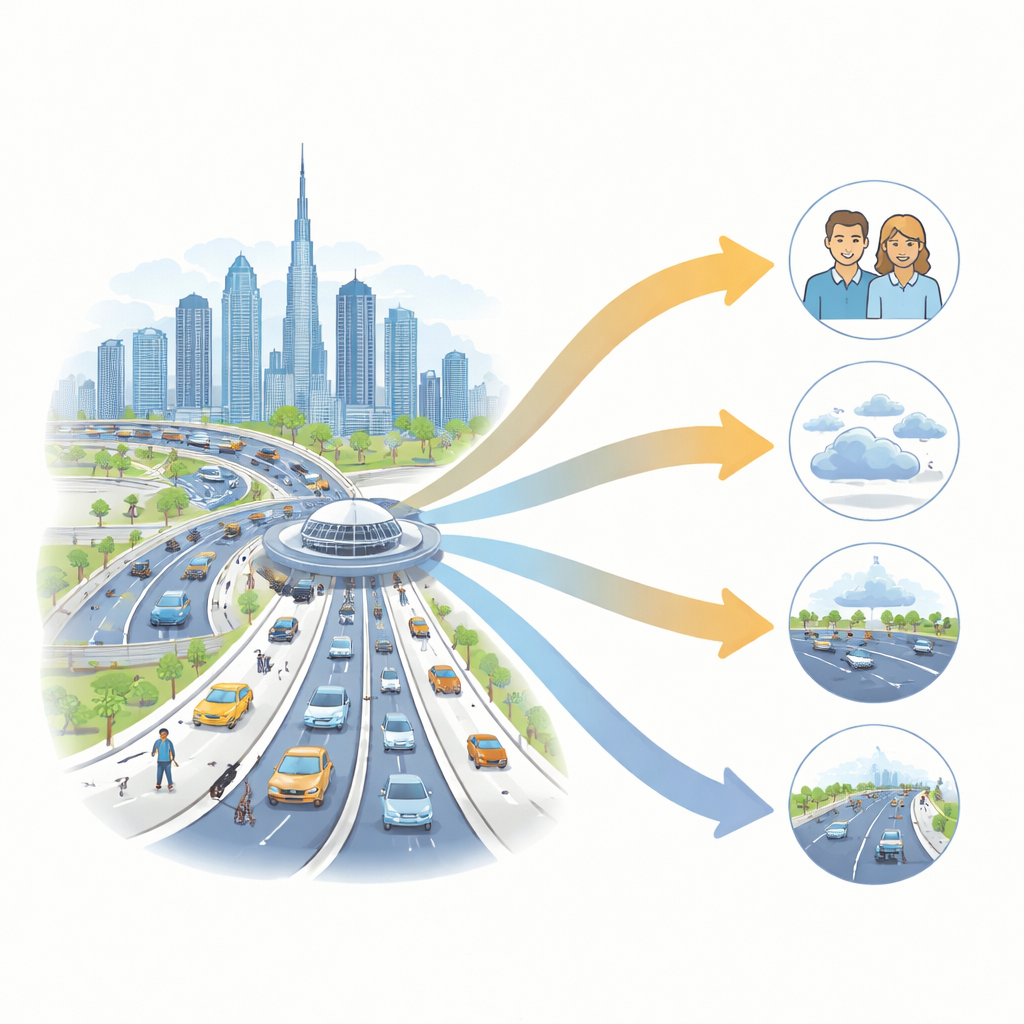
The authors start from a simple idea: multimodal transport success should be judged by the value it delivers to travelers—saving time and money and offering a smooth, reliable experience. Around this core, they gather the most important ingredients highlighted in recent research: how well different modes connect, how easy systems are to use, how strongly they are steered by environmental goals, how much they rely on digital data, and how widely services are offered across the city. Instead of treating each ingredient as a separate “score,” the study weaves them into a single cause-and-effect framework that can be tested and compared over time and between cities.
What the research looked at in Dubai
To build this framework, the team first carried out a systematic review of 53 studies on multimodal transport and related freight systems. They then refined the ideas through interviews with four mobility experts in Dubai, who helped clarify which factors truly matter on the ground. A new factor, called coverage, was added to distinguish the physical spread and frequency of services from people’s actual ability to use them. Finally, the researchers surveyed 50 specialists working in Dubai’s mobility sector, asking them to rate statements about integration, accessibility, digital tools, sustainability, coverage, and user benefits such as cost, travel time, and service quality. The answers were analyzed using a statistical approach designed for complex, interlinked concepts.
How smart data and good design shape the ride
The analysis shows that four ingredients strongly and directly support multimodal success in Dubai: integration and connectivity between modes, accessibility for different users, data-driven decision-making and innovation, and a clear orientation toward sustainability. In practical terms, this means that seamless transfers, well-located and affordable stations, real-time information and digital services, and policies favoring low-emission options all make travelers more likely to view the system as worthwhile. Importantly, data and digital tools do more than just add convenience: they also make it easier to coordinate services behind the scenes, which in turn improves the overall journey.
Why more lines on the map are not enough
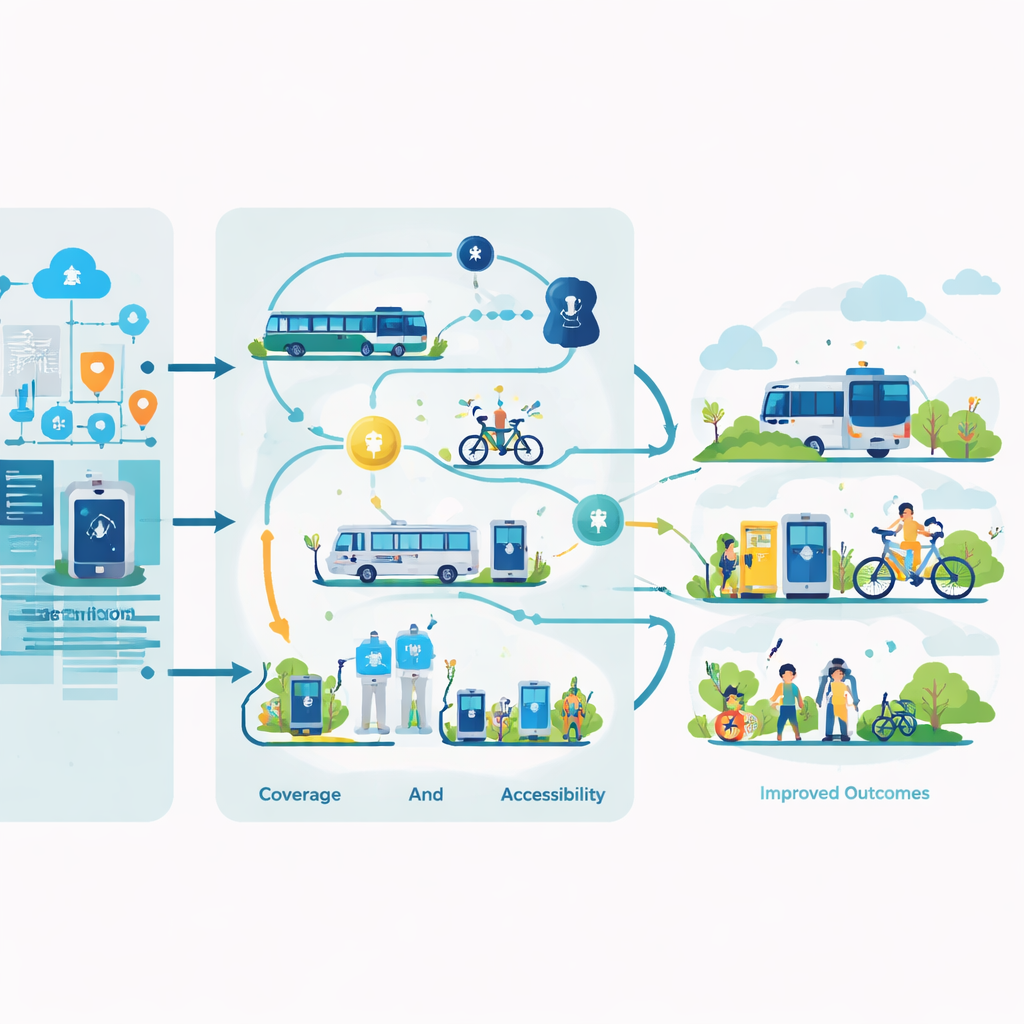
One of the most striking findings concerns coverage. Simply adding more routes, stations, and modes across the city does not, by itself, translate into a better experience. The study finds that coverage only boosts success when it improves accessibility—when extra lines really make it easier, safer, and more affordable for people to reach and use the system. In the same way, digital capabilities matter most when they enhance how well buses, trains, bikes, and other options fit together. These “chain reactions” show that what counts is not just the presence of infrastructure, but how well it is orchestrated from the user’s point of view.
What this means for future city travel
For non-specialists, the message is clear: a good multimodal system is not defined only by shiny stations or high-tech vehicles. It succeeds when different modes are tightly connected, widely accessible, guided by environmental goals, and continuously tuned using data. The Dubai case demonstrates that these elements can be captured in a single, testable model that explains most of the variation in how experts judge system performance. This framework can help smart cities prioritize investments that people actually feel—shorter, cheaper, cleaner, and more comfortable trips—rather than merely expanding networks on paper.
Citation: El Jallad, A.Y., Alozn, M., Ahmed, V. et al. A data-driven framework for measuring multimodal transport success in smart cities: the case of Dubai. Sci Rep 16, 13190 (2026). https://doi.org/10.1038/s41598-026-43179-3
Keywords: multimodal transport, smart cities, urban mobility, Dubai transport, data-driven planning