Clear Sky Science · en
Differential effects of voluntary exercise and Totum-448, a plant-based formulation, in a hamster model of MASLD
Why this matters for everyday health
Fatty liver disease linked to obesity, now called metabolic dysfunction–associated steatotic liver disease (MASLD), affects roughly one in three adults worldwide and can quietly progress to cirrhosis and liver failure. Because very few drugs are approved, doctors mainly rely on advice most of us struggle with: improve your diet and move more. This study explores whether adding a plant-based supplement rich in natural compounds called polyphenols can meaningfully boost the benefits of exercise—using a controlled experiment in hamsters fed a Western-style diet designed to mimic human MASLD.
How the study was set up
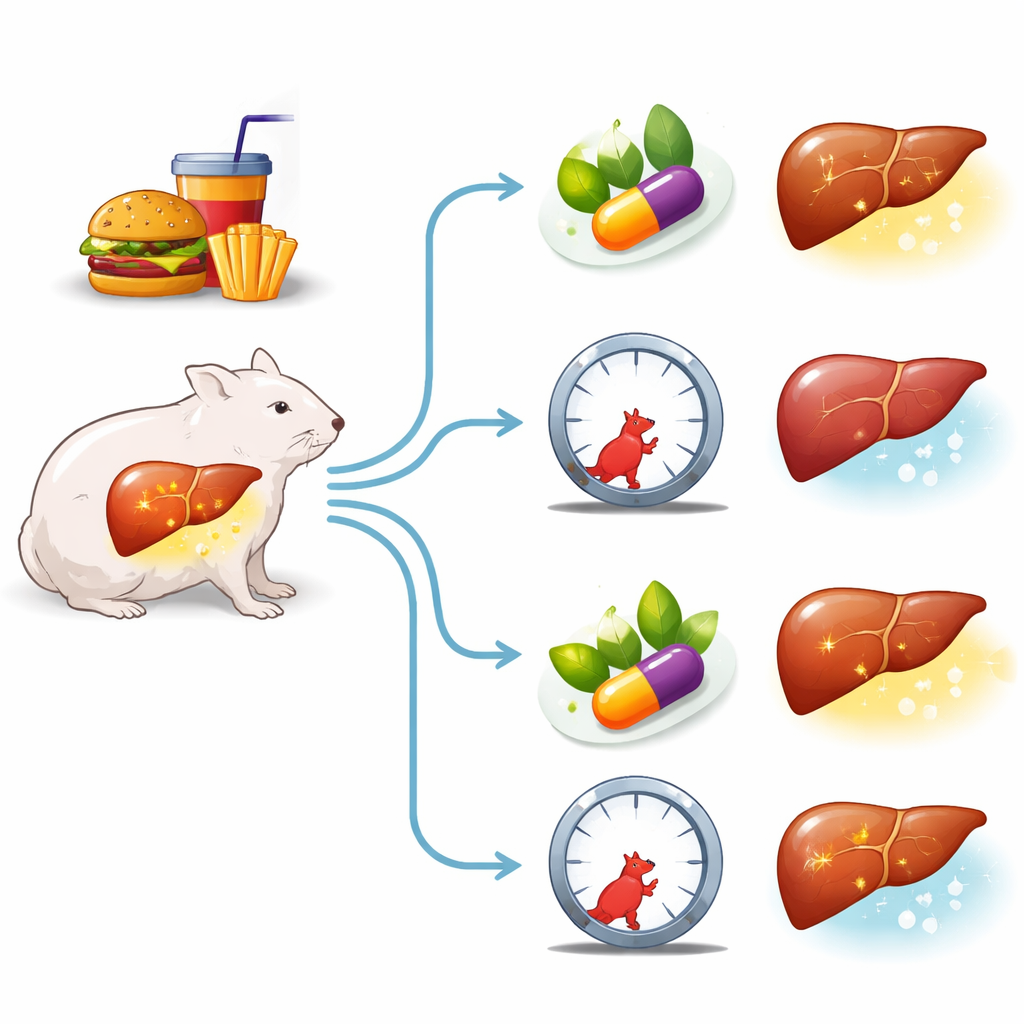
Researchers first fed golden Syrian hamsters either a standard diet or a calorie-dense Western diet high in fat and sugar for six weeks. The Western diet animals developed key signs of early MASLD: more body fat, less lean mass, and sharply higher blood fats such as cholesterol and triglycerides, even though their body weight and food intake were similar to the normal-diet group. After this "induction" phase, Western-diet hamsters were split into four groups for another five weeks: Western diet alone; Western diet plus Totum‑448 (a mix of extracts from olive leaf, bilberry, artichoke, chrysanthellum, black pepper, and choline); Western diet plus voluntary exercise on a running wheel; or the combination of Totum‑448 and exercise.
What exercise changed in the animals
Hamsters with access to running wheels ran surprisingly long distances—about 10 to 17 kilometers per day—at a range of speeds, mostly during the night. This vigorous voluntary exercise reshaped their bodies: lean mass and muscle weight increased, while relative fat mass and several internal fat pads shrank. Even when the animals were later tested in special cages without wheels, their overall energy expenditure remained higher, showing that exercise had raised their metabolic "idle speed" independent of simple movement. Inside the liver, exercise reduced the build-up of cholesterol and triglycerides, meaning less fat stored in the organ itself, even though it did not clearly improve microscopic signs of inflammation or scarring.
What the plant mix changed in the body
Totum‑448 acted differently. It did not alter how much the hamsters ate, their overall body weight, or liver fat deposits. Instead, its main impact was seen in the bloodstream and in early molecular warning signals inside the liver. The supplement significantly lowered total cholesterol, triglycerides, and free fatty acids in the blood of Western‑diet animals. At the gene-expression level, Totum‑448 reduced several liver markers linked to inflammation and tissue remodeling (including Il6, Tgfβ1, and Mmp12), suggesting a quieter inflammatory and fibrotic response, even though these changes were not yet visible under the microscope as less scarring. Some markers tied to oxidative stress also shifted in a direction consistent with lower cellular strain, hinting that the plant mixture might partly buffer the toxic effects of excess fats on liver cells.
What happened when both strategies were combined
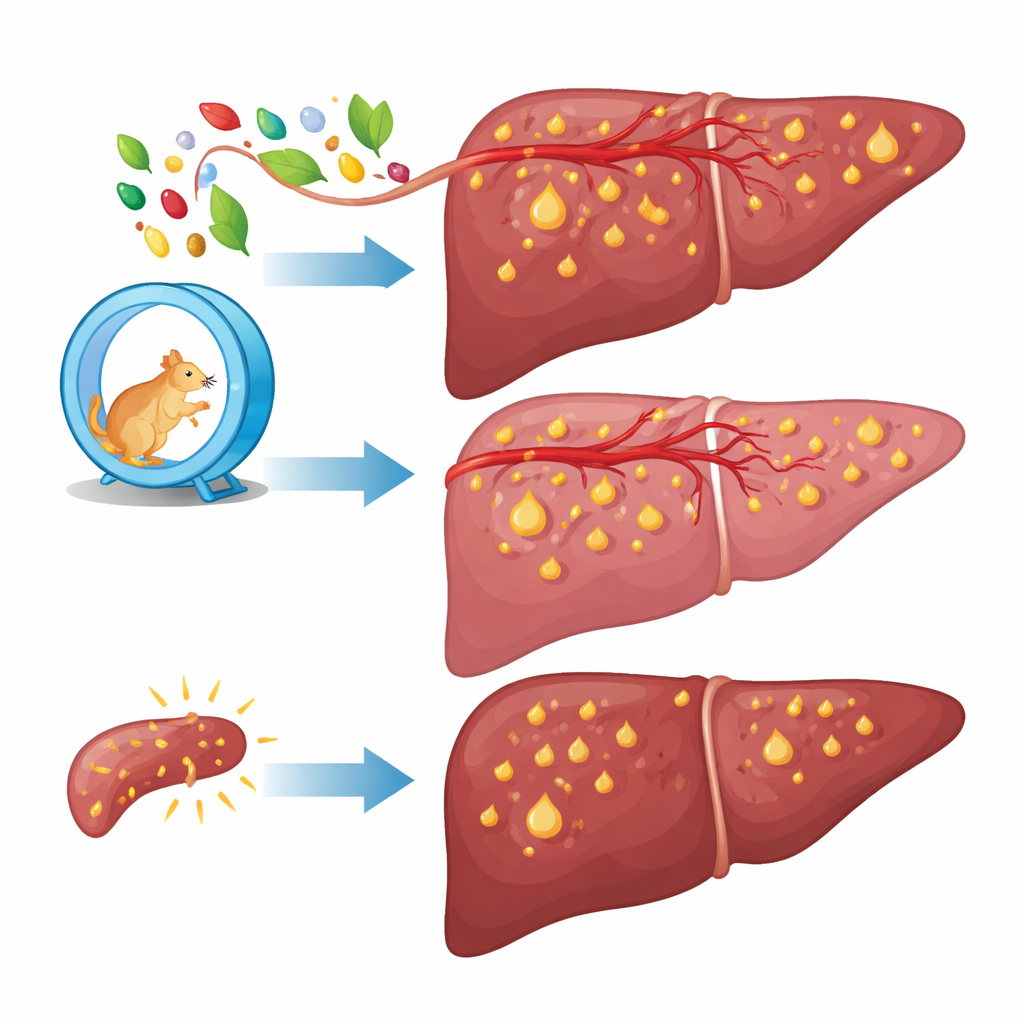
The team initially expected that pairing exercise with Totum‑448 would produce clearly additive benefits within the relatively short five‑week intervention. Instead, each treatment mostly kept its own specialty: exercise improved body composition and liver fat; the supplement improved blood lipids and toned down inflammatory signals. When given together, the combination did not outperform the single interventions in a statistically robust way, but it also did not cancel their benefits. In many measurements, such as liver fat content and inflammatory gene activity, the combination group looked directionally similar to the better of the two single treatments, suggesting that their effects were largely complementary rather than synergistic.
What this means for people worried about fatty liver
While these findings come from hamsters—not humans—and involved more exercise and higher supplement doses than most people would tolerate, they echo current medical advice: no pill can replace physical activity, yet smart nutritional strategies may broaden protection. In this model of diet‑induced fatty liver, running improved how the liver handled fat, whereas the plant formulation mainly cleaned up the blood fat profile and dialed down early inflammatory signals. Using both together gave the widest, though not stronger‑than‑expected, shield against MASLD damage. For people, this supports a simple message: sustained physical activity should remain the foundation of liver‑friendly living, and carefully tested plant-based supplements might one day serve as useful partners rather than magic bullets.
Citation: Chavanelle, V., Ennequin, G., Ripoche, D. et al. Differential effects of voluntary exercise and Totum-448, a plant-based formulation, in a hamster model of MASLD. Sci Rep 16, 12813 (2026). https://doi.org/10.1038/s41598-026-43177-5
Keywords: fatty liver disease, exercise, polyphenols, plant-based supplements, metabolic health