Clear Sky Science · en
Impact of extraction methods on Monte Carlo based dietary health risk assessment of potentially harmful elements in edible plants
Why what’s in our greens matters
Most of us reach for vegetables, fruits, and grains believing they are unambiguously good for us. Yet these same foods can also carry tiny amounts of metals such as lead or cadmium that accumulate in soil from industry, traffic, and farming. This study asks a deceptively simple question with big implications for food safety rules: when scientists estimate health risks from these elements in our diet, does the laboratory method they use make the danger look bigger—or smaller—than it really is?
Hidden metals in everyday foods
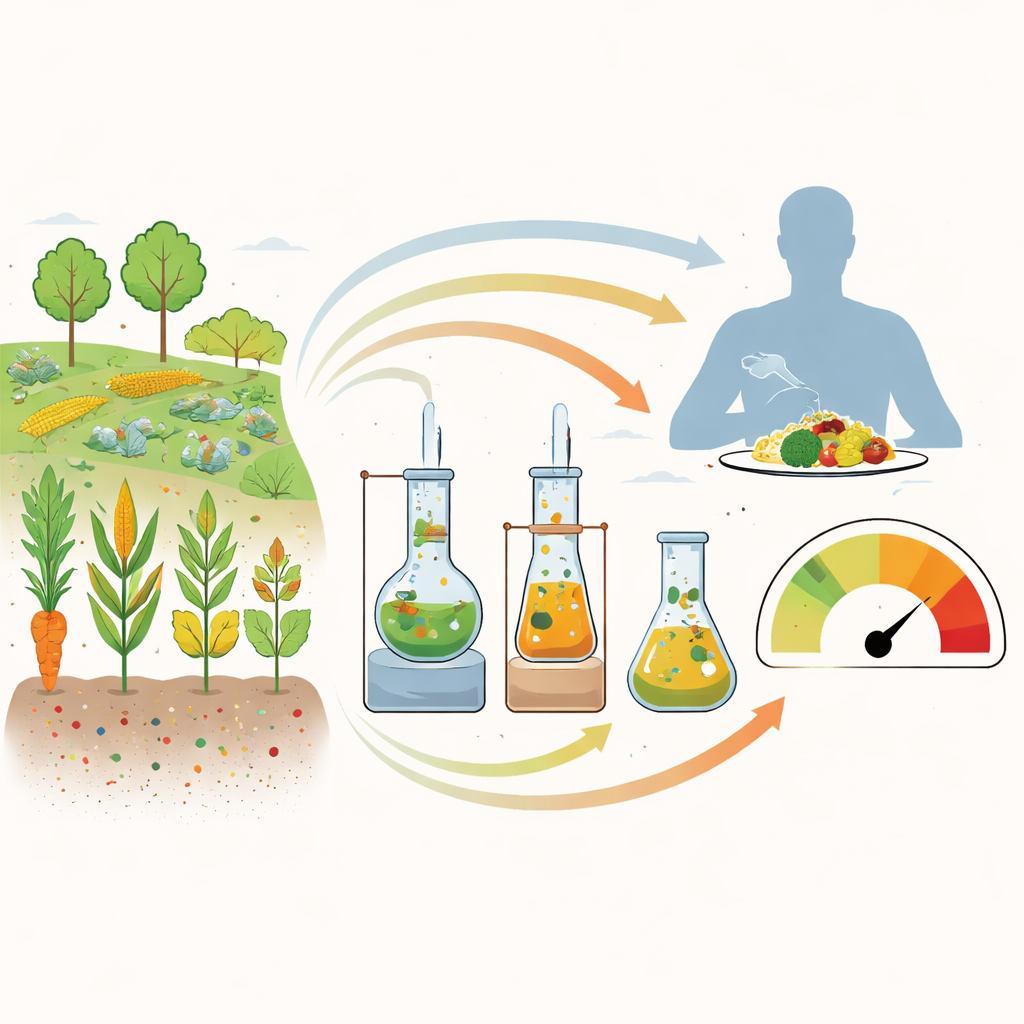
The researchers focused on eight potentially harmful elements commonly found in the environment: arsenic, cadmium, chromium, nickel, lead, antimony, tin, and thallium. They collected popular vegetables, fruits, and cereals from markets in southern Poland and prepared them as we would eat them—washed, peeled, sliced, dried, and ground. These samples were then tested for metal content using a very sensitive instrument that can detect tiny amounts. The central issue was not just how much metal is present in the plants, but how much could realistically enter the human body during digestion.
Different ways of asking the same question
Traditionally, health agencies often use a “total concentration” approach: measure all the metal in a food and assume the body can absorb it completely. That is simple but very conservative, and it can exaggerate risk. To challenge this, the authors compared seven extraction methods that aim to mimic different conditions. Some were designed for environmental studies and show how easily metals move out of soil; others simulate what happens in the acidic stomach or the more neutral intestine. By placing plant powders into artificial digestive fluids and measuring what dissolves, the team estimated the “bioaccessible” portion—the fraction that could, in principle, be taken up by the gut.
Simulating real-life eating patterns
To translate these measurements into meaningful health information, the researchers used Monte Carlo simulations, a technique that runs thousands of slightly different scenarios based on real data about how much vegetables, fruit, and cereal Polish adults tend to eat. For each metal and each extraction method, the computer drew random values for concentrations in food, portion sizes, body weight, and other factors, building up a full distribution of possible daily intakes and risks. This allowed the team to estimate both non-cancer effects, such as kidney or nerve damage, and cancer risks where appropriate, as well as to see how often accepted safety thresholds might be exceeded.
What the models revealed about risk
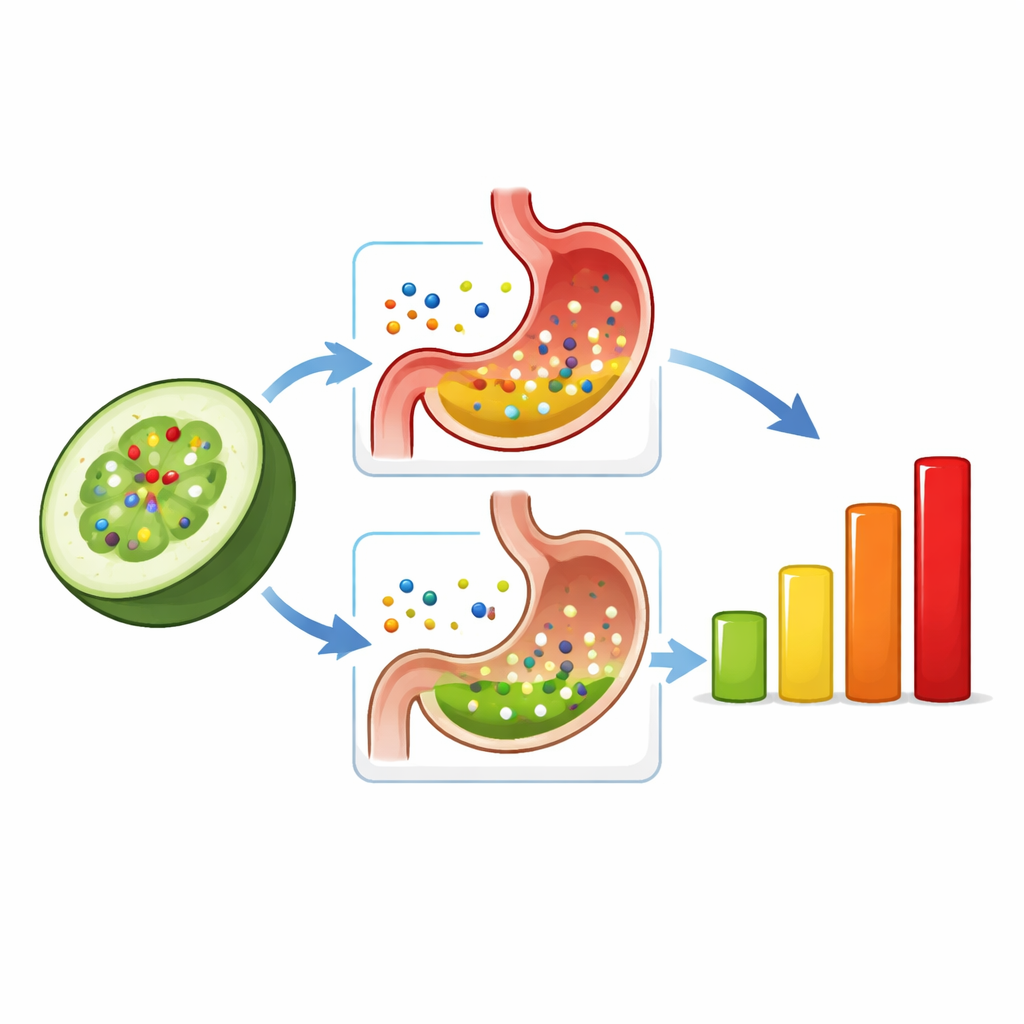
The results showed that the chosen extraction method can dramatically change the apparent level of danger. The total concentration method almost always produced the highest risk estimates and, for some elements like chromium and thallium, suggested worrisome levels that likely overstate real-world hazards because much of the metal is locked in forms the body cannot easily absorb. Methods that better mimic digestion usually yielded lower and more varied risks. For several elements, especially cadmium and lead, stomach-focused extractions showed higher potential uptake than tests representing the intestine, reflecting that metals are often more soluble in acidic conditions. A sensitivity analysis further revealed that the single most important factor driving risk was the actual metal concentration in the food, while how much people eat played a secondary but still notable role.
What this means for your plate
From a layperson’s perspective, the study does not argue that eating vegetables, fruits, and cereals is unsafe. Instead, it highlights that the way scientists and regulators estimate danger strongly shapes the verdict. Methods that assume everything in a food is absorbed may provide a useful “worst case,” but they can also trigger unnecessary alarm or overly strict limits. Approaches that account for what the body can realistically take up during digestion, combined with probabilistic modeling of how people actually eat, offer a more balanced picture. In practical terms, the work supports using bioaccessibility-based tests alongside traditional measurements when setting food standards, helping authorities protect public health without overstating risks—and reassuring consumers that careful science underpins safety decisions.
Citation: Stolecka, A., Gruszecka-Kosowska, A. Impact of extraction methods on Monte Carlo based dietary health risk assessment of potentially harmful elements in edible plants. Sci Rep 16, 12901 (2026). https://doi.org/10.1038/s41598-026-43176-6
Keywords: food contamination, heavy metals, dietary risk assessment, bioaccessibility, Monte Carlo simulation