Clear Sky Science · en
The Rana sylvatica skin-secreted antimicrobial peptide (AMP) gene repertoire highlights broader patterns in anuran AMP evolution
Frogs, Tiny Defenders, and a Big Evolutionary Puzzle
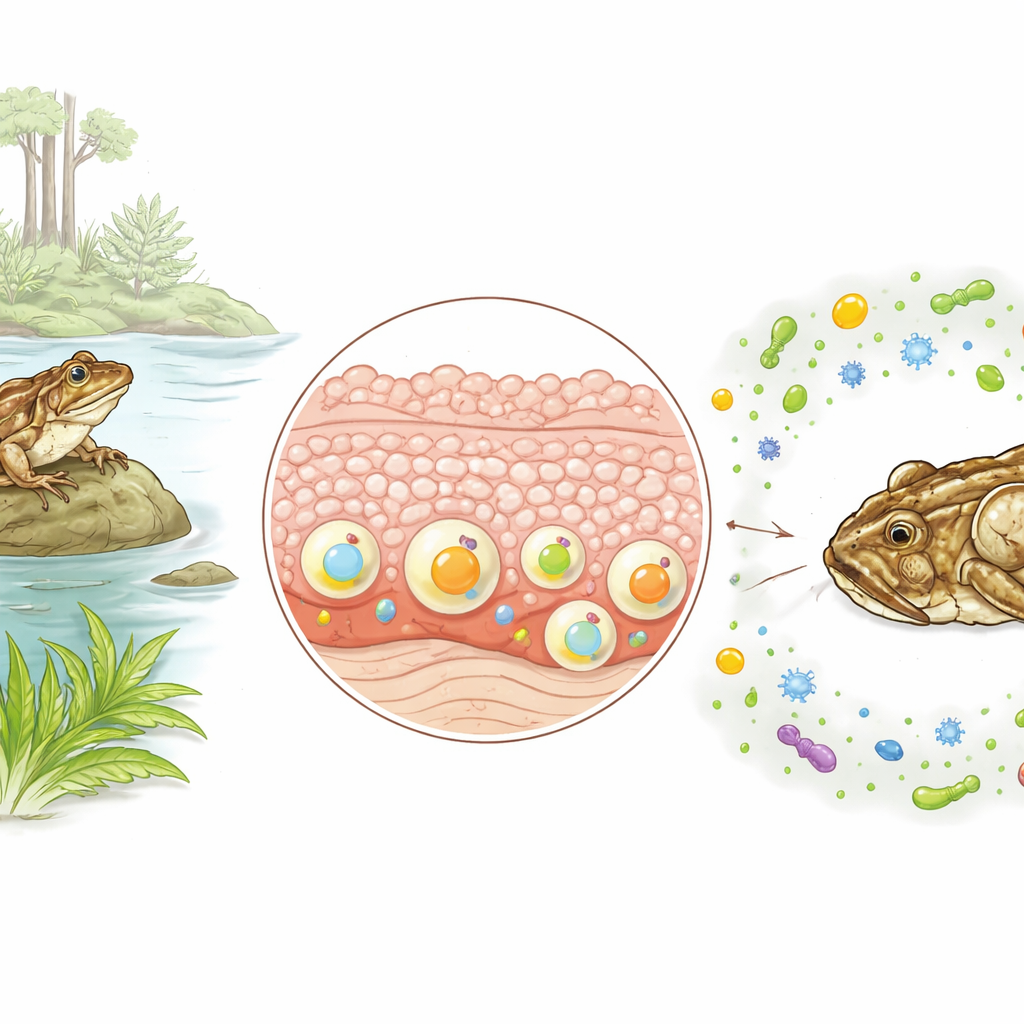
Frogs may look delicate, but their skin is a front line of defense packed with natural antibiotics called antimicrobial peptides. These tiny molecules can kill bacteria and fungi and are being explored as blueprints for new medicines. Yet even in frogs, which are champions at making these peptides, scientists still do not fully understand how the underlying genes are organized, how they change over time, or why some species carry huge arsenals while others have almost none. This study zooms in on the wood frog, a hardy North American species that can survive being frozen, to uncover how its skin-defense genes are built, arranged, and switched on.
Hidden Weapons in Wood Frog Skin
The researchers began with a high-quality wood frog genome and RNA data from skin to search for genes that encode skin-secreted antimicrobial peptides. Earlier biochemical work had only found two such peptides in this species, suggesting it might be unusual among frogs. By combining genome searches, skin transcript sequencing, and detailed mass spectrometry of skin secretions, the team uncovered a much richer arsenal: 11 distinct antimicrobial peptides, nine of them previously unknown, plus additional gene copies that appear to be damaged or on their way to losing function. These genes sit near the end of one chromosome in three tight clusters, and almost all of them are active in the skin.
Conserved Launch Signal, Shape-Shifting Weapons
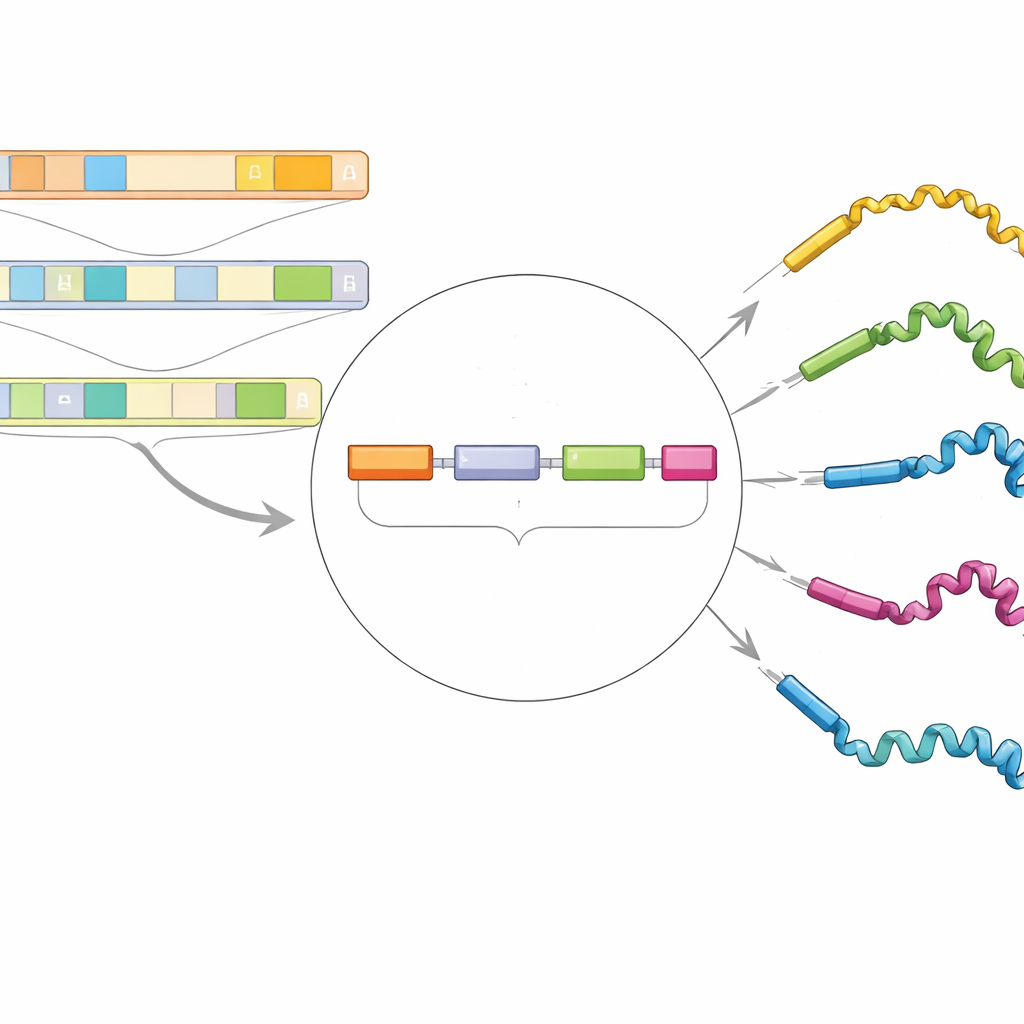
Each antimicrobial peptide is produced as a larger "prepropeptide" that includes a short signal segment to guide it into secretory glands, a spacer region, and finally the active portion that attacks microbes. In the wood frog, the genes all share a remarkably similar exon that encodes the signal segment, whereas the active peptide segments vary widely in sequence, chemistry, and predicted shape. Evolutionary analysis showed that the signal part is under strong purifying selection, meaning harmful changes are weeded out, while the active regions are free to diversify. The team even found extra copies of the signal exon not clearly attached to any known peptide gene, raising the intriguing possibility that this conserved piece acts as a kind of reusable export module for different secreted molecules.
Shared Gene Neighborhoods Across Frog Lineages
To see whether this gene layout is unique to wood frogs, the scientists compared its genome with those of other frogs in the same broader group. Using the conserved signal exon as a genetic beacon, they identified three matching gene clusters in several closely related Rana species and a partially similar region in more distant relatives. Although the exact sets of peptide genes differ, the overall pattern of clustered copies, some intact and some degraded, fits a "birth and death" model of evolution, where genes repeatedly duplicate, specialize, and sometimes are lost. One nearby gene encodes a bradykinin-like peptide, another kind of frog skin molecule, hinting that different secreted peptide systems may have evolved in the same genomic neighborhoods even if they do not share a direct origin.
Seasonal Shifts and Pathogen Pressure
Because frog skin is constantly exposed to changing environments and microbes, the team also asked how expression of these defense genes responds to seasons and infection. By collecting skin secretions from frogs captured in spring, summer, and fall, they found that the total amount of peptide released is much lower in spring, when animals are just emerging from cold conditions, even though the mix of detected peptide types changes only subtly. Reanalysis of existing RNA data from frogs experimentally exposed to a fungal pathogen that causes chytrid disease revealed that many antimicrobial peptide genes actually decreased in transcript levels after infection. This suggests that the pathogen or the stress it causes can dampen the skin’s innate defenses, a worrying finding for amphibians already threatened by climate change and emerging diseases.
What This Means for Frogs and Future Medicines
Taken together, the study shows that wood frogs harbor a far more complex and evolutionarily dynamic set of antimicrobial peptide genes than previously recognized. These genes are organized in repeat-rich clusters, shaped by cycles of duplication and decay, yet anchored by an unusually stable signal segment that reliably delivers a shifting cast of defensive peptides to the skin. For a lay reader, the key message is that frog skin is not just a barrier but a living, tunable chemical shield whose design principles could inspire new antibiotics. At the same time, the sensitivity of these defenses to season and infection highlights how environmental stress and disease can erode a frog’s natural protection, underlining the urgency of understanding and safeguarding amphibian immune systems.
Citation: Douglas, A.J., Katzenback, B.A. The Rana sylvatica skin-secreted antimicrobial peptide (AMP) gene repertoire highlights broader patterns in anuran AMP evolution. Sci Rep 16, 13882 (2026). https://doi.org/10.1038/s41598-026-43170-y
Keywords: amphibian immunity, antimicrobial peptides, frog skin defenses, gene evolution, chytrid fungus