Clear Sky Science · en
Tanycytic G6PT silencing prevents obesity induced by early postnatal overnutrition
Why Brain Cells Matter for Body Weight
Why do some people seem programmed for weight gain from the very start of life? This study looks beyond diet and exercise to a little-known group of brain cells called tanycytes. Working deep in the brain’s control center for hunger and metabolism, these cells help sense and manage the body’s fuel supplies. The researchers show that turning off a single transport protein in tanycytes can protect mice from obesity and blood sugar problems that arise when they are overfed as newborns, hinting at a new way to tackle metabolic disease.
Early Life Overfeeding and Lifelong Weight Gain
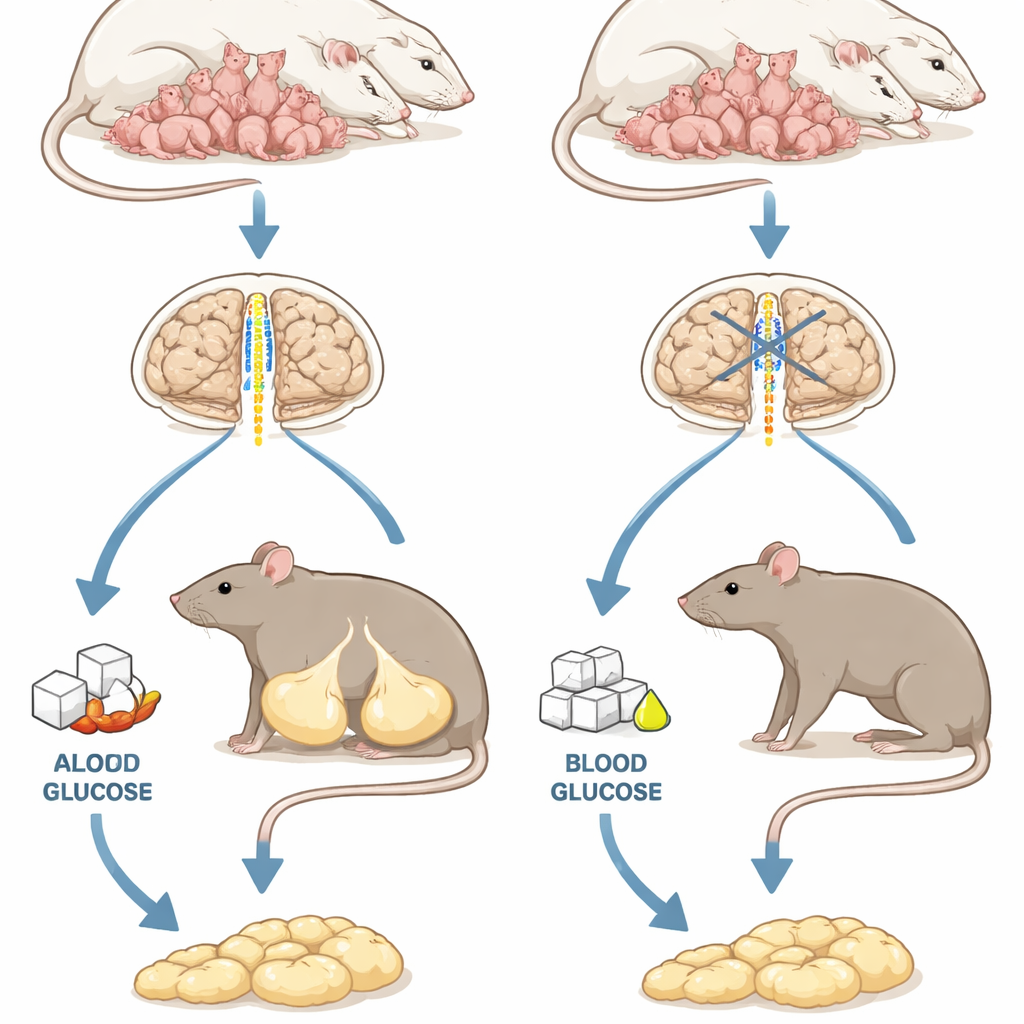
To mimic overfeeding in early life, the team used a well-established mouse model. Some mouse mothers raised normal-sized litters, while others raised very small litters. With fewer siblings competing for milk, pups in the small litters ate more during nursing and quickly became heavier than their normally fed peers. This weight gap did not vanish with age; by four months, the overfed mice carried clear signs of obesity. They had larger and heavier fat pads in the abdomen and their fat cells were swollen and fewer in number, a hallmark of excess fat storage rather than healthy, small fat cells spread across the tissue.
From Extra Pounds to Sugar Problems
The damage was not limited to appearance. Overfed mice developed serious problems handling sugar. Their pancreases were enlarged, their blood sugar stayed high whether they were fed or fasting, and they responded poorly when challenged with a surge of glucose. At the same time, their blood insulin levels were actually lower than those of normally raised mice, suggesting that their bodies were failing to produce or use this key hormone correctly. Together, these changes resemble a shift toward type 2 diabetes, linking early overnutrition to adult metabolic disease.
Hidden Brain Cells and a Sugar Transport Switch
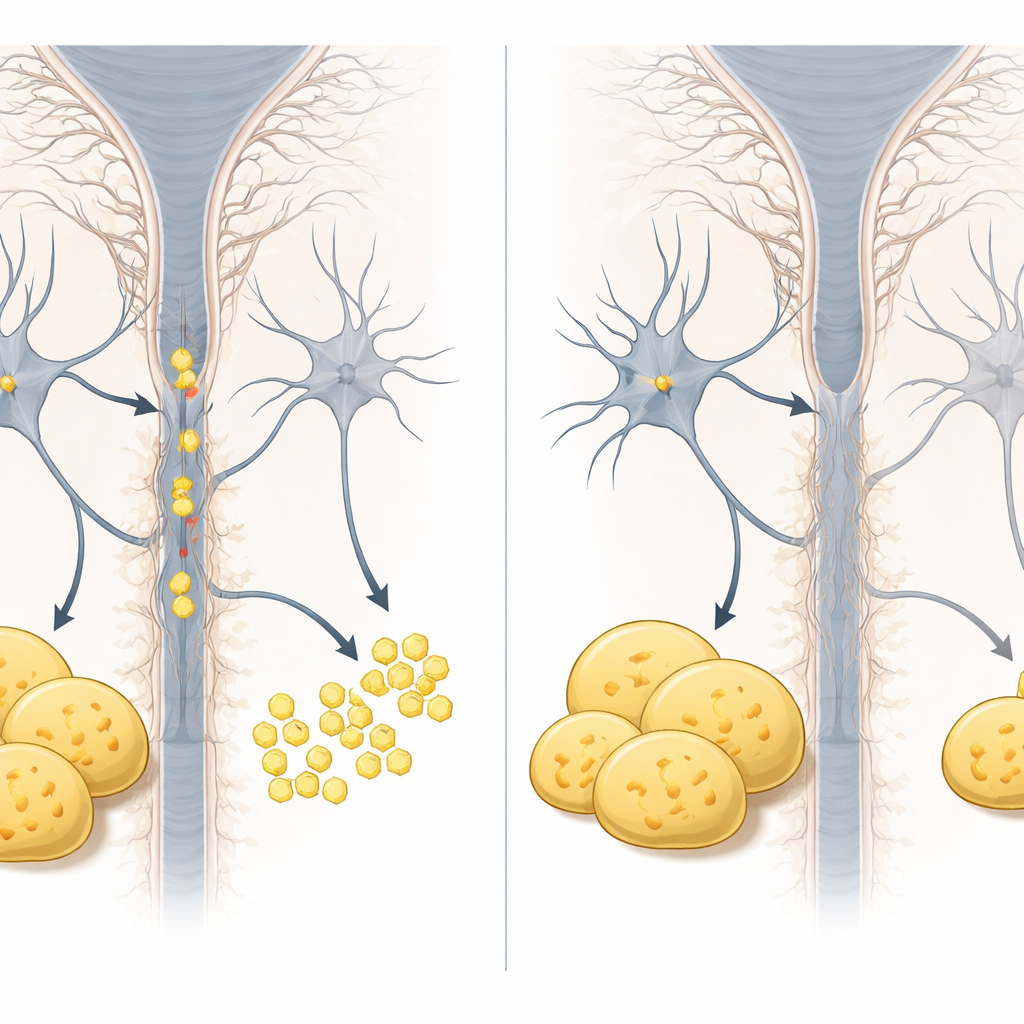
Tanycytes line the walls of a fluid-filled cavity in the brain and extend long processes into the region that controls hunger and energy use. They contain a transport protein called G6PT, which helps move a phosphorylated form of glucose into an internal compartment where it can be stored and later released. Earlier work suggested that when blood sugar drops, tanycytes can release glucose to nearby neurons that drive feeding. In this study, the researchers found that overfed mice had markedly lower levels of G6PT in these cells compared to normal mice, hinting that the brain might be trying to compensate for chronic high sugar levels by dialing down this transport system.
Switching Off the Transport to Reprogram Metabolism
To test whether this transport system actually shapes obesity, the team selectively silenced the gene for G6PT only in tanycytes of overfed adult mice. They used a viral vector injected into the brain’s third ventricle that carried a short RNA sequence designed to knock down G6PT production, and confirmed that about half of the tanycytes in the target region were affected while other brain cells were largely spared. Within two weeks, mice with G6PT-silenced tanycytes began to lose weight compared to overfed controls, and this difference persisted at four weeks. Their abdominal fat pads were smaller, with many more small fat cells instead of a few engorged ones. Remarkably, their fasting blood sugar and their response to a glucose challenge improved to levels indistinguishable from normally raised mice.
How Eating Behavior Was Quietly Reset
The researchers then asked whether this brain-cell switch changed how much the animals ate. Under regular, non-fasting conditions, overall food intake in a day was similar whether or not tanycyte G6PT was silenced. But after a full day without food, the pattern shifted. All mice ate quickly during the first hour after food returned, yet overfed mice with intact G6PT continued to eat more over the following 12 to 24 hours. In contrast, overfed mice lacking G6PT in tanycytes behaved more like normal mice: after an early burst, their intake tapered off, leading to a lower total amount eaten after fasting. This selective change—normal everyday eating but a calmer rebound after deprivation—paralleled their leaner bodies and healthier blood sugar.
What This Could Mean for Human Health
In simple terms, this work shows that a specific group of support cells in the brain, and one transport protein inside them, can strongly influence whether early overfeeding locks in an obese, diabetic-like state. By turning off G6PT in tanycytes, the researchers shifted overfed mice from an unhealthy, high-fat and high-sugar profile toward a leaner, more balanced one, without broadly shutting down appetite. While the study was done in male mice and the approach is far from ready for people, it points to the brain’s energy-sensing cells as promising targets for future therapies aimed at preventing or reversing metabolic diseases rooted in early life.
Citation: Barahona, M.J., Vera, M., Gajardo, C. et al. Tanycytic G6PT silencing prevents obesity induced by early postnatal overnutrition. Sci Rep 16, 13061 (2026). https://doi.org/10.1038/s41598-026-43136-0
Keywords: tanycytes, obesity, glucose metabolism, hypothalamus, early overnutrition