Clear Sky Science · en
Tracing the water–beef safety nexus: assessing water quality’s role in beef contamination from slaughterhouse to plate, in Southwest Ethiopia
Why the Water Behind Your Steak Matters
For many people in Ethiopia and around the world, fresh beef is a prized part of daily meals and social gatherings. But the journey from a cow in a slaughterhouse to a slice of raw or cooked beef on a plate is more complex than it looks. This study from Southwest Ethiopia asks a simple but important question: how much does the quality of water used along this journey affect the safety of the beef we eat? By tracing microbes from river to tap, from carcass to cutting board, the researchers show how hidden germs can travel into food and what can be done to stop them.
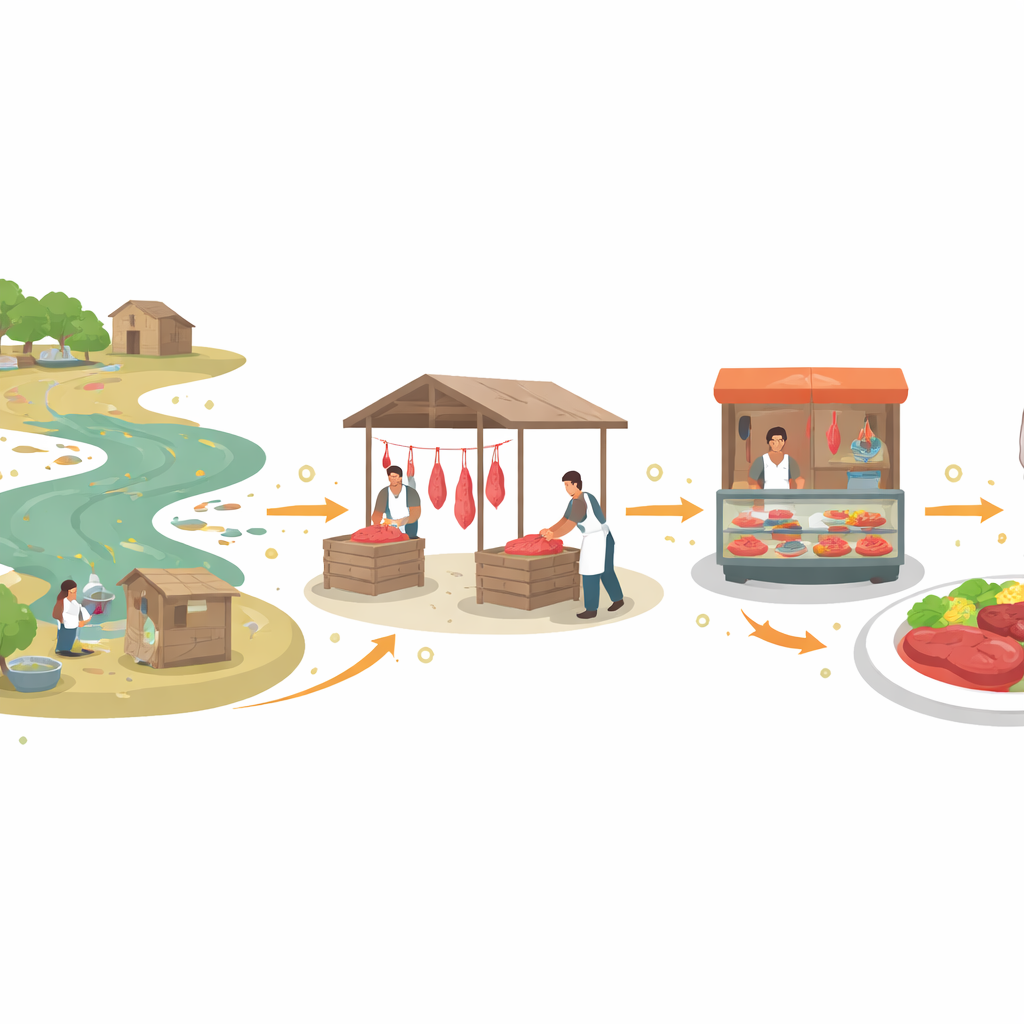
Following Beef from River to Plate
The researchers worked in the towns of Mizan and Aman, where rivers, hand-dug wells, and piped taps supply water to homes, slaughterhouses, butcher shops, hotels, and restaurants. They collected 349 samples in total: water from the main catchment river and local sources, cuts of fresh and minced beef from retailers, swabs from animal carcasses at abattoirs, and contents from cattle intestines. All samples were carefully transported to laboratories and checked for groups of bacteria that signal fecal pollution and poor hygiene, including common culprits such as E. coli, Salmonella, Shigella, Listeria, and other related microbes.
What the Germs Revealed
The picture that emerged was worrying. Across all water, meat, and environmental samples, presumptive E. coli was found in about four out of ten samples, Salmonella in nearly three out of ten, Shigella in almost two out of ten, and Listeria in more than one in ten. Other bacteria linked to human contact and contaminated environments, such as Proteus and Klebsiella, were also common. River water was the most polluted: every river sample contained large numbers of coliform bacteria, far above international safety guidelines. Hand-dug wells were also heavily contaminated, while tap water was cleaner but still failed safety standards in almost half of the samples tested.
Where Beef Picks Up Trouble
Although unsafe water was an important part of the story, the beef itself often carried even more of the worrisome microbes. Carcass swabs and colon contents showed high levels of Shigella and Listeria, pointing to feces and the slaughter environment as key contamination sources. Staphylococcus aureus, a bacterium usually linked to human skin and hands, was found only on beef, strongly suggesting that people handling the meat—often without proper handwashing or clean tools—were spreading germs. Visual checks of slaughterhouses and shops confirmed this: floors were dirty, drainage poor or absent, stray animals moved freely, hand-dug wells were uncovered, and utensils were sometimes washed without soap or safe running water.
Small Actions That Make a Big Difference
By looking closely at patterns in bacterial counts, the researchers identified some levers for improvement. Carcass washing did lower contamination compared with unwashed meat, but when the water itself was dirty, washing could also spread fecal bacteria. On the other hand, beef seasoned with traditional spice mixes such as awaze and da’ta tended to have lower counts of fecal and total coliforms than unspiced beef, suggesting that some spices may have a mild germ-slowing effect. Still, this benefit was not enough to overcome the risks from heavily polluted water, unclean equipment, and poor hygiene at key points along the chain.
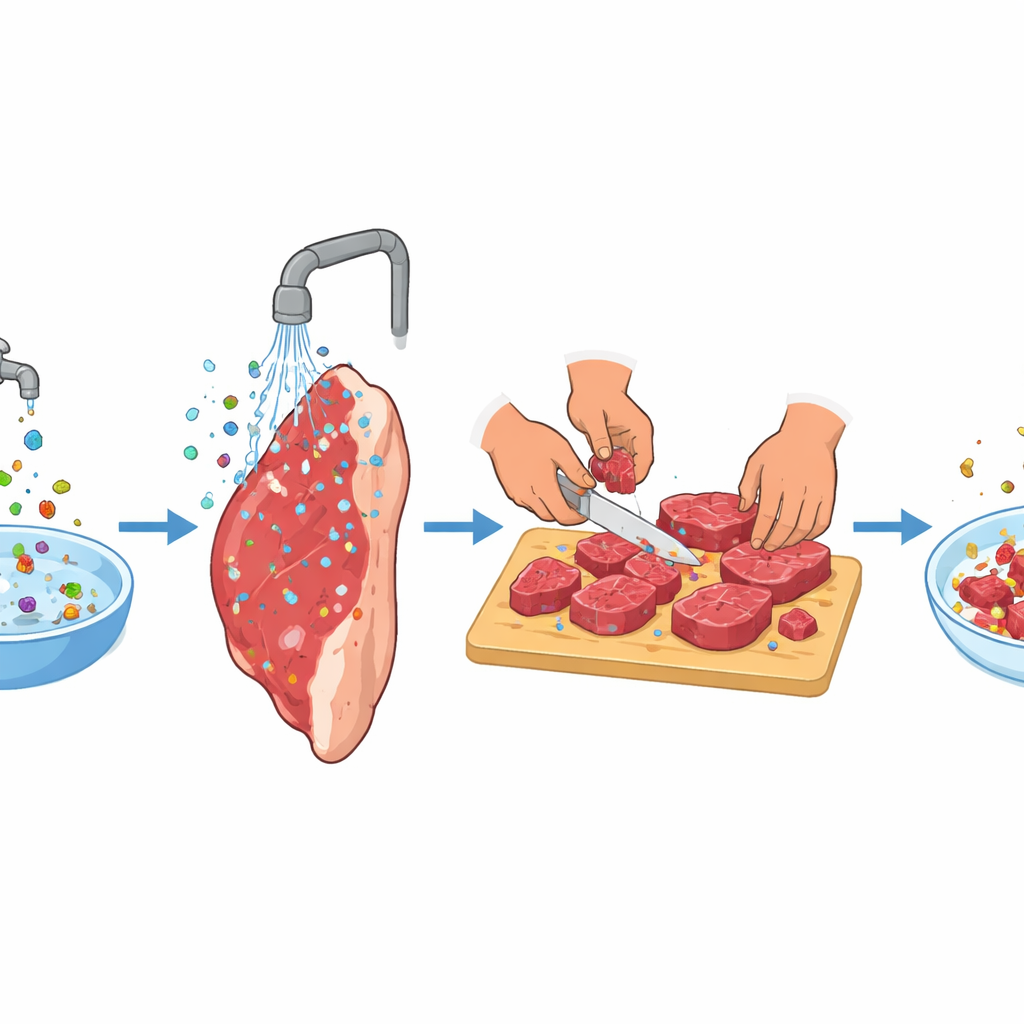
What This Means for Everyday Meals
For ordinary consumers, the study’s message is both sobering and hopeful. On the sobering side, it shows that the beef supply in this part of Ethiopia is exposed to germs at many stages, from contaminated rivers and wells to poorly maintained abattoirs and unsafe handling in shops and restaurants. Nearly half of the water sources tested did not meet World Health Organization standards, and many meat samples carried bacteria linked to diarrhea and other serious illnesses. On the hopeful side, the findings also point to concrete steps that can greatly reduce risk: treating water from source to tap, upgrading slaughterhouse infrastructure, enforcing basic cleanliness rules for workers and tools, and regularly checking water and meat for microbial safety. Together, these changes could help ensure that a treasured meal of beef is not accompanied by unseen threats to health.
Citation: Zegene, G.M., Mereta, S.T. & Mekonen, S. Tracing the water–beef safety nexus: assessing water quality’s role in beef contamination from slaughterhouse to plate, in Southwest Ethiopia. Sci Rep 16, 13477 (2026). https://doi.org/10.1038/s41598-026-43126-2
Keywords: beef safety, water quality, foodborne bacteria, slaughterhouse hygiene, Ethiopia