Clear Sky Science · en
Sustainable EV adoption with clustering and predictive modelling for optimal charging infrastructure in the West Midlands and North East UK
Why smarter charging matters for everyday drivers
Switching from petrol to electric cars promises cleaner air and lower running costs, but only if drivers can find convenient, reliable places to plug in. This study looks at how real electric vehicle (EV) owners in two English regions use and charge their cars, and then applies advanced data tools to design better charging networks. By understanding who drives EVs, how they charge, and what they care about most, the work shows how cities and regions can roll out charging points in ways that feel seamless to ordinary drivers rather than frustrating or risky.
Two regions, many different EV stories
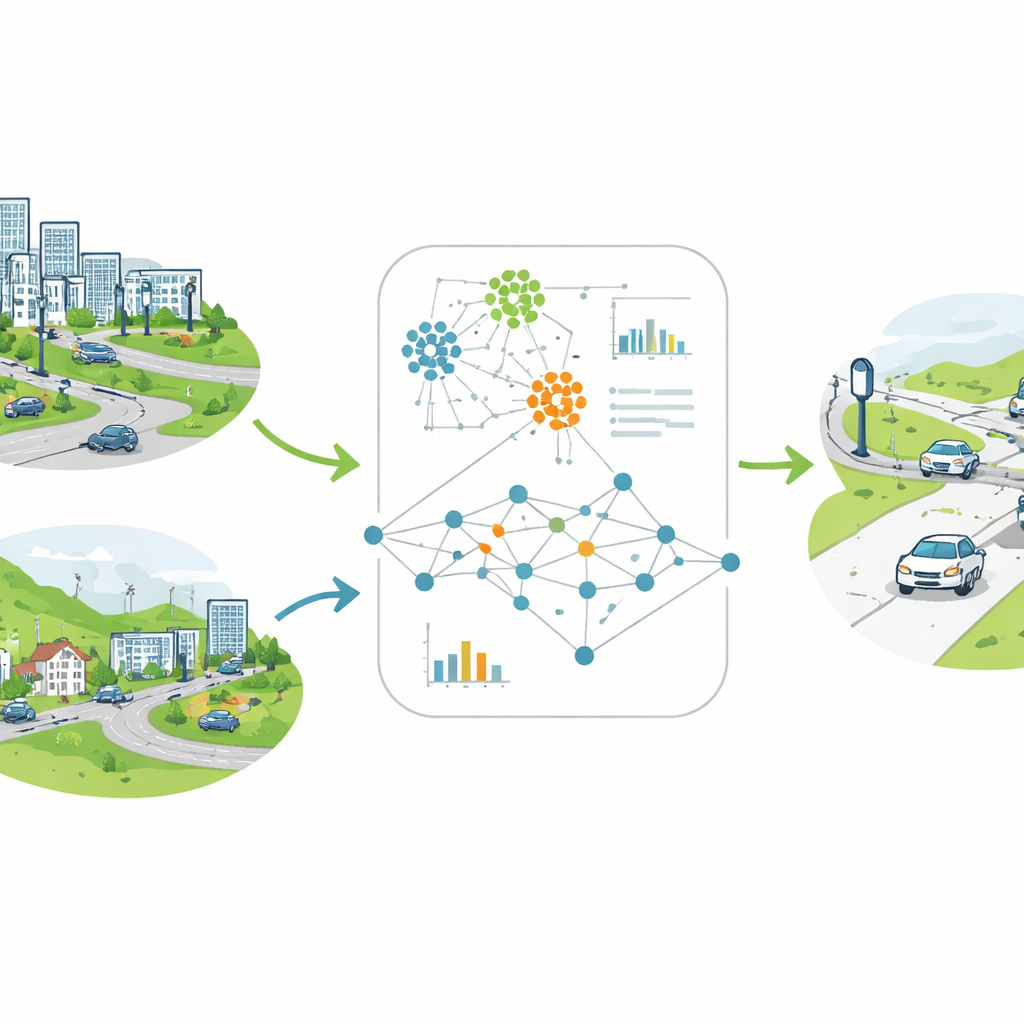
The researchers focused on 256 EV owners from the North East and the West Midlands, two UK regions with contrasting incomes, settlement patterns, and transport networks. Most respondents were working adults, often with higher education and above-average incomes, but the West Midlands sample included many more high-earning households. People in both places mainly owned fully electric cars rather than plug‑in hybrids, and most had only been driving electric for a few years, reflecting the recent surge in EV sales. Why they switched, however, differed by region: in the North East, cost savings were the main reason for buying an EV, while in the West Midlands environmental concern played a larger role, even though money still mattered. These differences suggest that “one size fits all” policies may miss what motivates different communities.
How people actually charge and travel
Everyday charging behaviour turned out to be surprisingly structured. Most drivers in both regions charged their cars once or twice a week and drove fairly modest daily distances, often between 10 and 30 kilometres. Long daily trips above 100 kilometres were rare. When they did need to plug in, 85% preferred fast direct‑current chargers, especially when their battery was low. People were generally willing to travel only short distances for a charge: up to 3 kilometres for most respondents, with very few happy to go beyond 9 kilometres. Waiting time was a key pain point. Many wanted to wait less than 20 minutes before a charger became free, and only a small minority accepted longer queues. Charging was typically done in the evening or overnight, when electricity is cheaper and roads are quieter, and sessions often lasted three to six hours, indicating planned, routine charging rather than last‑minute panic stops.
Grouping users and predicting what they will need
To move beyond simple averages, the authors built an integrated platform they call ISE‑CAP. First, they used clustering techniques to sort drivers into three broad groups in each region, based on how often they charge, how far they travel, and their willingness to wait or detour. Some clusters represented heavy users who drive longer distances and rely more on public charging; others were mostly home chargers with shorter, predictable trips. Next, the team trained computer models to predict charging behaviour, such as how long a session would take, using information about driving patterns, income, education, and charger preferences. These models were very accurate within the study sample, particularly in the more compact North East, where behaviour was more uniform and the charging network more concentrated.
What really shapes charger choices
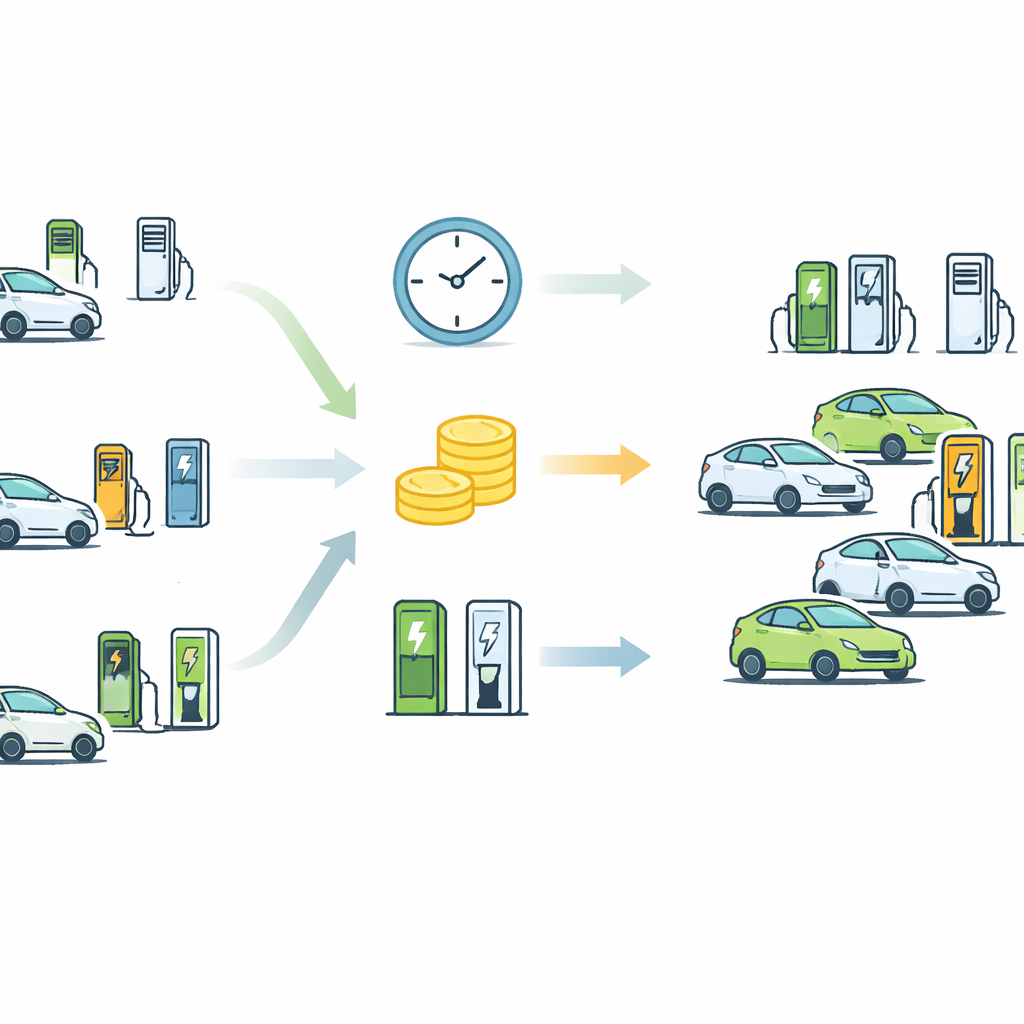
The researchers then asked: which factors actually sway people when they choose a charging point? Using an explainable modelling approach, they found three features that stood out across both regions: how long charging would take, whether a charger was actually available in real time, and how much it would cost. Distance to the charger also mattered, but people were especially sensitive to the idea of turning up and finding all plugs occupied. Many drivers relied on mobile apps or in‑car systems to see which chargers were free, and word‑cloud analysis of open comments highlighted repeated calls for “more stations,” better maintenance, and improved reliability. In short, drivers want fast, nearby chargers they can trust to be working when they arrive, at prices that feel fair.
From data to better charging maps
Finally, the ISE‑CAP platform was used in computer simulations to test where new chargers should go. The models weighed up predicted demand, how far people would need to drive to reach a charger, and how extra charging load would affect the electricity grid. Over many simulated runs, the system found layouts that reduced average travel distance to chargers while keeping grid strain under control. While these optimisation results are not yet tested on the ground, they show how combining survey insights, predictive models, and trial‑and‑error simulations can guide smarter infrastructure planning tailored to each region’s patterns rather than national averages.
What this means for the future of EV driving
For a layperson, the core message is that EV success is not just about building more plugs, but about putting the right kinds of chargers in the right places for the people who will actually use them. This study shows that most current EV drivers want fast, nearby, reliable chargers and clear information about whether they are free, and that these preferences differ subtly between regions with different incomes and layouts. By grouping users into behaviour types, predicting demand, and explaining the key factors behind their choices, the ISE‑CAP framework offers a practical way for councils, utilities, and planners to design charging networks that feel convenient and fair. If scaled up and refined with larger datasets, this kind of data‑driven planning could help make EV ownership smoother, cheaper, and more attractive for many more drivers, speeding the shift to cleaner transport.
Citation: Cavus, M., Wang, S., Deb, S. et al. Sustainable EV adoption with clustering and predictive modelling for optimal charging infrastructure in the West Midlands and North East UK. Sci Rep 16, 14457 (2026). https://doi.org/10.1038/s41598-026-43106-6
Keywords: electric vehicles, charging infrastructure, smart cities, user behaviour, machine learning