Clear Sky Science · en
Enhancing hospital workforce planning, scheduling, and performance evaluation through an AI-driven human resource management system
Why Smarter Schedules Matter for Patients
Anyone who has waited nervously in a hospital hallway knows how much staffing shapes the experience of care. If too few nurses or doctors are on duty, delays and stress rise for everyone. Yet building fair, efficient schedules in such a complex setting is incredibly hard. This paper explores how an artificial intelligence–driven system can help hospitals predict how many staff they will need, create better rosters, and monitor performance continuously, with the ultimate goal of shorter waits, less burnout, and safer care.
Hospitals as Never-Ending Balancing Acts
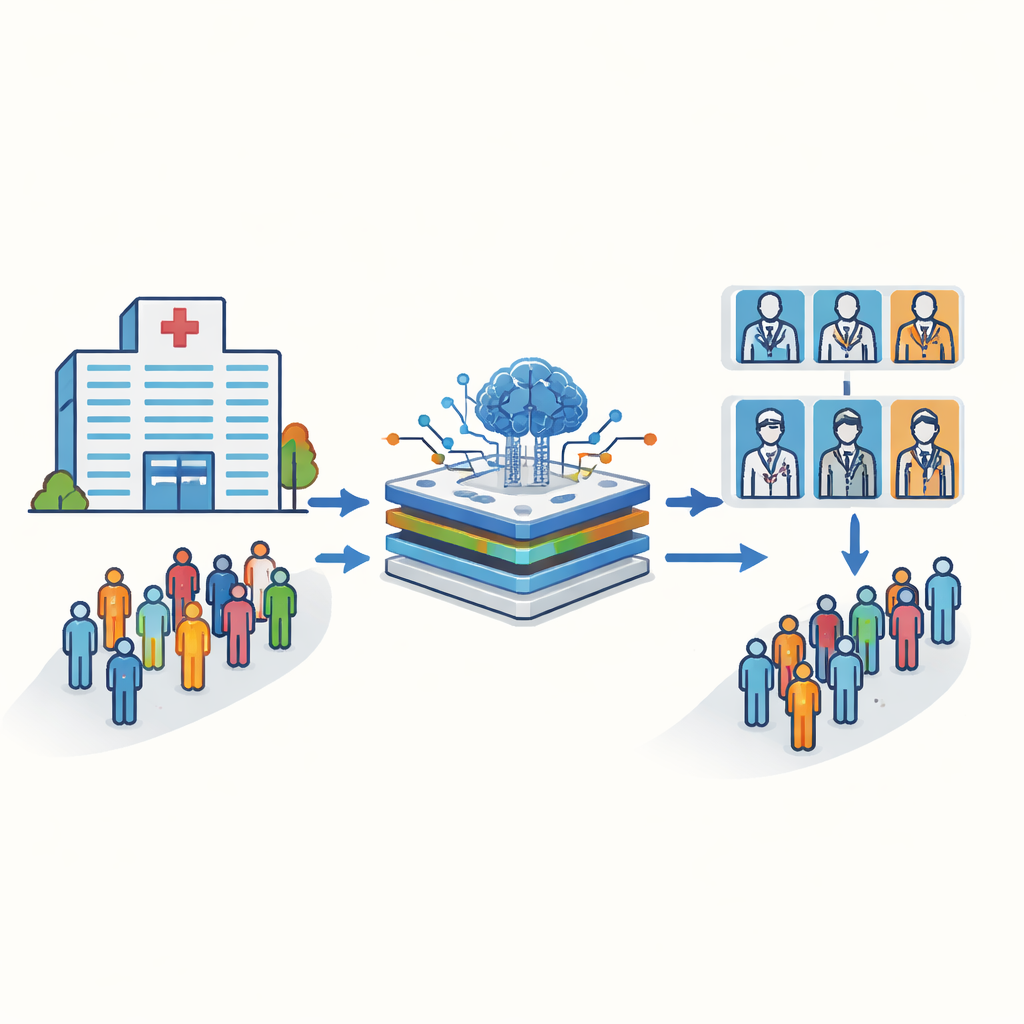
Hospitals operate under constant pressure. Patient numbers swing with seasons, outbreaks, and emergencies, while budgets and labor rules limit how many people can be on the payroll and on each shift. Traditionally, managers have relied on experience, spreadsheets, and partial information to plan their workforce. That often means schedules that are slow to update, ignore staff preferences, and do not fully match actual patient demand. The result can be long waiting times, tired staff, and uneven quality of care.
A Three-Part Digital Helper for Managers
The authors propose a unified digital framework that ties together three tasks managers usually treat separately: planning how many staff are needed, deciding who works when and where, and evaluating how well teams are doing over time. First, the system looks at past hospital records—such as admission logs and bed occupancy—to forecast how many patients are likely to arrive in the coming days. Second, it uses these forecasts to build staff rosters that obey labor laws, honor contracts, consider skills and qualifications, and account for individual preferences. Third, it continuously evaluates performance using both numbers (like attendance and task completion) and free-text feedback from patients and coworkers.
How the System Learns Demand and Builds Fair Schedules
To anticipate demand, the framework uses advanced prediction methods that capture patterns in time, including long short-term memory neural networks and other machine learning models. These tools learn how admissions change by day of the week, season, and service line, and then translate those patterns into expected staffing needs for each unit and shift. On top of these forecasts, an optimization engine assigns real people to specific shifts. It enforces limits on working hours and rest, ensures the right mix of skills in units such as intensive care, and spreads workload as evenly as possible. Fairness is not an afterthought; it is built into the objective the system tries to improve, so schedules avoid overloading a small group of staff while others have lighter duties.
Listening to Voices, Not Just Numbers
Beyond schedules and headcounts, the framework pays attention to experience. It pulls in patient comments and peer reviews and applies language-processing techniques to detect positive, neutral, and negative sentiments and recurring themes. These insights are combined with quantitative indicators like punctuality and absenteeism in easy-to-read dashboards. Managers can see, for example, when rising demand coincides with more negative patient comments in a particular ward, and can then respond by adjusting staffing or offering support and training. This makes performance evaluation more continuous and transparent, and less dependent on occasional, subjective reviews.
What Trials Reveal in Practice
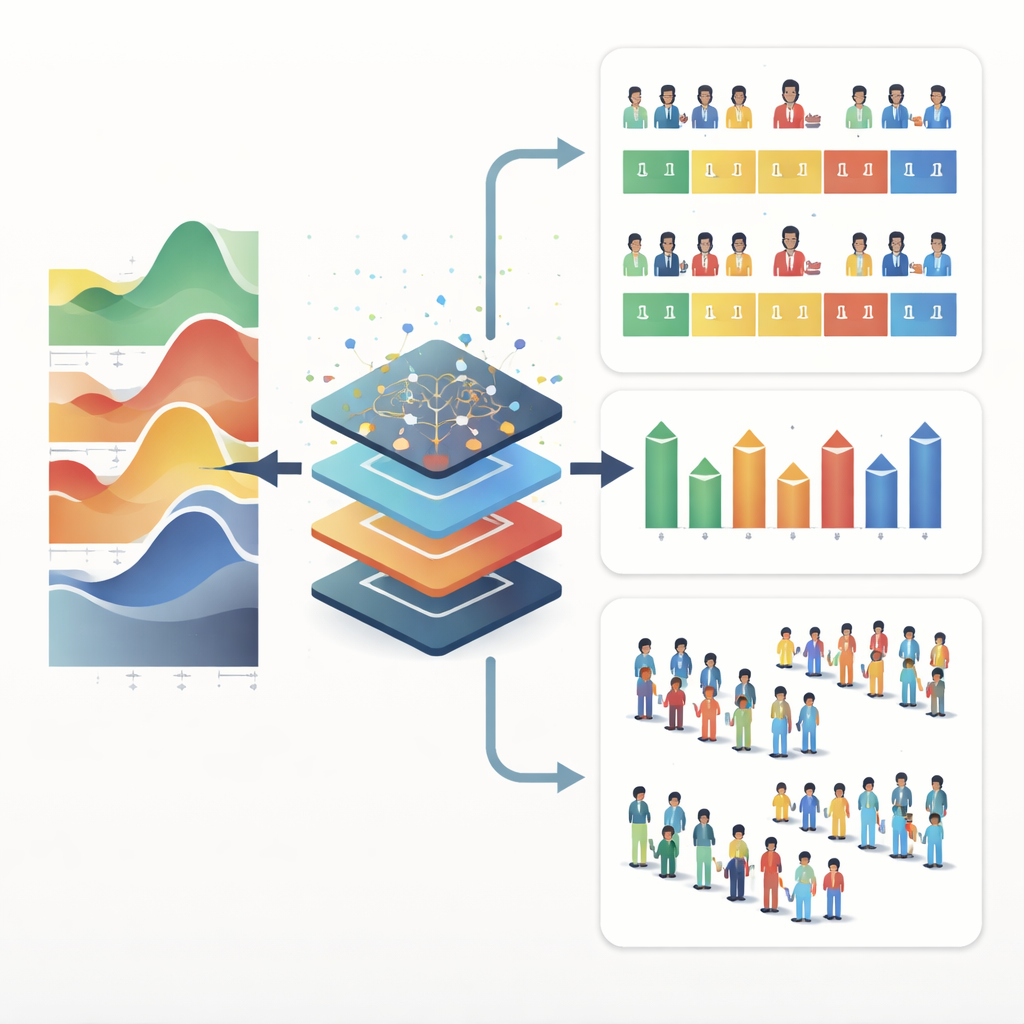
The system was tested using both simulated hospital data and records from a large tertiary-care hospital, and then piloted in real units. In forecasting, the neural network models predicted patient admissions with high accuracy. In scheduling, the new rosters cut conflicts by more than a third, kept computing time under two minutes even for a workforce of 1,000 people, and achieved a very even spread of working hours among staff. In performance evaluation, about three-quarters of patient comments were classified as positive, and the analysis highlighted specific pain points such as waiting times and communication gaps. During pilot deployments, hospitals saw an 18% drop in average waiting time and a 14% rise in patient satisfaction scores, while staff reported greater fairness and better alignment with their preferred shifts.
What This Means for Everyday Care
For non-specialists, the takeaway is straightforward: by combining prediction, optimization, and careful listening to feedback, an AI-driven system can help put the right people in the right place at the right time, in a way that feels fair to staff and safer for patients. The approach does not replace human judgment; rather, it gives managers a clearer, data-informed view of demand, staffing, and performance. While hospitals still need to ensure good data quality and support staff in using new tools, this study suggests that thoughtfully designed AI can make hospital work more sustainable and patient care more reliable.
Citation: Wang, Y., Zheng, P., Guan, Y. et al. Enhancing hospital workforce planning, scheduling, and performance evaluation through an AI-driven human resource management system. Sci Rep 16, 13379 (2026). https://doi.org/10.1038/s41598-026-43102-w
Keywords: hospital staffing, artificial intelligence, workforce scheduling, patient waiting time, healthcare performance