Clear Sky Science · en
Preparation of cellulose/zinc oxide/graphene oxide ternary hybrid aerogel to photodestruction of anionic dye from aqueous environment
Cleaning Dirty Water with a Super Sponge
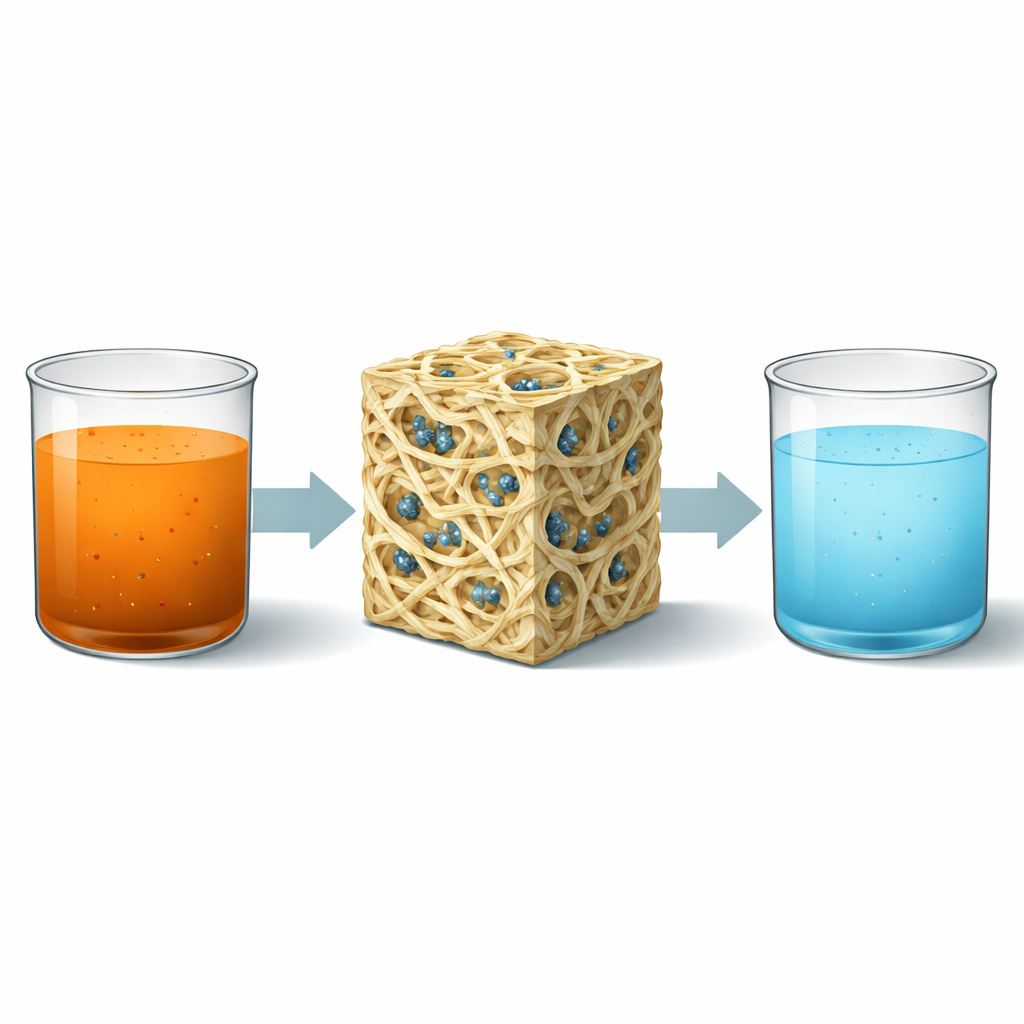
Many everyday products, from clothes to paper, rely on colorful dyes that can leave behind stubborn pollution in water. This study describes a new kind of ultra-light “super sponge” made from plant-based cellulose, zinc oxide, and graphene oxide that can pull a common toxic dye called methyl orange out of water and then break it apart under ultraviolet light. Because the sponge is solid and three‑dimensional, it can be lifted out with simple tools and reused several times, offering a practical way to help keep waterways cleaner.
Why Colored Wastewater Is a Problem
Industrial wastewater, especially from dyeing and textile plants, often contains brightly colored molecules that are hard to destroy. Methyl orange is one such dye: it is widely used, highly stable, and linked to health risks such as irritation and possible genetic damage. Once released, it can block sunlight in rivers, feed algal blooms, and lower oxygen for fish and other aquatic life. Conventional treatment methods—physical filters, chemicals, or microbes—may only move the dye around or partially change it, rather than fully breaking it down into harmless components.
A New Kind of Light-Driven Sponge
The researchers built a three‑part aerogel, a very light and porous solid that looks like a frozen sponge of air. Its skeleton is cellulose, a renewable material from plants that is strong, biodegradable, and easy to shape into a three‑dimensional network. Inside this network they embedded zinc oxide particles, which are well known for reacting under ultraviolet light, and thin sheets of graphene oxide, which conduct charges and provide a large surface for reactions. By freeze‑drying their mixture, they created a cube-like material full of tiny, interconnected pores where water and dye molecules can flow and interact with the active components.
How the Super Sponge Destroys Dye
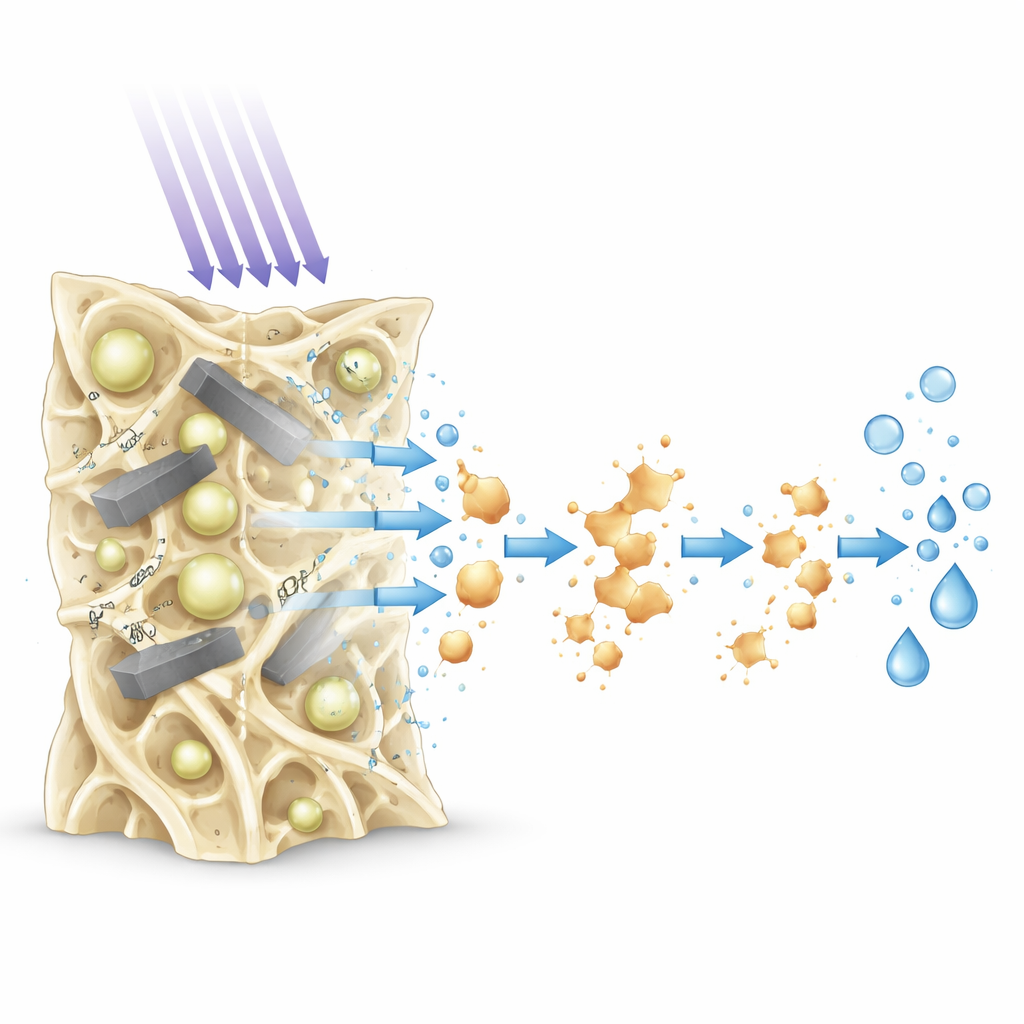
When dye-contaminated water is mixed with this aerogel and exposed to ultraviolet light, a chain of events unfolds. Zinc oxide particles absorb the light and generate energetic charges. Graphene oxide sheets act as highways for these charges, helping to keep them separated instead of letting them cancel each other out. This separation allows the charges to react with oxygen and water near the aerogel surface, forming aggressive short‑lived species often called radicals. These radicals attack methyl orange molecules, chopping them into smaller, harmless parts such as carbon dioxide, water, and simple mineral ions. The cellulose framework mainly provides structure and easy handling, but its pores also help trap dye molecules close to where the radicals are formed.
Finding the Best Working Conditions
The team carefully tested how well their aerogel worked under different conditions. They adjusted the amount of sponge, the acidity of the water, the starting dye concentration, the brightness of the ultraviolet lamp, the water temperature, and how long the mixture was irradiated. The best performance occurred in slightly warm, acidic water: about 35 degrees Celsius, a pH of 3, a modest amount of dye, and a bright ultraviolet source. Under these conditions, the aerogel removed about 99 percent of methyl orange. Importantly, the solid piece could be lifted out with simple tweezers, rinsed with distilled water, and used again. After five cleaning cycles, it still kept almost all of its dye‑destroying power.
What This Means for Cleaner Water
To a non‑specialist, the key message is that the authors have combined a plant-based skeleton with smart nanomaterials to create a reusable, easy‑to-handle sponge that not only captures a hazardous dye but actually destroys it using light. By tailoring the inner structure and mixing cellulose with zinc oxide and graphene oxide, they greatly boosted the sponge’s surface area and its ability to generate reactive species that dismantle dye molecules. While this work focuses on methyl orange in laboratory tests, the same design strategy could be adapted for other dyes and pollutants, offering a promising, sustainable tool for cleaner industrial wastewater and safer water resources.
Citation: Hasanpour, M., Hatami, M. & Jing, D. Preparation of cellulose/zinc oxide/graphene oxide ternary hybrid aerogel to photodestruction of anionic dye from aqueous environment. Sci Rep 16, 10676 (2026). https://doi.org/10.1038/s41598-026-43089-4
Keywords: wastewater treatment, photocatalytic aerogel, graphene oxide, zinc oxide, dye degradation