Clear Sky Science · en
Ultrasound-assisted extraction, quantification and characterization of inulin from agave, chicory and Jerusalem artichoke
Why Plant Fiber From Everyday Crops Matters
Most of us know we should eat more fiber, but it is less obvious where that fiber comes from or how it is prepared for use in foods. This study looks at inulin, a natural fiber with gentle sweetness and proven benefits for gut health, and asks a practical question: which common plants provide the best inulin, and how can it be extracted in a cleaner, more efficient way? By comparing agave, chicory, and Jerusalem artichoke and using sound waves instead of harsh heating, the researchers point toward new, locally grown sources of healthier ingredients for future foods.
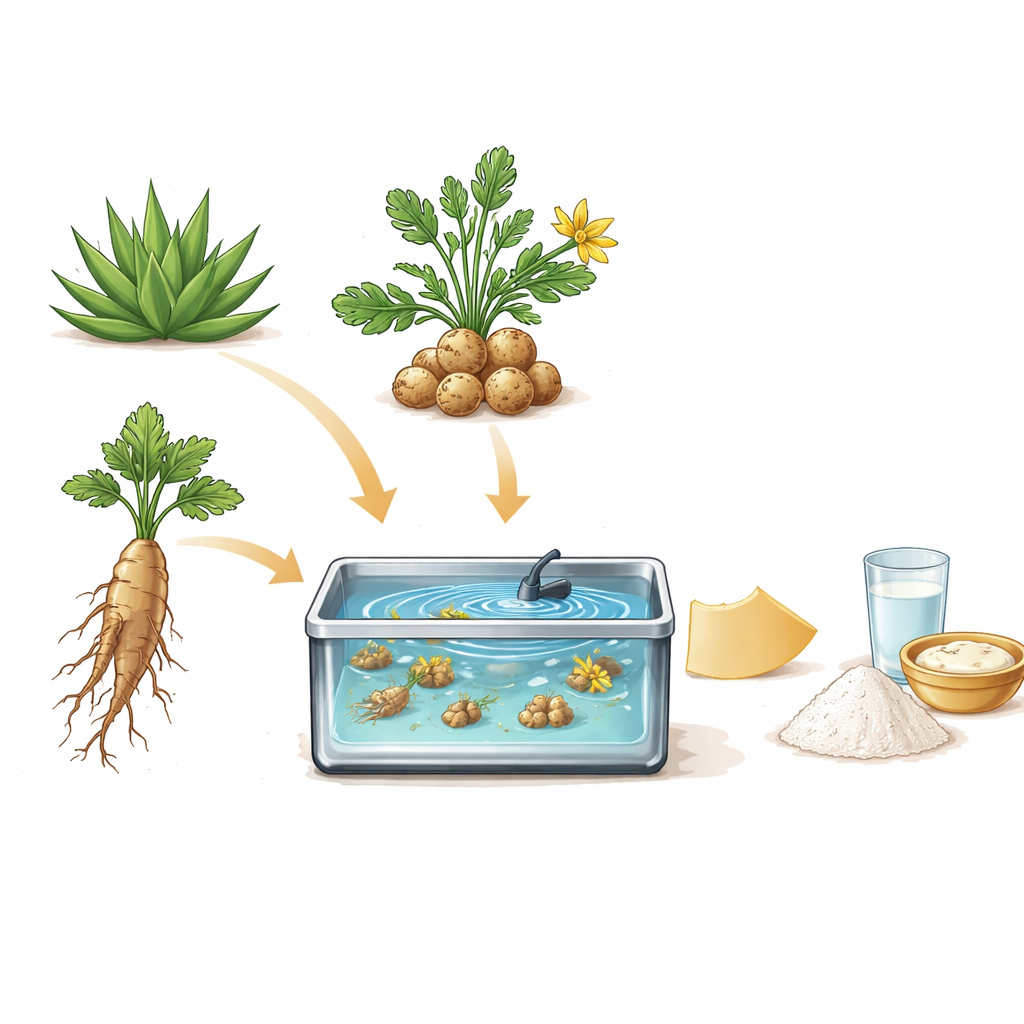
Three Humble Plants With Hidden Potential
Inulin is a chain-like sugar that our own enzymes cannot digest, but friendly gut microbes can. It naturally occurs in many roots and tubers. The team focused on three that can grow well in Pakistan: the spiky agave plant, the blue-flowered chicory, and the knobbly tubers of Jerusalem artichoke. First, they measured the basic make-up of these plants, including moisture, protein, fat, fiber, and key minerals such as potassium and calcium. Each plant brought something different to the table: agave leaves were wetter and slightly richer in fat, chicory roots carried more protein and ash (a marker of total minerals), while Jerusalem artichoke tubers were the most fibrous. Across all three, potassium and calcium stood out, underlining their value not just as fiber sources but also as mineral contributors in the diet.
Using Sound Waves Instead of Harsh Heat
Traditional inulin extraction often relies on high temperatures and long processing times, which can break down the fragile chains that give inulin its special properties. In this work, the scientists turned to ultrasound-assisted extraction, a method that sends high-frequency sound waves through water. As tiny bubbles form and collapse, they tear open plant cells and help dissolve inulin into the surrounding liquid. The researchers varied two simple knobs: how much water they used relative to plant material, and the strength of the ultrasound signal. They found that a higher water level (a one-to-six solid-to-liquid ratio) and a stronger sound frequency (60 kilohertz) consistently pulled more inulin from all three crops.
Which Plant Gave the Best Inulin?
When the numbers were tallied, Jerusalem artichoke emerged as the inulin champion. Under the best ultrasound conditions, its inulin content reached about 94 percent of the dried extract, slightly higher than chicory and clearly higher than agave. But the story did not end with yield. The team also examined how the resulting powders behaved in water and oil and how dry, thick, or soluble they were. Agave inulin held oil particularly well and showed moderate solubility, traits useful in creamy foods and emulsions. Chicory inulin dissolved most readily in water, which makes it attractive for drinks and smooth dairy-style products. Jerusalem artichoke inulin, by contrast, soaked up water like a sponge and had the highest dry matter, qualities that can help add body and moisture to baked goods or meat substitutes even when fat is reduced.
Peeking Inside the Powder
To understand whether ultrasound changed the basic nature of inulin, the researchers used two structural tools more familiar to chemists than cooks. Infrared light revealed the same kinds of chemical groups found in standard inulin, such as alcohol and ether linkages that hold the sugar units together. X-ray analysis showed broad, hazy patterns rather than sharp crystal peaks, meaning the inulin was mostly amorphous with only hints of ordered regions. These patterns shifted slightly depending on the plant source, but there was no evidence that the sound treatment had damaged the essential structure. In other words, the process boosted extraction without stripping away the very features that make inulin valuable as a prebiotic fiber.
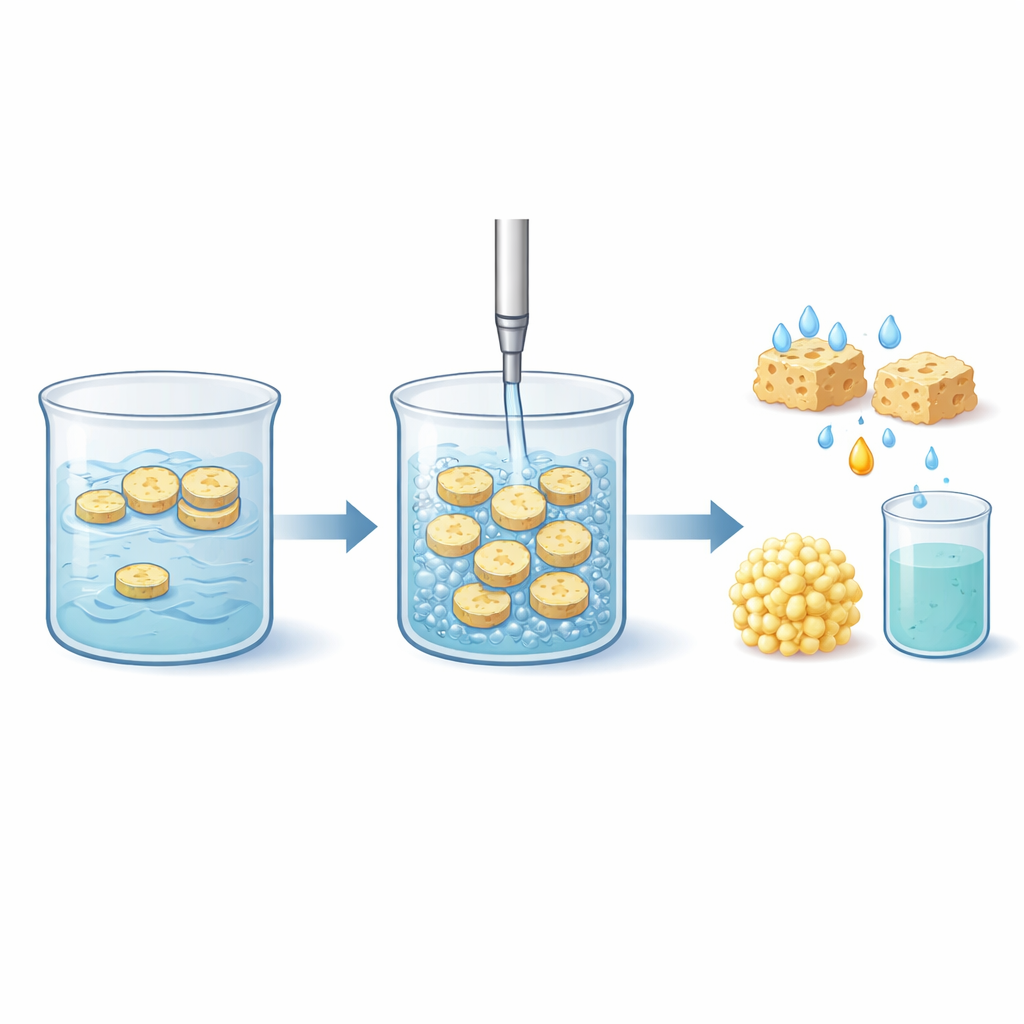
What This Means for Future Foods
Put simply, this work shows that carefully tuned sound waves can pull high-quality inulin from common crops using only water and mild conditions. Among the plants tested, Jerusalem artichoke looks especially promising, combining high inulin yield with strong water-holding power and solid structural traits for food use. Chicory and agave bring their own strengths, particularly in solubility and oil interaction. Together, these findings support the idea that farmers and food makers in regions like Pakistan can rely more on local plants and greener processing to create fiber-rich breads, yogurts, snacks, and nutraceutical products that gently support digestive and mineral health.
Citation: Hussain, S., Randhawa, M.A., Rakha, A. et al. Ultrasound-assisted extraction, quantification and characterization of inulin from agave, chicory and Jerusalem artichoke. Sci Rep 16, 11713 (2026). https://doi.org/10.1038/s41598-026-43085-8
Keywords: inulin, ultrasound extraction, Jerusalem artichoke, functional fiber, agave and chicory