Clear Sky Science · en
Optimizing injector nozzle configuration for high efficiency and low emissions in diesel engines fueled with biodiesel and n-butanol blends
Cleaner Power from Everyday Waste
Burning diesel fuel keeps tractors, pumps, and generators running, but it also warms the planet and fouls the air. This study explores how to turn two unlikely waste products—used cooking oil and fast-growing algae—into a cleaner fuel for diesel engines, and how a small change in the metal tip that sprays the fuel can boost efficiency while cutting harmful gases. The work points toward practical ways to keep existing engines working, but on greener fuel blends that fit rural and small-scale power needs.
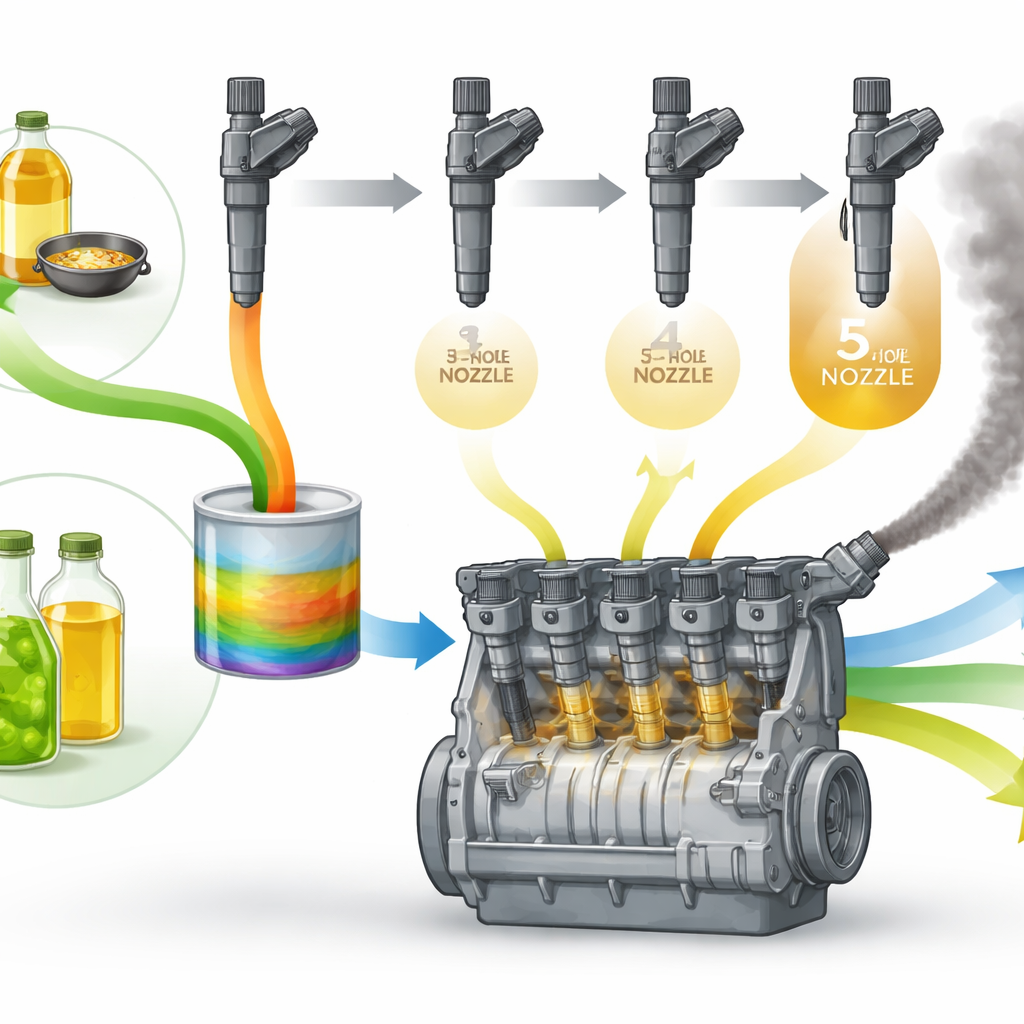
Turning Algae and Fryer Oil into Usable Fuel
The researchers first created a blend of biodiesel using oil from the microalga Chlorella vulgaris and waste cooking oil in equal parts. On their own, these oils are too thick to burn well in a modern engine, so the team used a chemical process that thins them into biodiesel while stripping out unwanted by-products. A solid graphene-based catalyst helped speed the reaction and could be reused several times, reducing waste. The resulting biodiesel was then mixed with regular diesel fuel to form a 20% biodiesel blend, and further improved by adding 30% n-butanol, an alcohol that makes the fuel flow more easily and burn more completely.
A Test Bench for Real-World Engines
To see how these fuels behave in practice, the team ran a small but commercially common single-cylinder diesel engine connected to a dynamometer, which lets them precisely control and measure power output. They replaced the standard injector with electronically controlled injectors that were identical except for one key detail: the number of tiny holes at the nozzle tip. By comparing nozzles with three, four, and five holes, all at the same size and pressure, they could isolate how this geometry affects fuel breakup, mixing with air, and ultimately the engine’s performance and emissions. Careful sensors monitored fuel use, cylinder pressure, and exhaust gases such as carbon monoxide, unburned hydrocarbons, and nitrogen oxides.
More, Finer Jets Bring Better Economy
Across all fuels, increasing the number of nozzle holes improved how finely the fuel spray was broken up and how evenly it mixed with air. This showed up as higher brake thermal efficiency—a measure of how much of the fuel’s energy becomes useful work—and lower specific fuel consumption, which reflects how much fuel is needed per unit of power. While straight diesel still gave the highest peak pressures and strong efficiency, the blend of 20% algae–waste-oil biodiesel with 30% n-butanol and 50% diesel, combined with the five-hole nozzle, produced the best balance: it reached about 33% efficiency and the lowest fuel consumption at the highest tested load. In simple terms, the engine did more work for each liter of this blended fuel when sprayed through the most finely divided nozzle.
Cleaner Exhaust, with One Important Trade-Off
Exhaust measurements revealed that the biodiesel–butanol blends, especially with more nozzle holes, clearly lowered carbon monoxide and unburned hydrocarbon emissions compared with ordinary diesel. These gains come from the extra oxygen in the fuel and the finer spray, which help the fuel burn more completely even as engine power rises. However, the same more thorough burning and hotter combustion also raised levels of nitrogen oxides, a family of gases linked to smog and respiratory problems. The five-hole nozzle and oxygen-rich blend produced the highest nitrogen oxide levels of all the tested cases, although the authors note that common after-treatment systems, such as exhaust gas recirculation and selective catalytic reduction, could bring these emissions down.
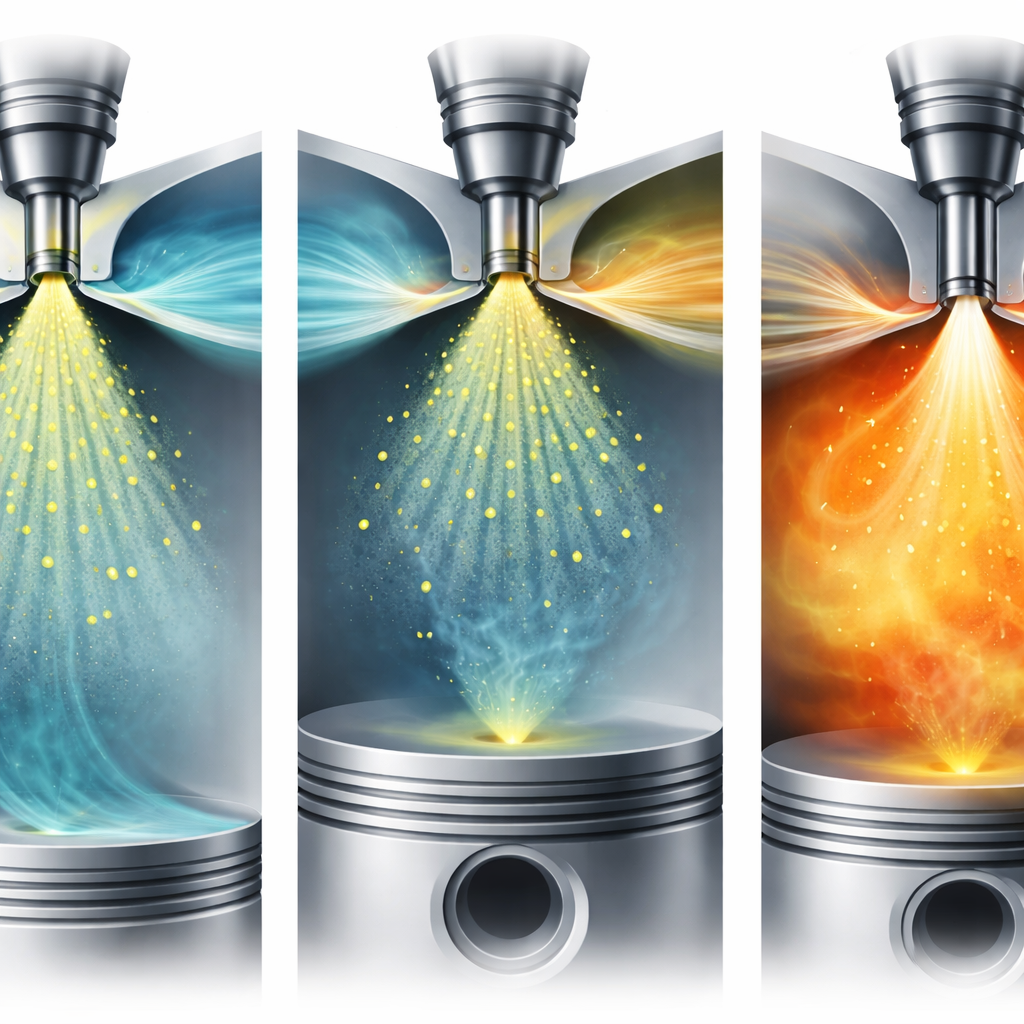
Small Hardware Changes for Greener Diesel
Put simply, this study shows that a modest redesign of the injector tip, paired with a carefully tuned mixture of waste-derived biodiesel, alcohol, and standard diesel, can make existing diesel engines cleaner and more economical without major mechanical overhauls. The combination of a five-hole injector with a blend of algae and used cooking oil biodiesel plus n-butanol gave the best overall result: strong efficiency, lower fuel use, and reduced soot-forming gases, at the cost of higher nitrogen oxides that can be tackled with known exhaust-cleanup technologies. For communities and industries that rely on small diesel engines, this approach offers a practical route to cut carbon footprint and local air pollution while making good use of everyday waste streams.
Citation: Kumar, N.S., Barik, D., Velmurugan, S. et al. Optimizing injector nozzle configuration for high efficiency and low emissions in diesel engines fueled with biodiesel and n-butanol blends. Sci Rep 16, 12556 (2026). https://doi.org/10.1038/s41598-026-43079-6
Keywords: biodiesel, diesel engine, fuel injection, waste cooking oil, n-butanol