Clear Sky Science · en
Depression severity and cardiovascular risk in patients with type 2 diabetes mellitus: insights from the framingham risk score
Why Mood Matters for Heart Health in Diabetes
For millions of people living with type 2 diabetes, managing blood sugar is a daily priority. But this study suggests that how someone feels emotionally may be just as important for their heart as what shows up on their glucose meter. The researchers asked a simple but powerful question: do more severe symptoms of depression go hand in hand with a higher chance of having a heart attack or stroke in the next decade for people with type 2 diabetes? Their findings highlight that emotional well-being is deeply intertwined with physical health—and that ignoring mood may mean overlooking serious heart risks.
Who Was Studied and What Was Measured
The research followed 400 adults with type 2 diabetes who were receiving outpatient care in Iran. All had been diagnosed within the last five years and were taking insulin or other glucose-lowering medications. The team collected detailed information: age, sex, blood pressure, cholesterol, blood sugar levels, waist size, and more. They then used the well-known Framingham Risk Score, a standard tool in cardiology, to estimate each person’s chance of developing cardiovascular disease over the next 10 years. At the same time, they assessed mood using a brief version of the Beck Depression Inventory, a questionnaire that rates how often people experience feelings such as sadness, hopelessness, or loss of interest, and groups them into no, mild, moderate, or severe depression.
How Common Depression Was in People with Diabetes
Depressive symptoms turned out to be widespread in this group. About half of the participants showed no signs of depression, but the rest did: nearly one in five had mild depression, more than one in five had moderate symptoms, and roughly one in ten had severe depression. When the researchers separated patients by how well their diabetes was controlled—based on a long-term blood sugar marker called HbA1c—they discovered a clear pattern. Those with poorly controlled diabetes were more likely to have severe depression than those whose blood sugar was better managed. This suggests that mood and everyday diabetes control may feed into each other, making life harder for the people who are already struggling most.
Heart Risk Rises with Worsening Mood
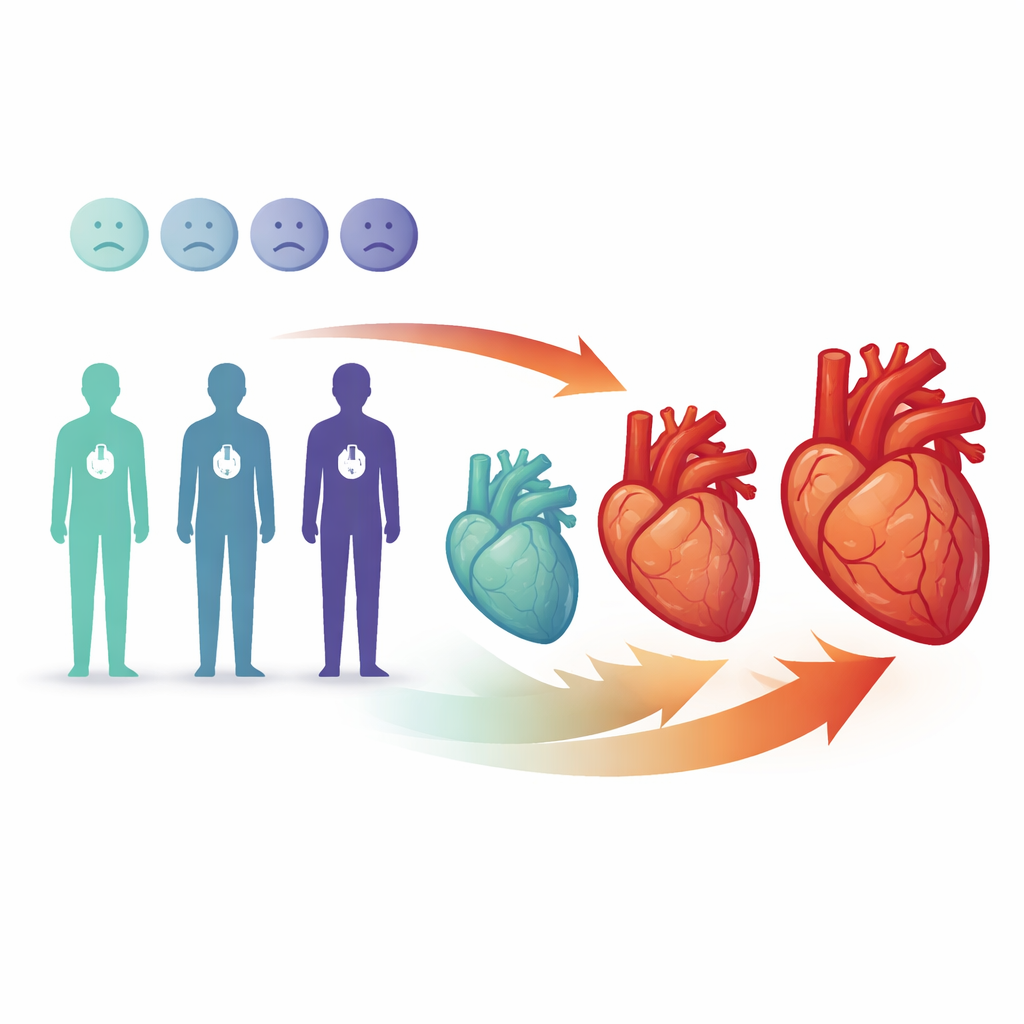
The study also painted a concerning picture of heart health. Using the Framingham score, about 40 percent of the participants were placed in a low-risk category for future cardiovascular disease, one third were at intermediate risk, and a quarter were in the high-risk range. People with poorly controlled diabetes were more likely to fall into the higher-risk groups than those with good control. Crucially, when the team compared heart risk across depression levels, they found that people with mild, moderate, and especially severe depression had higher 10-year cardiovascular risk scores than those with no depressive symptoms. This link held true even after taking into account other factors such as blood sugar levels, family history of diabetes, waist size, and certain liver markers.
Possible Pathways Connecting Mind and Heart
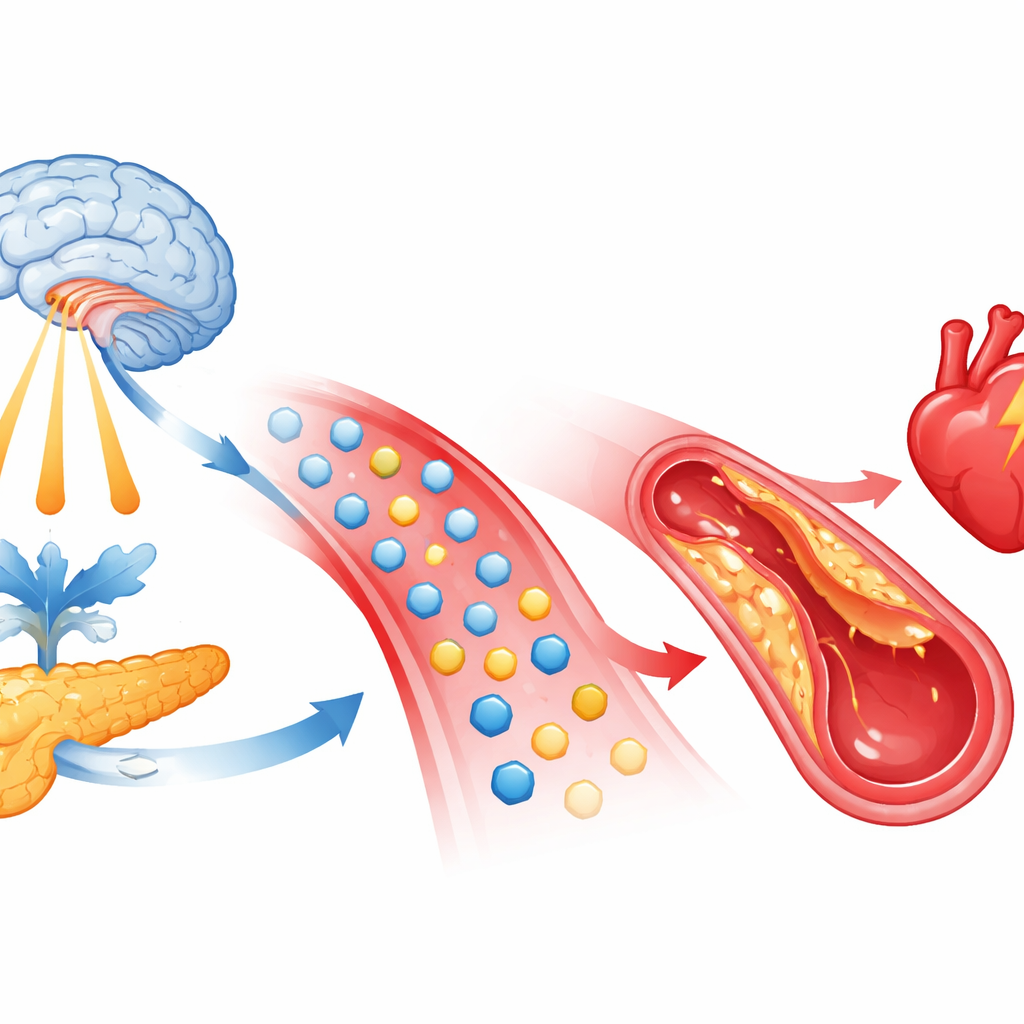
Why might low mood and heart disease be so closely linked in people with type 2 diabetes? The authors point to both behavior and biology. Depression can sap motivation, making it harder to stay active, eat well, avoid smoking, or stick to medications—all crucial parts of diabetes care. Over time, this can worsen blood sugar and cholesterol, straining blood vessels. At the same time, chronic emotional stress can alter hormone systems and the body’s inflammatory response, promoting insulin resistance, blood clotting, and damage to vessel walls. Other studies have shown that people with diabetes and depression face significantly higher rates of heart attacks, strokes, and cardiovascular deaths than those with diabetes alone, reinforcing the idea that mood disorders add an extra layer of risk.
What These Results Mean for Everyday Care
Although this study cannot prove that depression directly causes heart disease—it took a snapshot in time rather than following people over many years—it clearly shows that more severe depressive symptoms travel alongside higher estimated heart risk in adults with type 2 diabetes. For patients and clinicians, the message is practical and urgent: checking in on mood should be part of routine diabetes care, just like measuring blood pressure or cholesterol. Identifying and treating depression, whether through counseling, lifestyle changes, or medication when appropriate, may offer a way to protect both emotional well-being and long-term heart health, and future research will need to test whether improving mood can indeed lower the risk of serious cardiovascular events.
Citation: Aliasgharzadeh, S., Lotfi Yagin, N., Namazi, N. et al. Depression severity and cardiovascular risk in patients with type 2 diabetes mellitus: insights from the framingham risk score. Sci Rep 16, 14100 (2026). https://doi.org/10.1038/s41598-026-43077-8
Keywords: type 2 diabetes, depression, heart disease risk, Framingham risk score, mental health in diabetes