Clear Sky Science · en
Clinical impact and cost-effectiveness of rapid versus non-rapid antiretroviral therapy initiation in HIV-positive men who have sex with men in China using modelling and 96-week multicenter cohort data
Why starting HIV treatment quickly matters
When someone is told they are living with HIV, the next big question is when to start treatment. Acting fast could protect their immune system and reduce the chance of passing the virus to others, but newer drugs also tend to be more expensive. This study followed nearly two years of real-world care for men who have sex with men in China to compare what happens when treatment is started quickly versus later, and when people receive a modern single-pill regimen versus an older, multi-pill option. The results speak not only to individual health, but also to how health systems can spend money wisely.
Two treatment paths under the microscope
The researchers focused on two common starting treatments. One was a newer, single-tablet combination based on the drug bictegravir (often called BIC/FTC/TAF). The other was an older three-drug mix built around efavirenz (EFV+3TC+TDF). All 301 participants were adults newly diagnosed with HIV and had not taken HIV medicines before. They were divided into four groups depending on whether they started treatment within 14 days of diagnosis (rapid start) or after more than 14 days (non-rapid), and which of the two regimens they received. This setup allowed the team to tease apart how both timing and drug choice shape health over 96 weeks.

Tracking the body’s defenses over time
To understand how well people were doing, the study looked at two key signals. One was how strongly the virus was held in check, measured by whether virus levels in the blood dropped below a standard cut-off. The other was the recovery of CD4+ T cells, a type of white blood cell that HIV gradually destroys and that doctors use as a marker of immune health. Across the board, starting treatment rapidly led to excellent control of the virus and stronger immune recovery over nearly two years. This effect was especially noticeable among those taking the older EFV-based regimen, where early treatment helped prevent a drop in immune cells that can be hard to reverse later.
Staying on treatment and feeling well
Health benefits depend not only on which drugs are chosen, but also on whether people can stay on them. Here, the newer bictegravir-based pill clearly outperformed the older regimen. People on BIC/FTC/TAF were more likely to remain on their original treatment and less likely to need a switch because of side effects, suspected resistance, or other problems. When changes did happen in the bictegravir group, they were more often planned improvements, such as simplifying the regimen or supporting better day-to-day adherence, rather than emergency responses to treatment failure. This pattern suggests that the newer pill is generally easier to live with in real-world conditions.
Balancing better health with real-world costs
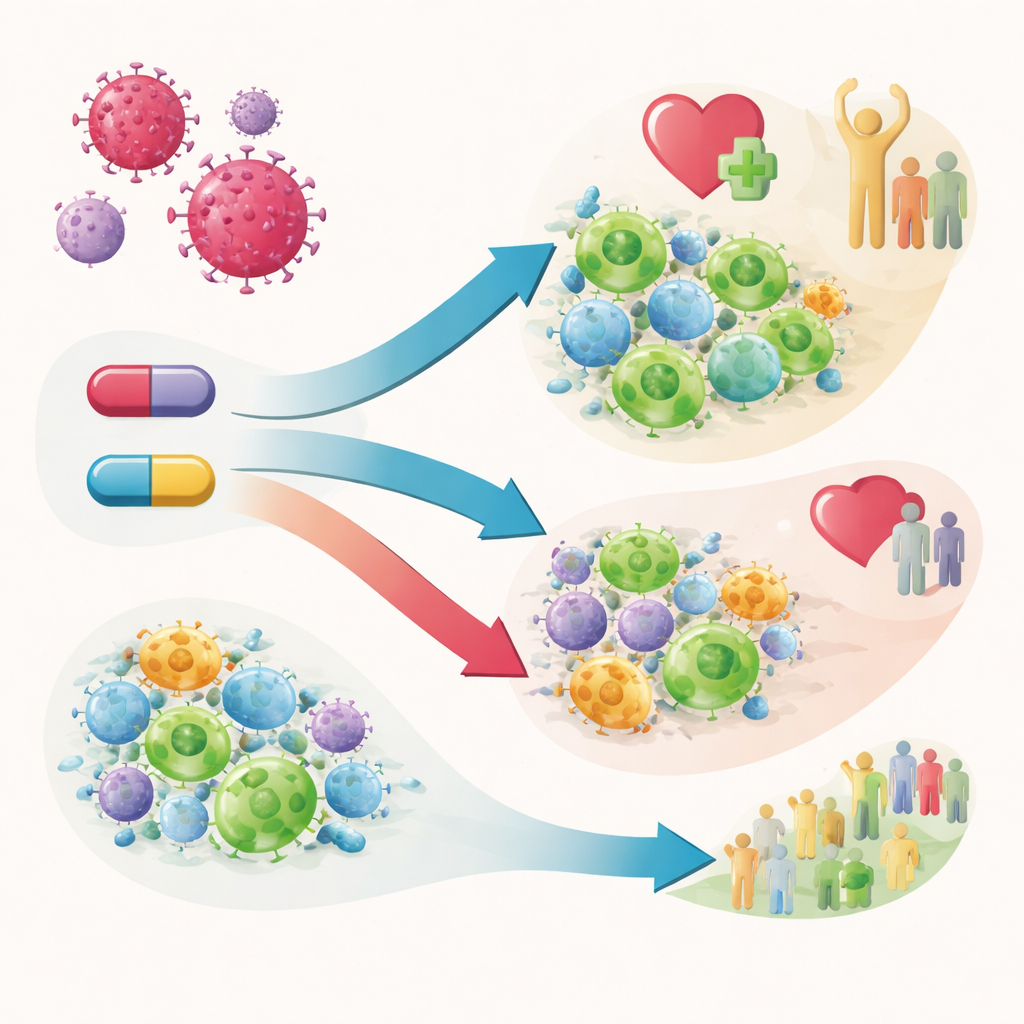
Because modern HIV medicines can be more expensive, the team also asked whether the extra spending pays off. They used computer models to follow people’s health over their lifetime and to project how many new infections might be avoided when treatment works well and quickly. The models showed that the bictegravir-based regimen gave better immune recovery, fewer treatment failures, and strong control of the virus, and that it was economically attractive, especially when started without long delays. In many scenarios, the added costs of the newer pill were offset by gains in quality of life, fewer complications, and a reduced burden of new infections over time.
What this means for people and policy
For a layperson, the message is straightforward: starting HIV treatment soon after diagnosis is good for your health and helps protect others, and using a modern, easy-to-take pill can make it easier to stay on therapy for the long haul. In this Chinese cohort of men who have sex with men, rapid treatment kept the virus under tight control, rebuilt the immune system more effectively, and did so in a way that makes sense for the healthcare system’s budget. The newer bictegravir-based pill was more effective, more durable, and offered better value than the older efavirenz-based combination. These findings support making fast treatment with modern regimens the norm in clinics and national guidelines.
Citation: Zhou, K., Wang, X., Zhou, D. et al. Clinical impact and cost-effectiveness of rapid versus non-rapid antiretroviral therapy initiation in HIV-positive men who have sex with men in China using modelling and 96-week multicenter cohort data. Sci Rep 16, 12620 (2026). https://doi.org/10.1038/s41598-026-43075-w
Keywords: HIV treatment, rapid therapy initiation, antiretroviral drugs, cost-effectiveness, men who have sex with men