Clear Sky Science · en
Micropropagation and ex vitro acclimatization of Lonicera caerulea var. altaica: molecular identification and protocol optimization
Why this hardy berry bush matters
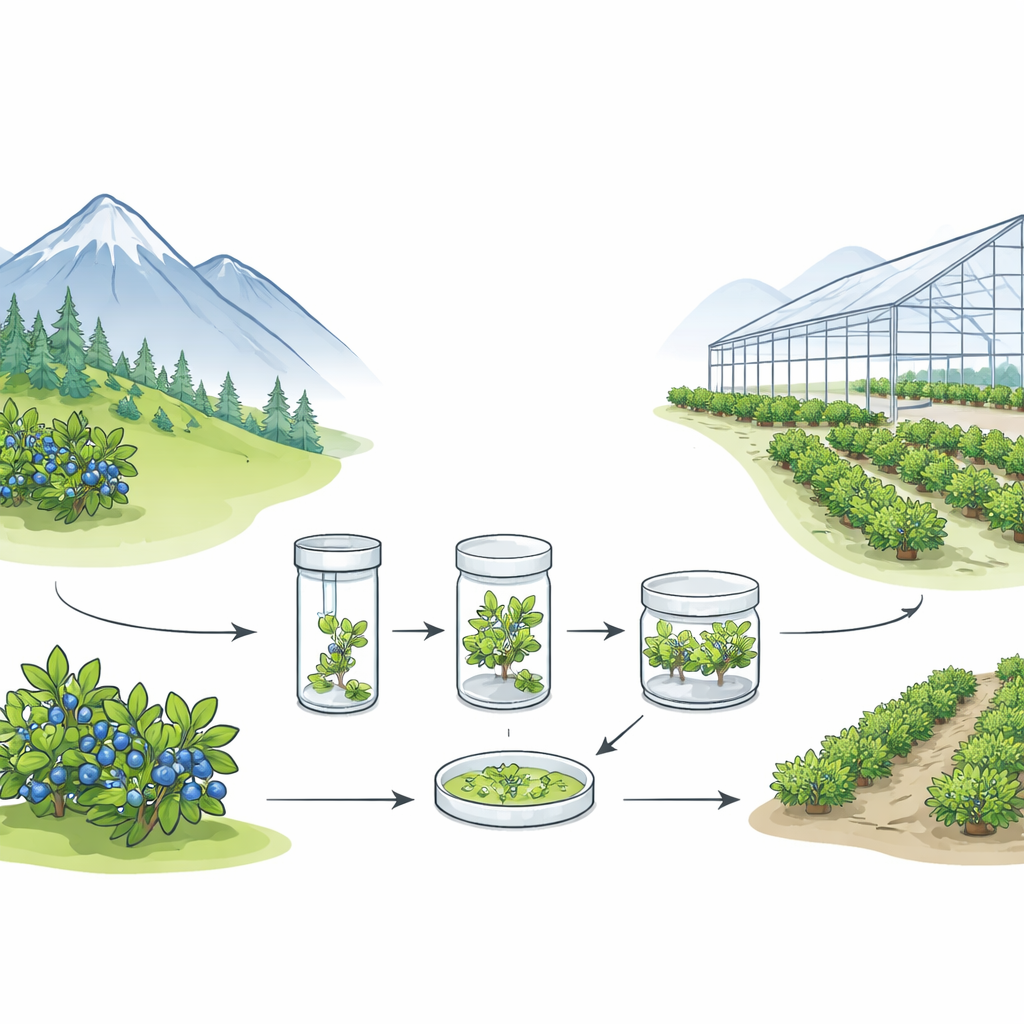
High in the mountains of eastern Kazakhstan grows a tough little shrub with deep blue berries and remarkable health benefits. Lonicera caerulea var. altaica, a type of blue honeysuckle, withstands harsh frosts and produces fruits rich in protective plant compounds. But wild stands are aging and natural regeneration is unreliable. This study shows how scientists developed a precise, lab-based growing method to multiply this valuable shrub quickly and safely, so it can be conserved, studied, and eventually used more widely for food and medicine.
From wild hillside to lab bench
The research team began by carefully collecting young shoots from honeysuckle bushes in the Altai region, under official permits and with herbarium records to document the source plant. They first confirmed that their shrub was truly the desired wild subspecies using a genetic ID technique called DNA barcoding. By reading short stretches of chloroplast DNA from two standard genes and comparing them with global databases, they showed that their plant matched known reference material for L. caerulea var. altaica. This step is crucial: if you want to conserve or grow a particular wild resource, you must be certain you have the right species.
Growing many plants from a few buds
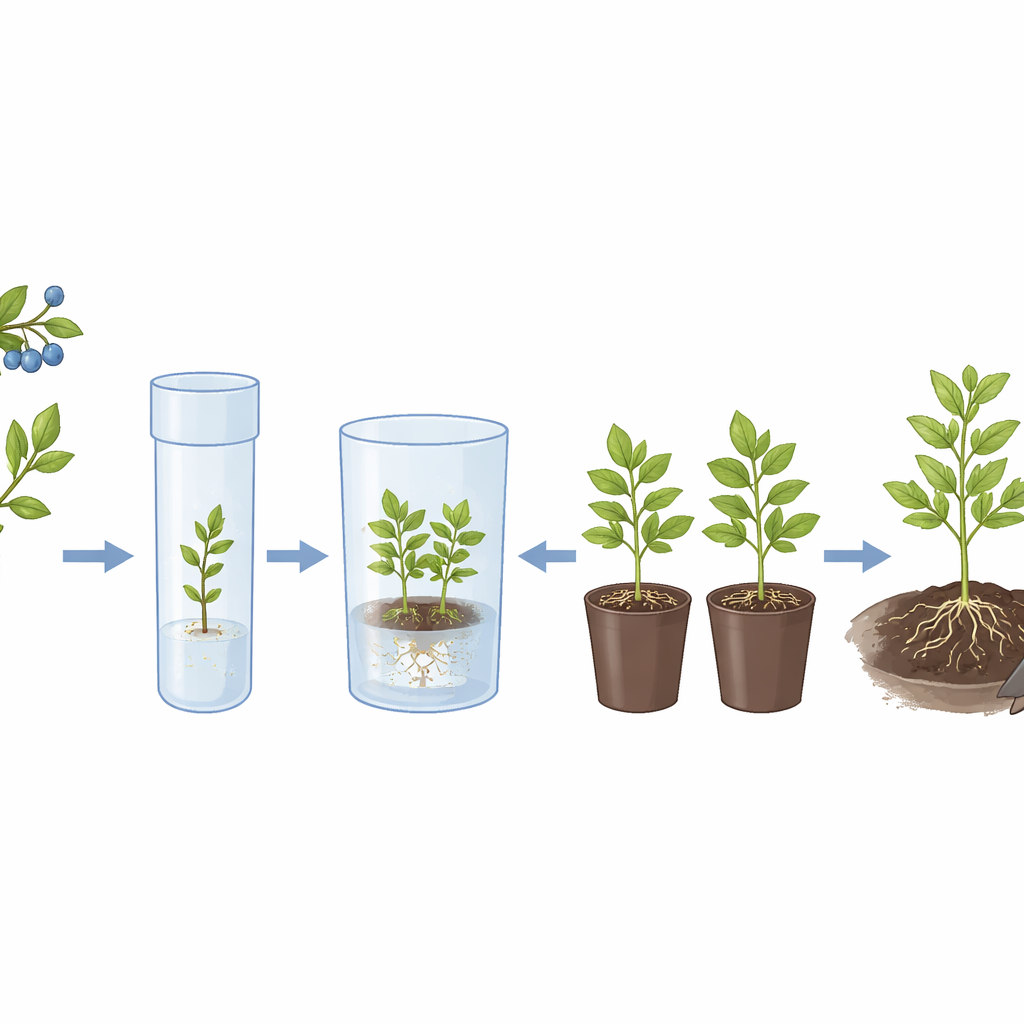
Next, the scientists turned a handful of buds into a small factory for new plants. They disinfected single-node stem pieces, each carrying a sleeping side bud, and placed them on different nutrient gels to see which recipe woke the buds most effectively. A formulation known as QL medium produced healthier, more vigorous shoots than two other standard plant media. The team then fine-tuned a cocktail of plant hormones that control growth. With a carefully chosen mix of one cytokinin, one gibberellin, and a tiny amount of an auxin, each original piece produced on average more than six new shoots in just over a month, each bearing dozens of leaves. This combination balanced speed of multiplication with good plant form, avoiding excessive, weak tissues.
Helping new roots take hold
Leafy shoots alone are not enough; young plants also need strong roots to survive outside the laboratory. The team moved shoot pieces to a diluted version of the QL medium and tested different amounts of a rooting hormone. They found that a moderate dose led to the best compromise: most plantlets formed several stout roots of useful length without becoming spindly. Under these conditions, more than four roots per shoot developed on average, and over 80% of shoots rooted successfully within 35 days. The rooted plantlets also continued to grow taller and produced fresh leaves, signs that they were ready for life beyond the test tube.
Training lab plants for the real world
The most delicate step was acclimatization—gradually shifting the pampered, humid-lab plants to drier air, variable temperatures, and real soil. The researchers compared several planting mixes and discovered that a blend of peat and perlite in a three-to-one ratio worked best. This mixture held enough water and air to let roots expand quickly. After just over a month in these pots, the honeysuckle plantlets had longer shoots, many leaves, and an average of more than a dozen roots each. Remarkably, survival reached 100% in this substrate. In total, 303 young shrubs were robust enough to leave the growth room and continue their lives in greenhouses and botanical gardens across Kazakhstan.
What this means for future berries and medicines
By combining precise genetic identification with an optimized step-by-step growing protocol, this work turns a vulnerable wild shrub into a reliably propagated resource. The method allows large numbers of identical, healthy plants of L. caerulea var. altaica to be produced from a few buds, rooted well, and eased into outdoor conditions with minimal loss. For non-specialists, the takeaway is simple: scientists have built a “life support and cloning system” for a hardy, health-promoting berry bush, giving conservationists and breeders a powerful tool to protect wild populations and explore its nutritional and medicinal promise.
Citation: Zhanybekova, Z., Bayanbay, S., Danilova, A. et al. Micropropagation and ex vitro acclimatization of Lonicera caerulea var. altaica: molecular identification and protocol optimization. Sci Rep 16, 12272 (2026). https://doi.org/10.1038/s41598-026-43068-9
Keywords: blue honeysuckle, plant tissue culture, DNA barcoding, conservation horticulture, micropropagation