Clear Sky Science · en
Effectiveness of estuarine adaptation strategies under future climate conditions
Why this river story matters
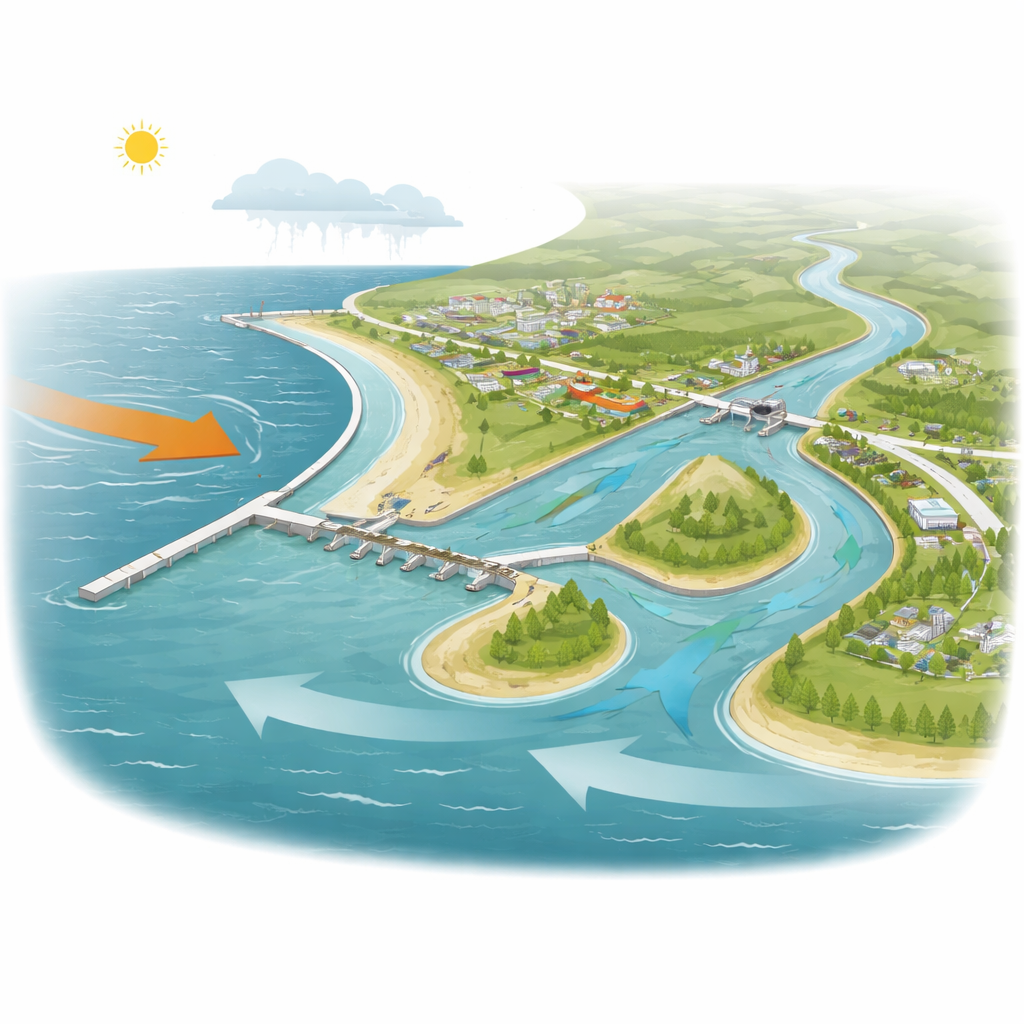
Along many coasts, busy ports sit where rivers meet the sea. These estuaries power local economies, shelter wildlife and buffer nearby cities from floods. But rising seas and warming waters are steadily reshaping how these systems work, threatening both livelihoods and ecosystems. This study asks a practical question using the Elbe Estuary near Hamburg as a test case: under an extreme future climate, can smart engineering changes to the river and its banks still protect people, ships and nature at the same time?
A working river under pressure
Estuaries like the Elbe have long been reshaped for shipping and flood protection. Dredging, dikes and channel deepening have turned what was once a broad, shallow inland delta into a narrow, deep waterway that funnels tides far upstream. At the same time, the Elbe carries high loads of nutrients and organic matter, feeding algae blooms that can later rob the water of oxygen. Climate change adds new pressure: higher sea levels lift the baseline for storm surges, saltier water penetrates further inland, and warmer temperatures speed up the breakdown of organic material, all of which can worsen flooding, muddiness and summertime low-oxygen “dead zones.”
Testing tomorrow’s climate today
To explore what may lie ahead, the authors used a detailed computer model that links physics and biology in the estuary. They imposed a strong but plausible end‑of‑century scenario: sea level is raised by one meter and water temperatures are increased by four degrees Celsius at the estuary mouth. With this future climate in place, they compared a business‑as‑usual Elbe against four alternative layouts that represent realistic adaptation options. These options include moving the tidal barrier further downstream and operating it actively, reopening an old side channel, adding a large flood‑storage wetland (polder), and constructing a diversion dike near the mouth to deflect incoming tides. The model then tracks tides, salinity, sediments, plankton and oxygen throughout the system.
Managing higher seas and stronger storms
The simulations show that rising seas intensify tidal heights and storm surges in the Elbe, especially in the port region. When the historic storm “Xaver” is replayed under the future scenario, peak water levels increase by about a meter simply because the mean sea level is higher. Yet the different engineering layouts do not respond in the same way. The flood‑storage polder and the relocated weir are especially effective at lowering storm peaks compared with the current geometry. They also reshape how quickly water flows in and out: the polder delays and dampens the incoming surge but helps drain the estuary faster afterward, creating more room for the next storm. Overall, all four adaptation options reduce peak surge levels relative to the unmodified estuary in both today’s and tomorrow’s climates, though with different trade‑offs in timing and drainage.
Mud, algae and the struggle for oxygen
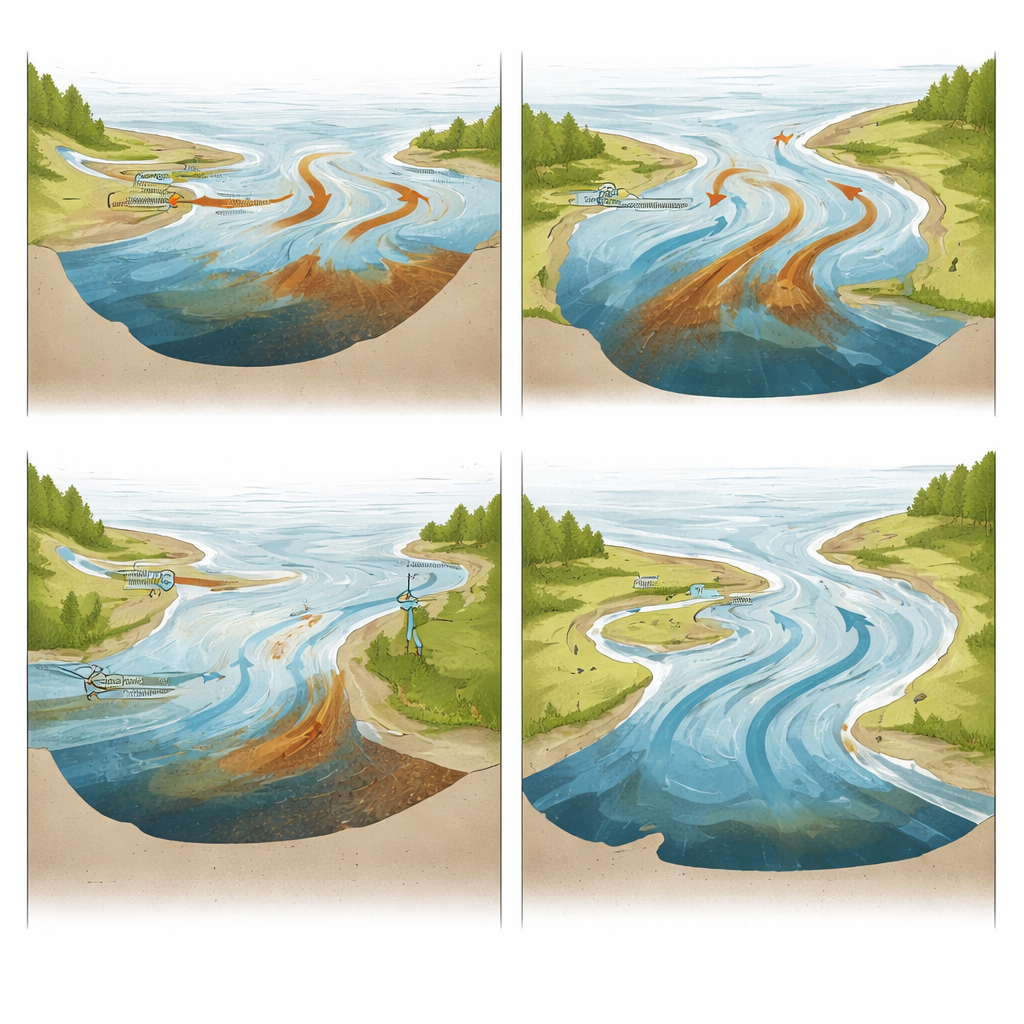
Higher water levels and stronger landward flows in the future scenario push salty, particle‑rich water further upstream. Sediments and bits of organic matter are more easily pumped inland, where the river has been deepened for navigation. The model suggests that mineral sediments increase in this freshwater reach, while lighter organic material is carried even farther, piling up in the shallow upper estuary. Plankton communities shift in step: algae and small animals drift landward and spend more time in these zones. In the critical stretch around 600 to 650 river‑kilometers, already prone to summer oxygen shortages, warmer water boosts respiration, and trapped organic matter fuels further oxygen loss at the bottom.
How redesigning the river can help
The four adaptation designs change this picture in different ways. The relocated weir, reopened side channel and flood‑storage polder all reduce the amount of suspended mineral sediment in the sensitive upper reach, mainly by weakening the tidal pumping that drives particles upstream. They also limit the buildup of organic matter there, which in turn eases stress on bottom‑water oxygen. The side‑channel option stands out by slightly boosting both algae and grazers under future conditions, hinting that restoring lateral connections and shallow areas can support more resilient food webs. The diversion dike, while helpful for some aspects of flood control, tends to keep more sediments in the system and offers less relief for oxygen than the other measures.
What this means for coasts and cities
In plain terms, the study finds that rising seas and warmer waters will make a heavily engineered estuary like the Elbe more flood‑prone, murkier and more likely to suffer from low‑oxygen events. Yet it also shows that carefully chosen structural changes—such as adding flood‑storage areas, reconnecting old channels and re‑positioning barriers—can blunt many of these impacts, especially under strong climate change. Because these measures behave differently in tomorrow’s conditions than they do today, the authors argue that estuary planning must look far ahead, using robust numerical models as test beds for “what‑if” designs. The message for coastal cities is clear: the shape of the river and its connection to the sea can be redesigned to keep ports working, ecosystems breathing and communities safer in a warming, rising‑sea world.
Citation: Pein, J., Staneva, J. Effectiveness of estuarine adaptation strategies under future climate conditions. Sci Rep 16, 9655 (2026). https://doi.org/10.1038/s41598-026-43040-7
Keywords: estuary adaptation, sea level rise, flood risk, sediment and oxygen, Elbe estuary