Clear Sky Science · en
Soil stoichiometric characteristics of protected cultivation systems in Northwest China
Why the Soil Under Greenhouses Matters
Across China and around the world, more vegetables and fruits are grown under plastic-covered structures that protect crops from bad weather and boost yields. But these protected cultivation systems—such as greenhouses and high tunnels—also change how nutrients like carbon, nitrogen, phosphorus, and potassium move through the soil. This study explores whether years of intensive greenhouse use, different types of crops, and contrasting climates in Shaanxi Province are quietly pushing soils away from a healthy nutrient balance, with important consequences for food production and the environment.
Taking a Close Look at Farm Soils
The researchers sampled topsoil from 189 protected cultivation systems and 130 nearby open fields across three very different regions of Shaanxi: the warm and humid south, the milder center, and the dry, cooler north. In each place, they compared soils from short‑, medium‑, and long‑term greenhouse plots growing leafy vegetables, fruiting vegetables like tomatoes and peppers, or fresh fruits such as melons. They measured the amounts of carbon, nitrogen, phosphorus, and potassium and then calculated simple ratios between these elements, which act like “vital signs” for soil health and nutrient balance. These ratios reveal whether the soil is leaning toward shortages or excesses that can affect microbes, plant growth, and nutrient losses.
Greenhouses Versus Open Fields
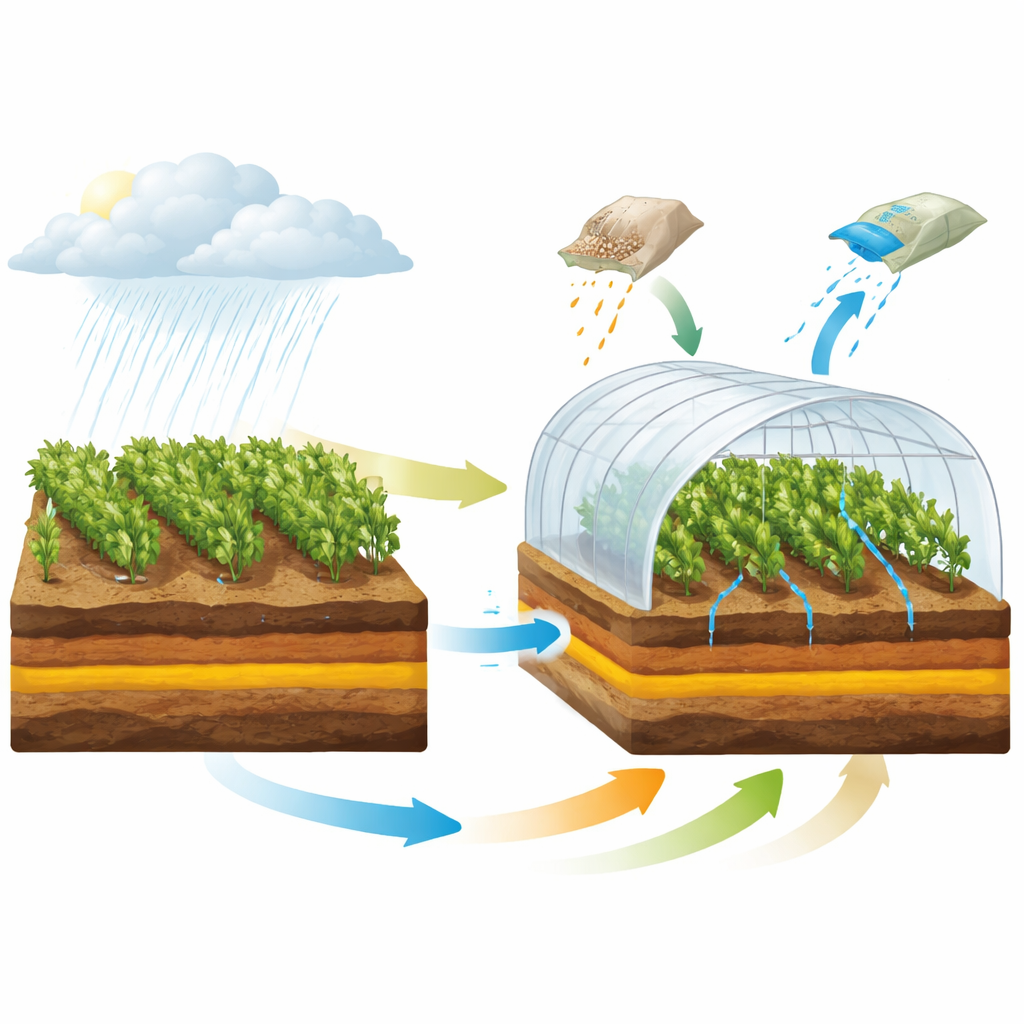
When the team compared protected systems with open fields, they found clear differences. Soils under greenhouses had much higher carbon‑to‑phosphorus and nitrogen‑to‑phosphorus ratios, and higher nitrogen‑to‑potassium ratios, than nearby open fields. In plain terms, greenhouse soils tended to build up more carbon and nitrogen relative to phosphorus and potassium. Carbon‑to‑nitrogen ratios, by contrast, were lower in greenhouses, reflecting faster breakdown of organic matter and heavy nitrogen fertilization. These patterns were strongest in the warm, moist southern zone, where intense biological activity and generous inputs of water and fertilizer speed up nutrient cycling and magnify imbalances between elements.
How Time and Crop Choices Shift the Balance
The length of time land had been under protected cultivation emerged as a powerful driver of change. As greenhouses aged from short‑term to long‑term use, their soils showed steadily lower carbon‑to‑nitrogen ratios but higher carbon‑to‑phosphorus, nitrogen‑to‑phosphorus, carbon‑to‑potassium, and nitrogen‑to‑potassium ratios. This pattern signals a gradual move away from nitrogen shortage toward growing shortages of phosphorus and especially potassium. The effect was most dramatic in the drier northern zone, where long‑used greenhouses showed nearly double the potassium‑related ratios of newer structures, hinting that potassium is being mined from the soil faster than it is replaced. Crop type on its own had smaller effects, but its influence changed with climate and cultivation time, meaning that the same crop could nudge soil nutrients in different directions depending on where and how long it was grown.
The Hidden Role of Soil Traits
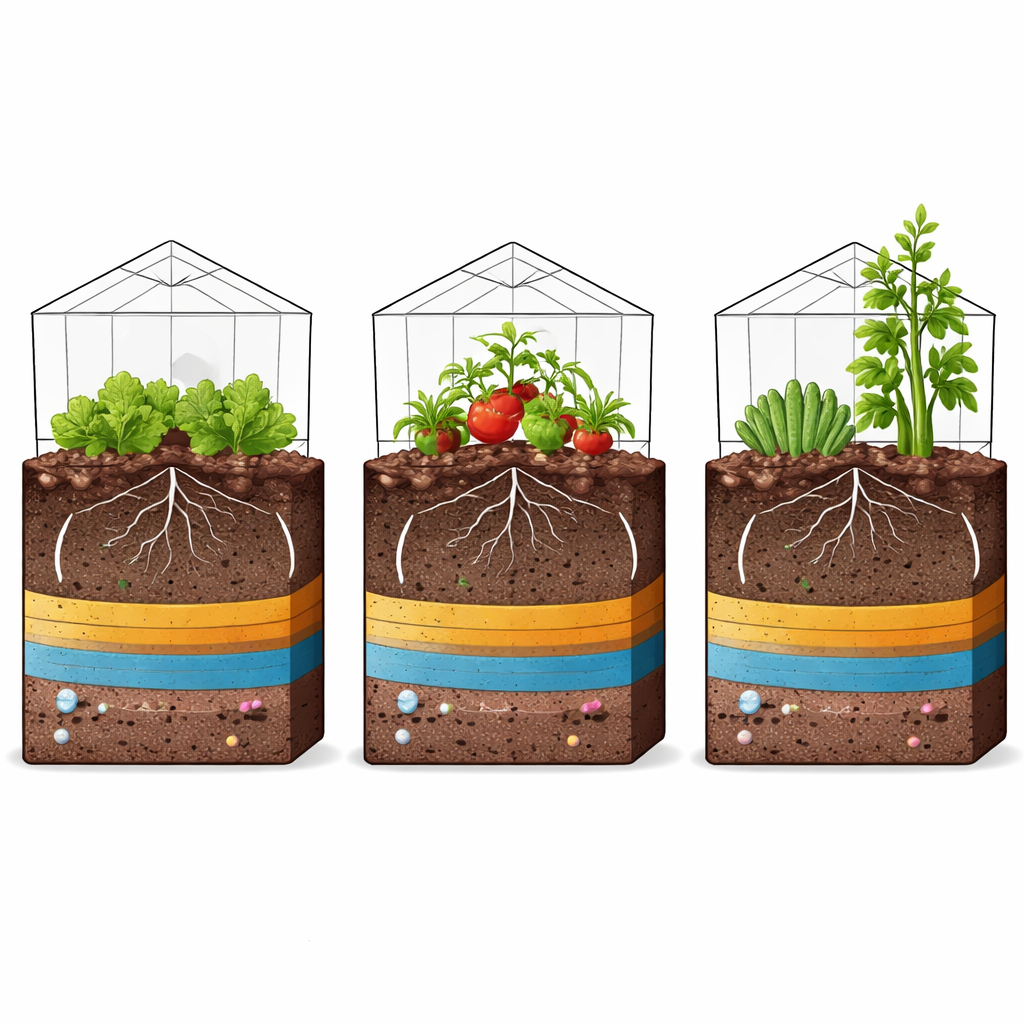
To untangle these interacting influences, the authors used statistical models that trace both direct and indirect effects. They found that climate zone, years of cultivation, and crop type all shaped soil nutrient ratios, but mostly by first changing basic soil properties such as acidity, organic matter levels, and the soil’s ability to hold charged nutrients. For example, soils with higher pH tended to hold more carbon relative to nitrogen, while soils with greater capacity to retain nutrients showed stronger signs of potassium limitation. Available potassium in the soil was closely tied to how strongly phosphorus‑to‑potassium and other ratios shifted. In essence, underlying soil conditions acted as the main “gearbox” through which management and climate translated into nutrient imbalances.
What This Means for Farmers and the Environment
For non‑specialists, the message is straightforward: protected cultivation can boost production, but it also quietly reshapes the nutrient budget of soils. Over time, heavy and often unbalanced fertilization in greenhouses in Shaanxi tends to load soils with nitrogen and carbon while leaving phosphorus and especially potassium behind. If left unchecked, this shift could weaken crops, waste fertilizer, and increase pollution. The study suggests that nutrient management needs to be tailored to local climate and soil conditions. In the humid south, cutting back on nitrogen while boosting phosphorus and potassium may restore balance; in the drier north, priority should go to replenishing phosphorus and potassium. By tracking simple nutrient ratios and adjusting fertilizer mixes accordingly, farmers and advisors can help keep greenhouse soils healthy, productive, and resilient over the long term.
Citation: Jing, G., Huang, B., He, L. et al. Soil stoichiometric characteristics of protected cultivation systems in Northwest China. Sci Rep 16, 13081 (2026). https://doi.org/10.1038/s41598-026-43026-5
Keywords: greenhouse soil, nutrient balance, soil stoichiometry, protected cultivation, fertilizer management