Clear Sky Science · en
Chitosan/pectin bio-composite films enriched with bioactive fraction of Acalypha indica L. as active packaging: a comparative assessment of postharvest fruit quality
Why Keeping Fruit Fresh Matters
Every year, enormous amounts of fruits and vegetables are thrown away because they spoil before we can eat them. Browned apple slices, mushy berries, and moldy tomatoes are more than just unappetizing—they represent wasted money, resources, and nutrition. This study explores a new kind of edible, eco-friendly food wrapping that not only slows down spoilage and browning but also fights harmful microbes, offering a potential alternative to plastic packaging and synthetic preservatives.
A Wrap Made from Nature
Instead of using petroleum-based plastics, the researchers built their wrapping film from two natural substances: chitosan and pectin. Chitosan comes from the shells of crustaceans like shrimp, while pectin is familiar as the gelling agent in jams, extracted from fruits and vegetables. On their own, these materials are already biodegradable and safe to eat, but the team went a step further by blending them and then enriching the blend with a concentrated “active fraction” from a common medicinal weed, Acalypha indica. This plant extract is rich in natural compounds known for their antioxidant and antimicrobial abilities. By combining all three, the scientists created a thin, transparent film intended to be both a physical barrier and a source of protective chemistry for food.
How the New Film Behaves
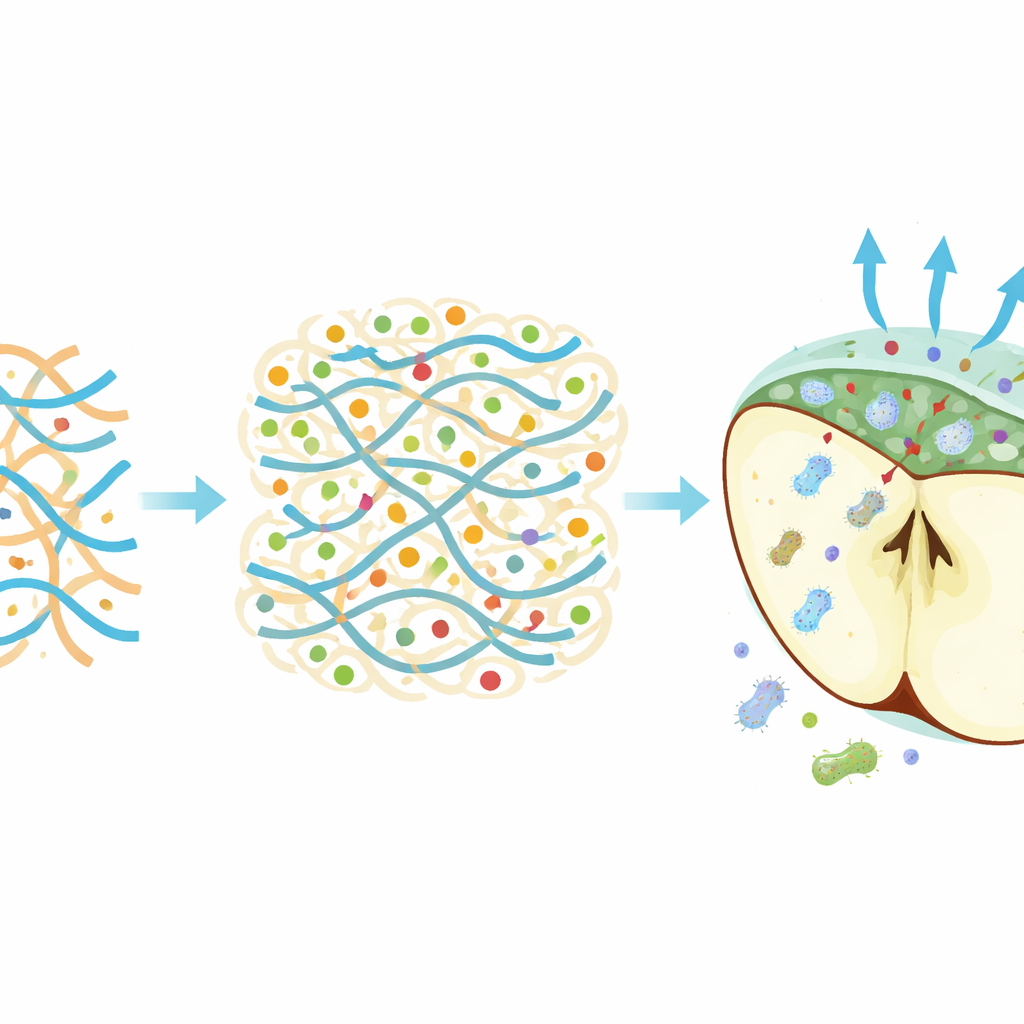
The team carefully measured how the films looked and behaved. The versions containing the plant extract were slightly less transparent and more tinted than the plain films, but they became denser and mechanically stronger. The composite chitosan–pectin film with plant extract had lower moisture content, absorbed less water, and swelled less, all of which are important for a stable food wrap. It also let less water vapor pass through than the control films, meaning it could better keep foods from drying out. Detailed tests using infrared light, X-ray diffraction, and nuclear magnetic resonance showed that adding the plant fraction did not disrupt the overall structure of the film, but created a more compact, amorphous network where the plant compounds were well dispersed.
Built-In Protection from Oxygen and Germs
Food spoils faster when it is attacked by free radicals, which drive oxidation, and by bacteria that cause decay and illness. The plant-enriched films showed clearly stronger antioxidant power than the plain chitosan or pectin films, approaching the performance of pure vitamin C in standard laboratory tests. They were also much better at stopping the growth of two common foodborne bacteria, Staphylococcus aureus and Escherichia coli. Among all the versions tested, the film that combined both polymers plus the active plant fraction produced the largest clear zones where bacteria could not grow, especially against the more vulnerable Gram-positive strain. At the same time, soil-burial experiments showed that all of the films broke down over days under composting conditions, confirming that they are biodegradable rather than persistent plastics.
Putting the Film to Work on Apple Slices
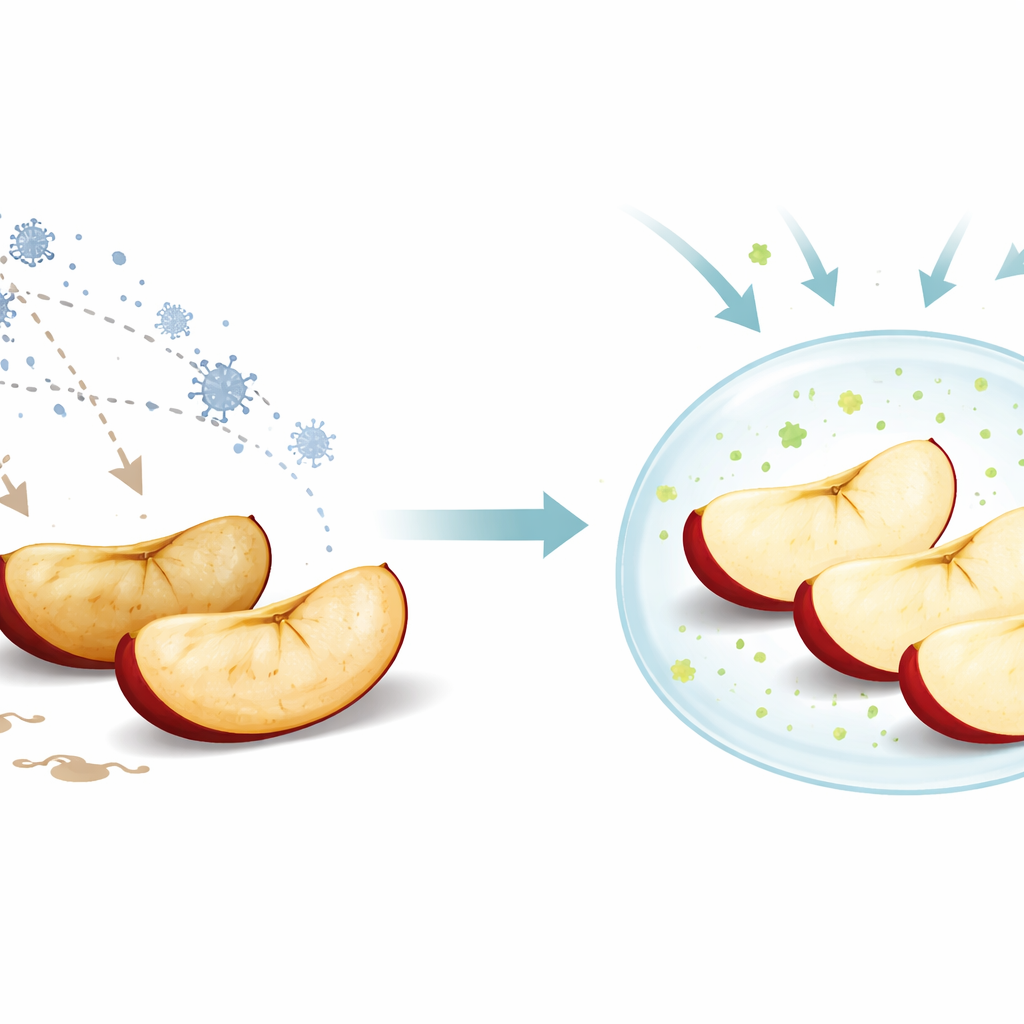
To see whether these benefits translated to real food, the researchers wrapped fresh-cut apple slices with the different films and stored them either at room temperature or in the refrigerator. Unwrapped slices quickly lost water, turned brown, and looked unappealing within a day at room temperature. By contrast, slices coated with the composite chitosan–pectin film containing the plant fraction stayed moister, browned more slowly, and maintained a fresher appearance. Under refrigeration, these protected slices kept their quality for up to seven days, with lower weight loss and a lower browning index than other film treatments or uncoated controls. The film also released its active plant components gradually over time, suggesting that its protective chemistry can be sustained during storage.
What This Could Mean for Everyday Food
In simple terms, this research shows that a thin, edible sheet made from natural polymers and plant extracts can act as a smart, compostable packaging material. It helps keep cut fruit like apples from drying out and turning brown, while also slowing the growth of harmful bacteria—without relying on synthetic preservatives or conventional plastic wraps. Although this work was carried out at laboratory scale and still needs long-term safety, stability, and industrial tests, it points toward a future where the “plastic” around our food could be both protective and part of the meal, and where less of what we harvest ends up in the trash.
Citation: Venkatesan, U., Muniyan, R. Chitosan/pectin bio-composite films enriched with bioactive fraction of Acalypha indica L. as active packaging: a comparative assessment of postharvest fruit quality. Sci Rep 16, 12466 (2026). https://doi.org/10.1038/s41598-026-43022-9
Keywords: edible packaging, fruit shelf life, biodegradable films, natural antimicrobials, food preservation