Clear Sky Science · en
Spirohydantoin derivatives exert dopamine D2-like receptor-independent cytotoxicity in glioblastoma cells with possible involvement of calpain inhibition
Why this brain cancer study matters
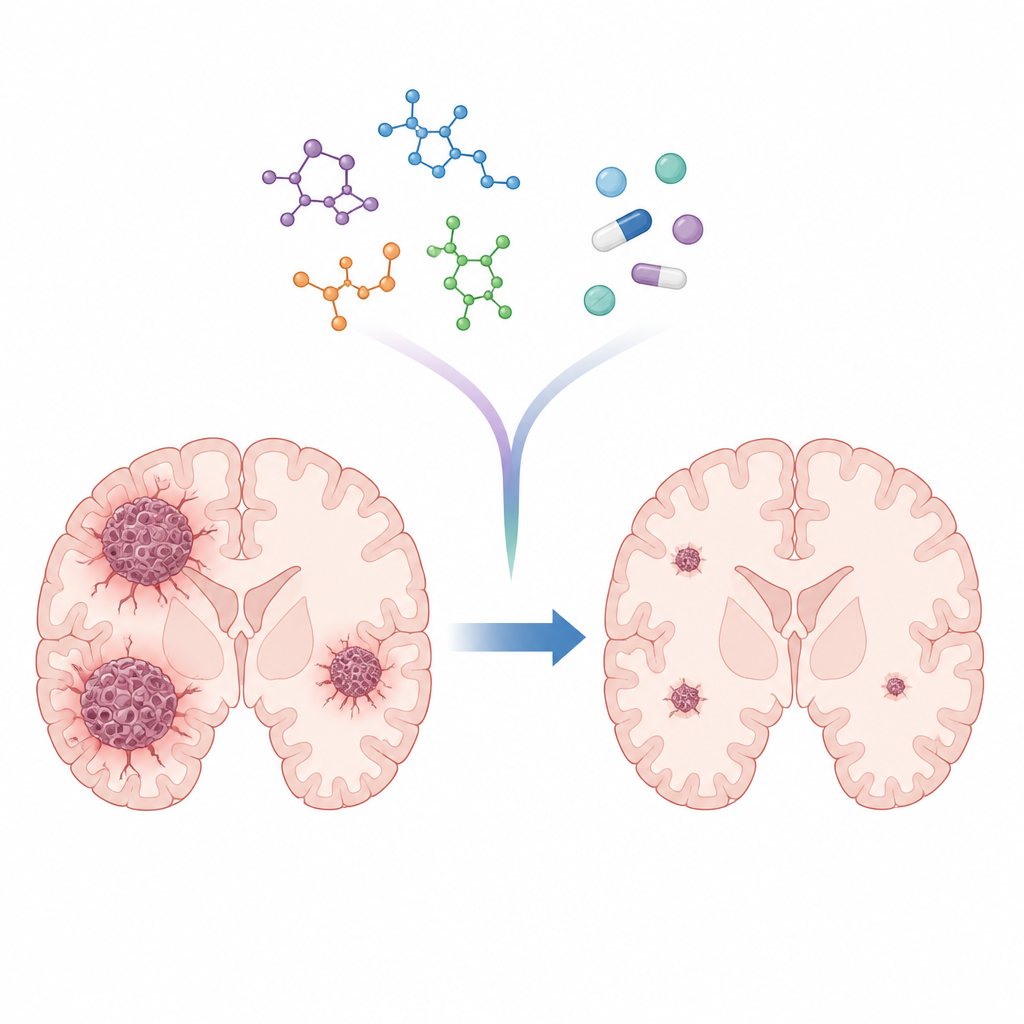
Glioblastoma is one of the deadliest forms of brain cancer, and current drugs add only a few months to patients’ lives. This study explores a new family of lab made molecules that can kill glioblastoma cells in dishes more effectively than today’s standard chemotherapy, and asks how they work inside the cells.
Looking for better options than today’s main drug
The standard drug for glioblastoma, temozolomide, often fails because tumor cells become resistant and the medicine does not easily cross the blood brain barrier. The researchers tested eight related compounds called spirohydantoins on three human glioblastoma cell lines and on normal human skin cells. They looked at how well each compound reduced cell survival and whether it harmed healthy cells. Three candidates, referred to as 4, 6 and 7, stood out: they killed cancer cells at far lower concentrations than temozolomide while sparing most normal cells, especially in two of the glioblastoma lines that grow quickly.
New drug family hits tumor cells but not through dopamine
Because these compounds can also bind to dopamine receptors, which are best known for their roles in brain signaling and psychiatric drugs, the team asked whether the cancer killing action came from blocking those receptors. They compared how strongly each compound bound to several dopamine and serotonin receptors with how toxic it was to tumor cells, and measured the levels of these receptors in the different glioblastoma lines. There was no clear match between receptor binding and cell killing, and the most potent anti tumor compound did not have the strongest receptor binding. This led the authors to conclude that dopamine receptors are unlikely to be the main route by which these molecules damage glioblastoma cells.
How the cells die and a new suspect: calpain
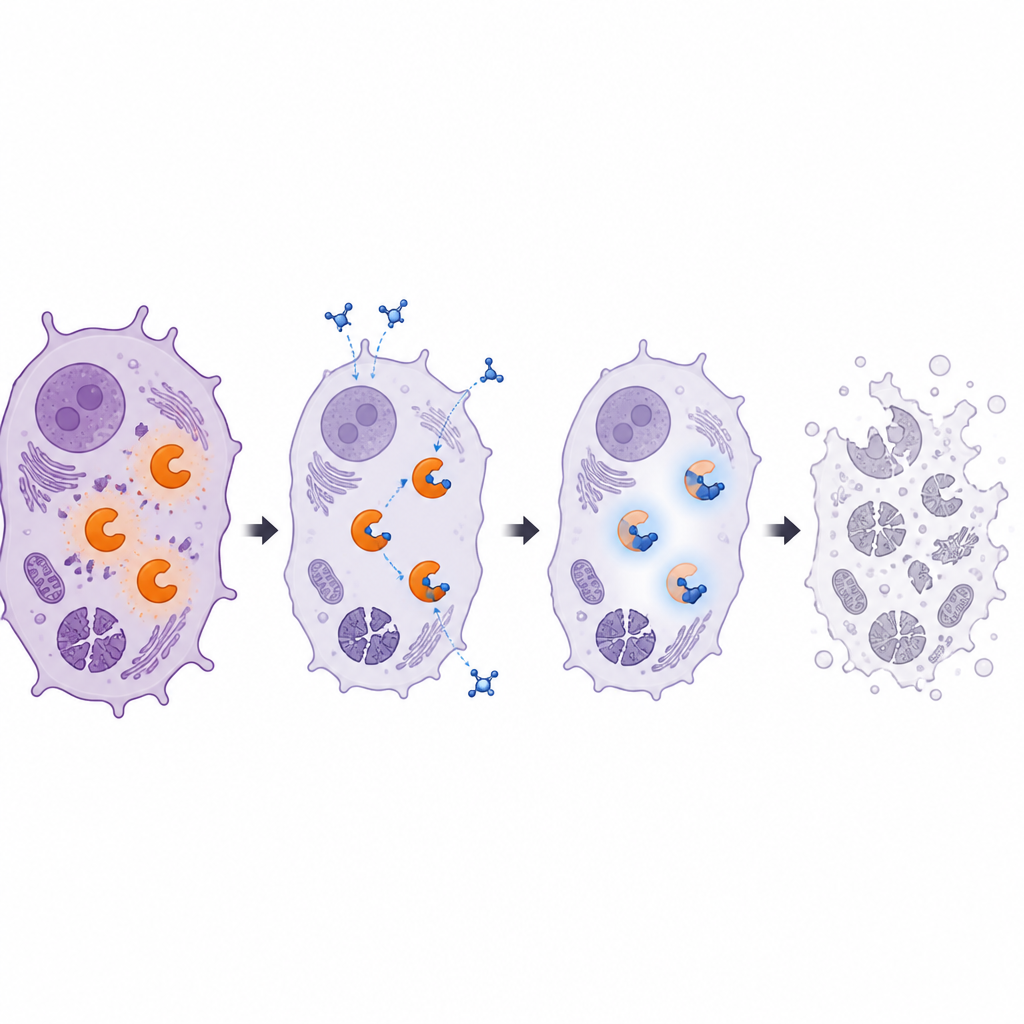
The scientists then probed what kind of cell death these compounds trigger. Temozolomide mainly turned on a classic self destruct program known as apoptosis, while compounds 4, 6 and 7 produced more necrosis like damage, where cells swell and rupture, without activating a key suicide enzyme. Blocking several known death pathways or stress signals did not rescue the cells. An intriguing clue came from testing calpain, a protein cutting enzyme involved in many cancer processes. Two known calpain blockers killed glioblastoma cells on their own and further increased the damage caused by the new compounds. Computer modeling suggested that the hydantoin part of the molecules can fit into calpain’s active pocket in a way similar to established calpain inhibitors, hinting that these drug candidates may partly work by interfering with this enzyme.
Working together with existing chemotherapy
The team also asked whether the new molecules could help temozolomide work better. In all three glioblastoma cell lines, including one that was relatively resistant to temozolomide, combining it with compounds 4, 6 or 7 led to stronger loss of cell viability than either agent alone. Microscopy confirmed more extensive cell damage and more cells with leaky membranes in the combined treatments. Calculations using a standard computational tool further suggested that these small molecules are likely able to cross the blood brain barrier, an essential property for any future brain tumor drug.
What this could mean for future treatment
For a lay reader, the key message is that this study uncovers a set of small, brain permeable molecules that selectively harm glioblastoma cells in the lab and make the current standard drug work better, without relying on the usual dopamine targets. Early evidence points to calpain, a protein cutting enzyme, as a possible player in this effect. While the work is still at the cell and computer modeling stage and much remains to be tested in more realistic tumor models and animals, it opens a fresh route for drug design and combination therapies aimed at a cancer that urgently needs new treatment strategies.
Citation: Kucwaj-Brysz, K., Podlewska, S., Jakubowska, K. et al. Spirohydantoin derivatives exert dopamine D2-like receptor-independent cytotoxicity in glioblastoma cells with possible involvement of calpain inhibition. Sci Rep 16, 14883 (2026). https://doi.org/10.1038/s41598-026-43014-9
Keywords: glioblastoma, spirohydantoin, calpain inhibition, temozolomide combination, dopamine receptors