Clear Sky Science · en
Antimicrobial use and Escherichia coli resistance patterns in Hungarian pig farms: a data-driven farm-level analysis
Why medicine on pig farms matters to everyone
Antimicrobial resistance – when germs outsmart the drugs meant to kill them – is usually discussed in hospitals and human clinics. But a large share of these medicines is actually used on farms, especially in pigs raised in intensive systems. This study looks inside four commercial pig farms in Hungary to understand how much medicine is being used, how resistant the pigs’ gut bacteria have become, and whether everyday farm records can be turned into an early-warning system for dangerous resistance trends.
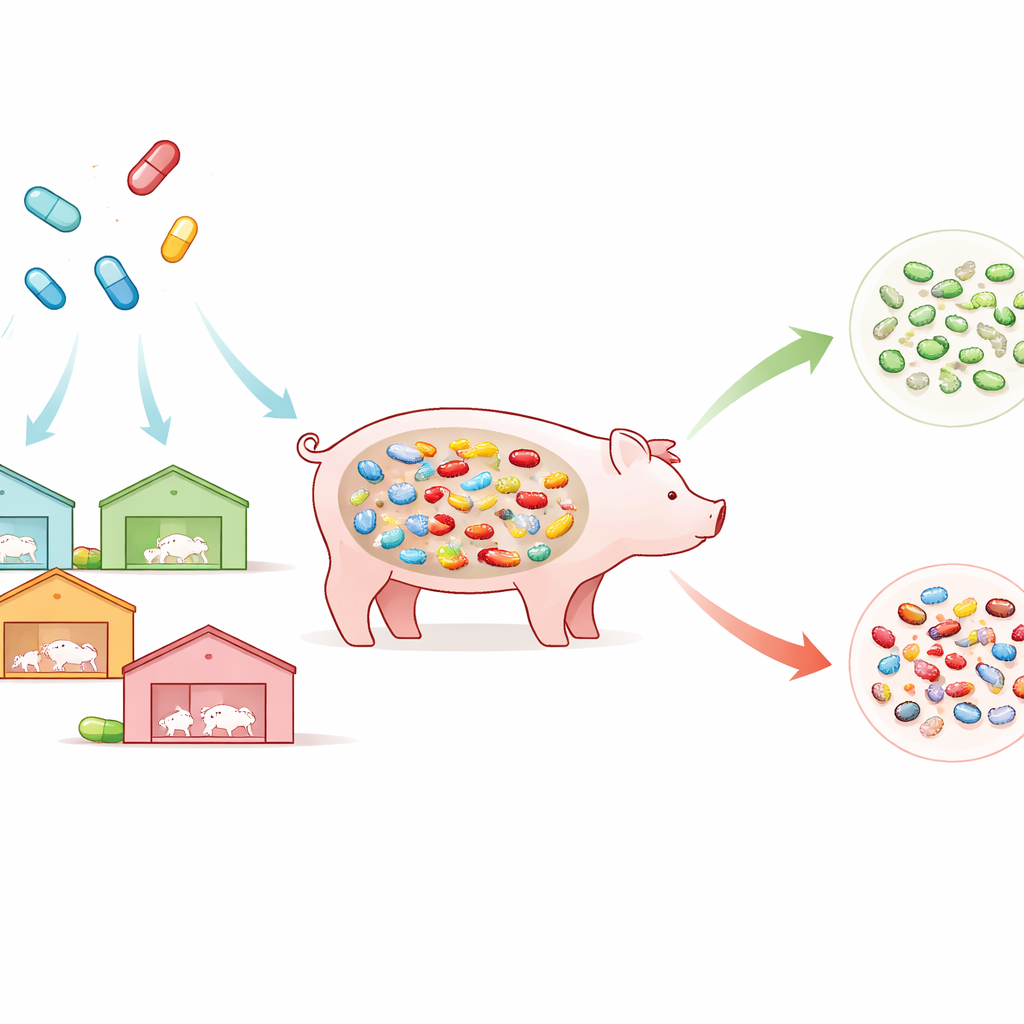
Looking closely at four real-world pig farms
The researchers combined two kinds of information from the same four farrow-to-finish pig farms. First, they took a detailed look at farm pharmacy records over the previous year, converting product names and doses into standardized monthly amounts of different antimicrobial drugs per kilogram of animal on the farm. Second, in December 2023 they collected rectal swabs from pigs of different ages and measured how well Escherichia coli – a common gut bacterium that can cause serious diarrhea in piglets – survived in the presence of 14 widely used drugs. This gave them both how much was used and how hard it was becoming to treat infections, farm by farm.
Different farms, different drug habits
The four farms turned out to use very different amounts and mixes of antimicrobials. One farm was a clear heavy user across almost all time windows, whereas another farm used comparatively little. Across nearly all situations, one drug – amoxicillin – dominated the treatment patterns, sometimes almost on its own. Other drugs, such as florfenicol and neomycin, were used in bursts or on specific farms. By looking backward over 3, 6, 9, and 12 months, the team could see whether recent spikes in use looked different from longer-term averages, revealing farms where certain medicines had become increasingly relied upon.
Resistance does not always follow use in a simple way
When the team compared usage and resistance patterns, they found both reassuring and worrying signals. As expected, the heaviest-using farm also tended to show the highest overall resistance in its E. coli, while the lightest-using farm showed the lowest. Yet at the level of individual drugs and individual farms, the story became more tangled. Some drugs, such as doxycycline on one farm, showed a straightforward picture: high use went hand in hand with high resistance. Others behaved very differently: on one farm, amoxicillin was used heavily but resistance remained low, while on another farm similar heavy use coincided with high resistance. In several cases, resistance stayed high even for drugs that had been used little in the recent past, hinting at long-lasting “memory” effects in the bacterial population.
Hidden links between different medicines
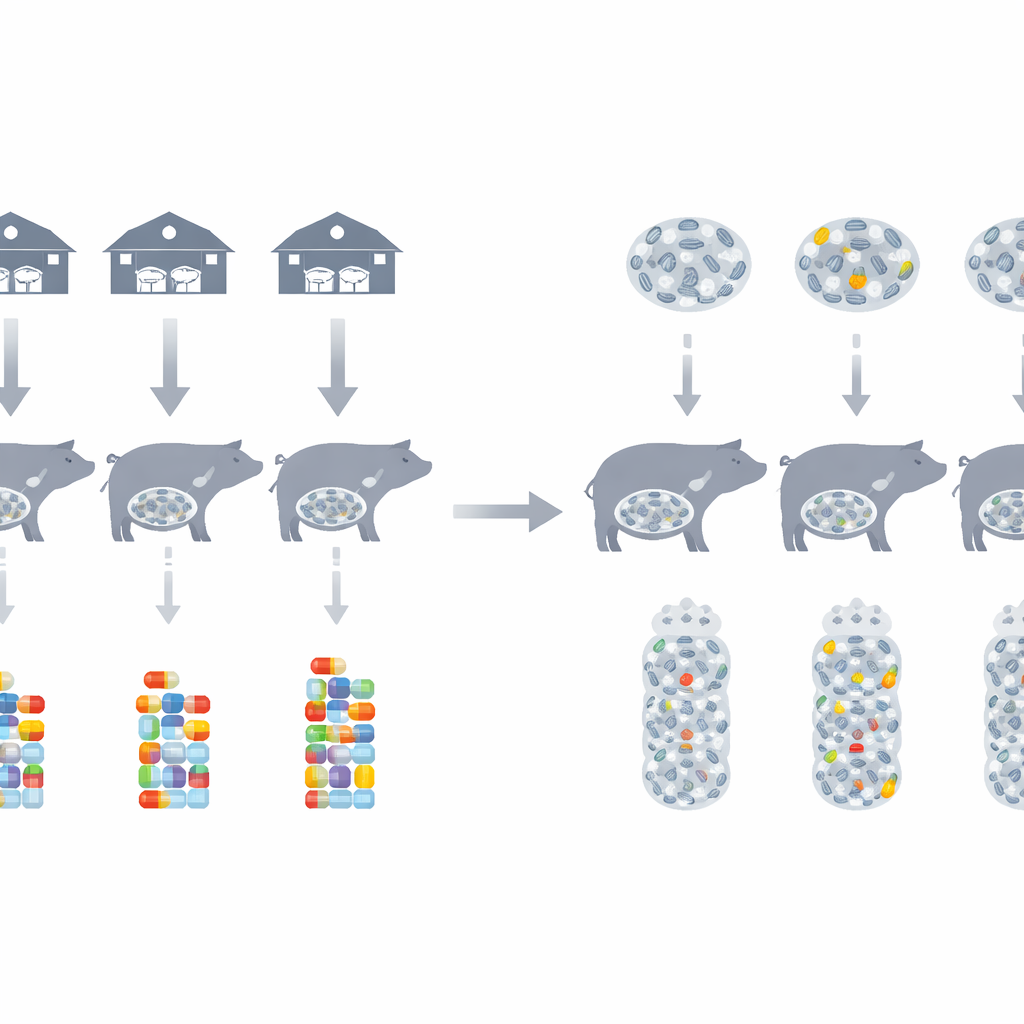
Beyond simple one-drug-at-a-time comparisons, the researchers also examined how resistance to different drugs moved together. By looking at how the minimum drug amount needed to stop growth changed across bacteria and across farms, they uncovered clusters of drugs whose resistance tended to rise and fall in parallel. Strong links appeared within families such as beta-lactams and fluoroquinolones, and there were also signs of cross-links between unrelated drug families. This suggests that using one drug may, in some situations, drag resistance to another drug along with it – possibly because the same genetic packages in the bacteria carry defenses against several medicines at once. However, some drugs, including florfenicol and colistin, showed much weaker connections, hinting at more independent resistance pathways.
From farm records to smarter stewardship
To make sense of these patterns, the study used relatively simple but robust data-processing steps, turning messy real-world records into standardized scores that show when a farm is using a given drug far more or far less than its own internal average. By aligning these scores with resistance measurements across several time windows, the authors show that routine farm data already contain enough structure to support more advanced tools, such as forecasting models that flag risky trends or test the impact of changing treatment strategies. The work also highlights key gaps: the data came from only four farms, and resistance was measured only at a single point in time, without genetic analysis of the bacteria. Still, the findings point toward a practical future in which pig farms – and potentially other livestock systems – use their own digital records to guide responsible medicine use, protecting both animal health and the effectiveness of our limited arsenal of antimicrobial drugs.
What this means in plain terms
In simple language, this study shows that pig farms can act as both a testing ground and a warning system for the global problem of drug-resistant bacteria. Heavier use of medicines often goes along with more resistance, but not always in a direct or immediate way. Past treatments, farm management, and hidden genetic links between drugs all shape how resistance unfolds. By proving that everyday farm records can be cleaned, combined, and analyzed to reveal these patterns, the researchers lay the groundwork for smarter, data-driven rules on when and how to treat animals. That, in turn, can help keep essential medicines working – not just for pigs, but for people as well.
Citation: Vribék, K., Farkas, M., Csorba, S. et al. Antimicrobial use and Escherichia coli resistance patterns in Hungarian pig farms: a data-driven farm-level analysis. Sci Rep 16, 11874 (2026). https://doi.org/10.1038/s41598-026-43008-7
Keywords: antimicrobial resistance, pig farms, Escherichia coli, antibiotic usage, livestock surveillance