Clear Sky Science · en
A variant in RESF1 is associated with Addison’s disease and multiple autoimmune syndrome in young Nova Scotia Duck Tolling Retrievers
Why this matters for dog lovers and human health
Many families think of their dogs as furry children, so a disease that strikes young dogs and cuts lives short is heartbreaking. This study uncovers a single genetic change in Nova Scotia Duck Tolling Retrievers that can trigger a powerful misfire of the immune system, attacking not just the adrenal glands but many organs at once. By understanding this rare but dramatic syndrome in dogs, scientists also gain a new window into how the immune system goes wrong in people. 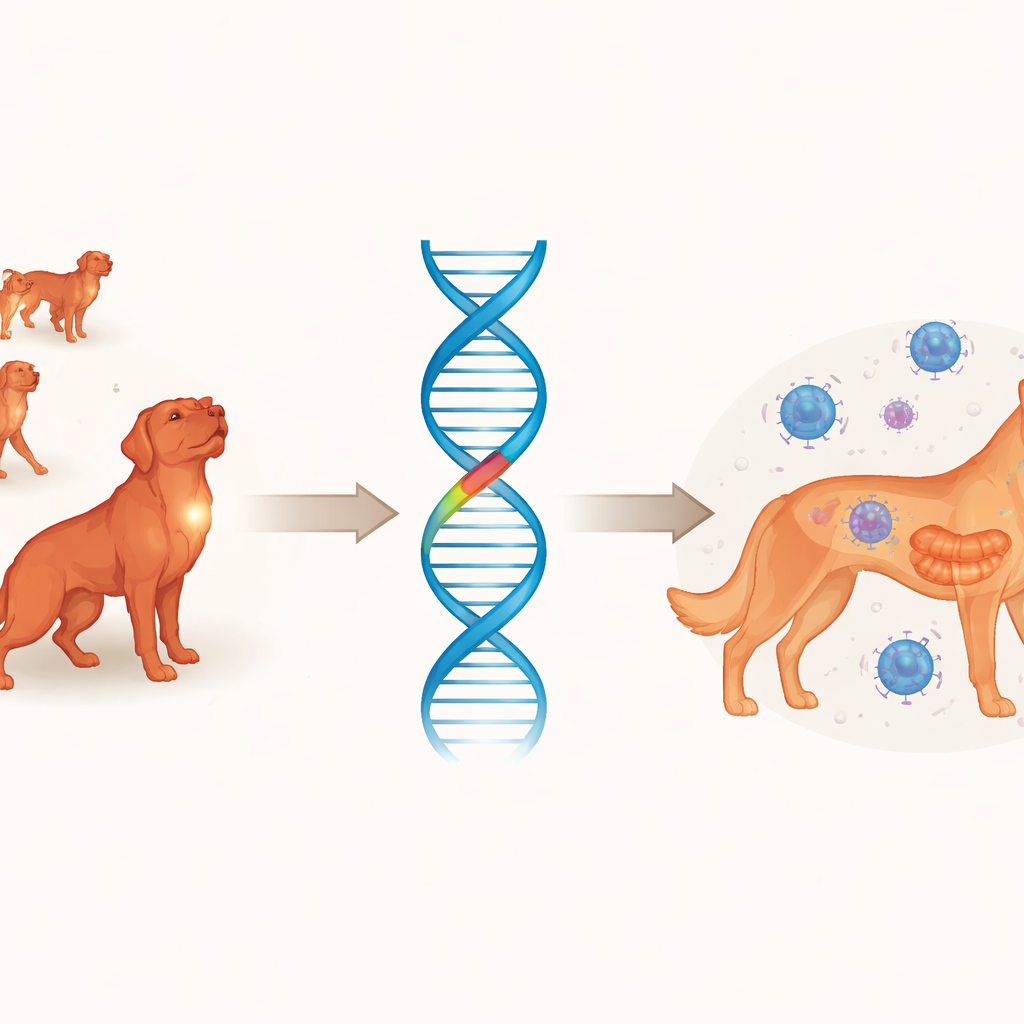
A hidden pattern in sick young retrievers
Veterinarians had long noticed that Tollers seemed unusually prone to Addison’s disease, a failure of the adrenal glands that normally help control stress, blood pressure, and salt balance. In most dogs and people, Addison’s disease appears in adulthood and often affects only the adrenal glands. Here, the researchers followed 60 affected Tollers from around the world and saw something different in the youngest dogs. Of the 24 diagnosed before their first birthday, fewer than a quarter had only adrenal problems. Most had a grab bag of other illnesses—ranging from gut trouble and eye inflammation to blood disorders and joint disease—suggesting a broad breakdown of immune self-control rather than a single-organ defect.
Many diseases, short lives
Medical records and postmortem exams painted a grim picture. Young Tollers with this syndrome frequently developed multiple autoimmune conditions at once, a situation known in people as multiple autoimmune syndrome. Some dogs had inflamed intestines, others had immune attacks on red blood cells or platelets, and many suffered recurring conjunctivitis and more severe eye disease. When the team looked at records for 14 of these dogs, they found that even with proper treatment for Addison’s disease, the average lifespan was only about three and a half years, with many dying much earlier from complications of their other autoimmune problems rather than from adrenal failure alone. 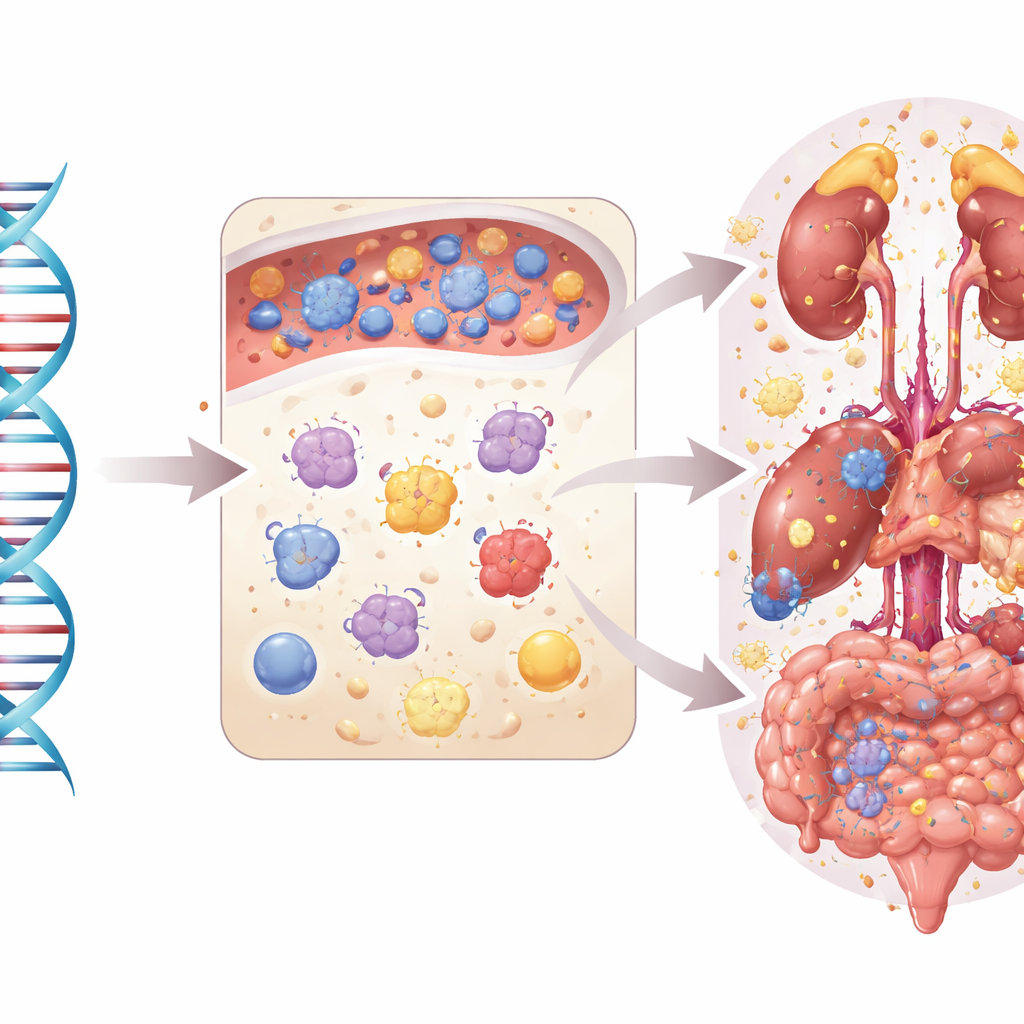
Tracing the problem to a single gene
To search for an inherited cause, the scientists compared DNA from the young, severely affected Tollers with DNA from older healthy dogs of the same breed. A genome-wide scan pointed strongly to one region on chromosome 27 that all but two of the young cases shared. Sequencing that stretch of DNA in detail revealed 25 differences from unaffected dogs, but only one changed a protein: a single-letter swap in a gene called RESF1. This change alters one amino acid at a spot that is identical across many mammal species, and several computer tools predicted it would damage the protein’s function. The vast majority of young affected Tollers carried two copies of this altered RESF1, while it was almost entirely absent from thousands of other dogs across hundreds of breeds.
How the altered gene may unleash the immune system
RESF1 is normally active at low levels throughout the body but is especially important in immune cells. In laboratory tests, blood cells from affected Tollers showed slightly higher RESF1 activity than those from healthy dogs, hinting that the mutation changes how the gene is regulated or how stable its protein is. Microscopic examination of adrenal glands from two unrelated affected dogs revealed dense clusters of T cells invading and destroying the hormone-producing tissue, a hallmark of autoimmune attack. Because RESF1 is known to help silence bits of ancient viral DNA in the genome and is highly active in early immune cells that learn to tolerate the body’s own tissues, the authors propose that the faulty version may disrupt these early training steps or allow viral remnants to provoke chronic immune activation.
Why some carriers get sick and others do not
Interestingly, not every Toller with two copies of the RESF1 variant falls ill as a puppy. Among more than 300 additional Tollers tested, the team found several adult dogs that were genetically at risk but had not developed juvenile Addison’s disease. Overall, they estimate that about three out of four dogs with the risky pair of genes actually develop the severe multi-organ syndrome. The researchers explored whether different immune gene backgrounds might explain this incomplete "on–off" effect, but they saw no clear pattern in a major immune region analogous to the human HLA complex. This suggests that other genes, epigenetic changes, infections, or environmental factors likely help determine which dogs cross the threshold into disease.
From a tragic syndrome to prevention and new clues
By tying this devastating cluster of illnesses in young Tollers to a single mutation in RESF1, the study provides one of the few known examples of a mostly single-gene cause of broad autoimmune disease in any species. For breeders and owners, the discovery has immediate benefits: a DNA test now allows them to avoid mating two carriers, and since the test became available, no new juvenile cases have been reported from tested parents. For medicine more broadly, these dogs represent a natural model of how failure in one gene involved in immune tolerance can lead to attack on many organs. In simple terms, the researchers conclude that a tiny genetic typo in RESF1 can tip the dog’s immune system from guardian to aggressor, and understanding why may ultimately help protect both canine and human patients from similar auto-destructive storms.
Citation: Brown, E., Varney, S., Young, A. et al. A variant in RESF1 is associated with Addison’s disease and multiple autoimmune syndrome in young Nova Scotia Duck Tolling Retrievers. Sci Rep 16, 13194 (2026). https://doi.org/10.1038/s41598-026-42994-y
Keywords: Addison’s disease, autoimmune syndrome, dog genetics, Nova Scotia Duck Tolling Retriever, immune tolerance