Clear Sky Science · en
Ibuzatrelvir potently reduced viral RNA levels despite a high rate of anti-S seropositivity: a post hoc analysis of serology of the phase 2b study
Why this matters now
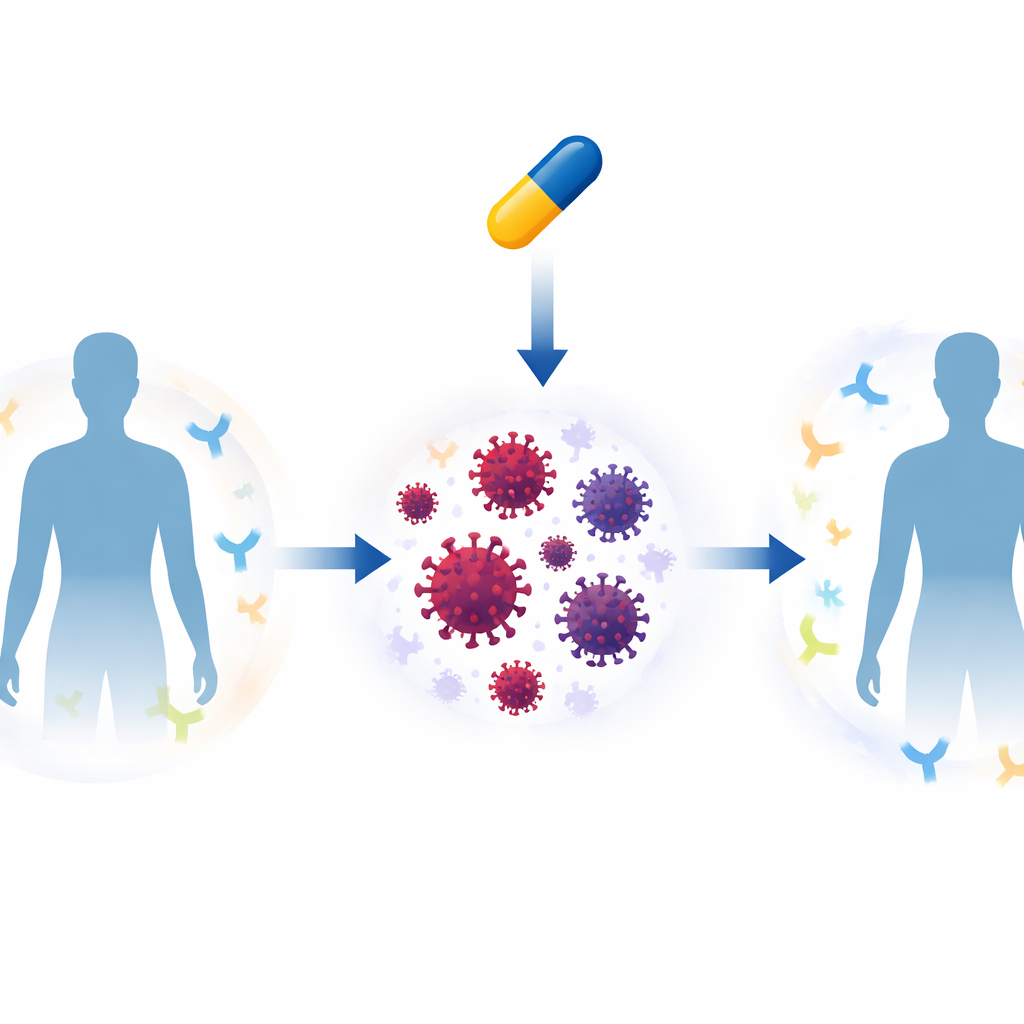
As the world moves into a new phase of the COVID-19 pandemic, many people already carry antibodies from vaccines, prior infections, or both. This has raised an important question: if most of us have some level of immunity, do antiviral pills still add much benefit? This study looks closely at ibuzatrelvir, an experimental COVID-19 drug, to see whether it can meaningfully cut down virus levels in the nose and throat even in people who already have antibodies.
The study at a glance
The researchers revisited data from a phase 2b clinical trial that tested different doses of ibuzatrelvir—an oral drug that blocks a key SARS-CoV-2 enzyme—against placebo in adults with mild to moderate COVID-19 during the Omicron era. These volunteers were younger than 65 and did not have medical conditions that raise the risk of severe disease. Very few were immunologically “naïve”: almost everyone (about 99.6%) had antibodies against the virus’s spike protein, and more than 80% had signs of past infection. The main outcome here was how much viral genetic material (viral RNA) in nasal swabs fell over the first five days of treatment.
What the immune landscape looked like
Blood samples taken before treatment showed a wide range of pre-existing immunity. While nearly all participants had spike antibodies, the levels of neutralizing antibodies—those that can actively block the virus from infecting cells—varied greatly. About one in six had neutralizing activity so low it was barely detectable, even though many still had high spike antibody levels. The team also confirmed that infections in the trial were caused by Omicron subvariants, mostly from the XBB family, and therefore measured neutralizing antibodies specifically against XBB.1.5. Overall, neutralizing and spike antibodies tended to rise and fall together, but not perfectly, hinting that not all spike antibodies are equally protective.
How antibodies and viral levels were linked
Before treatment started, people with higher antibody levels generally had lower amounts of virus. Looking over the following 10 days, those who started with more virus tended to mount bigger jumps in antibodies, regardless of whether they received ibuzatrelvir or placebo. This suggests that infection itself still acts as a strong booster, even in a population with past exposure. Yet, despite high rates of prior vaccination or infection, average neutralizing and spike antibody levels were not high enough on their own to ensure rapid viral clearance. Without antiviral help, many people cleared the virus more slowly than might be expected in such an immune-exposed population.
What ibuzatrelvir added
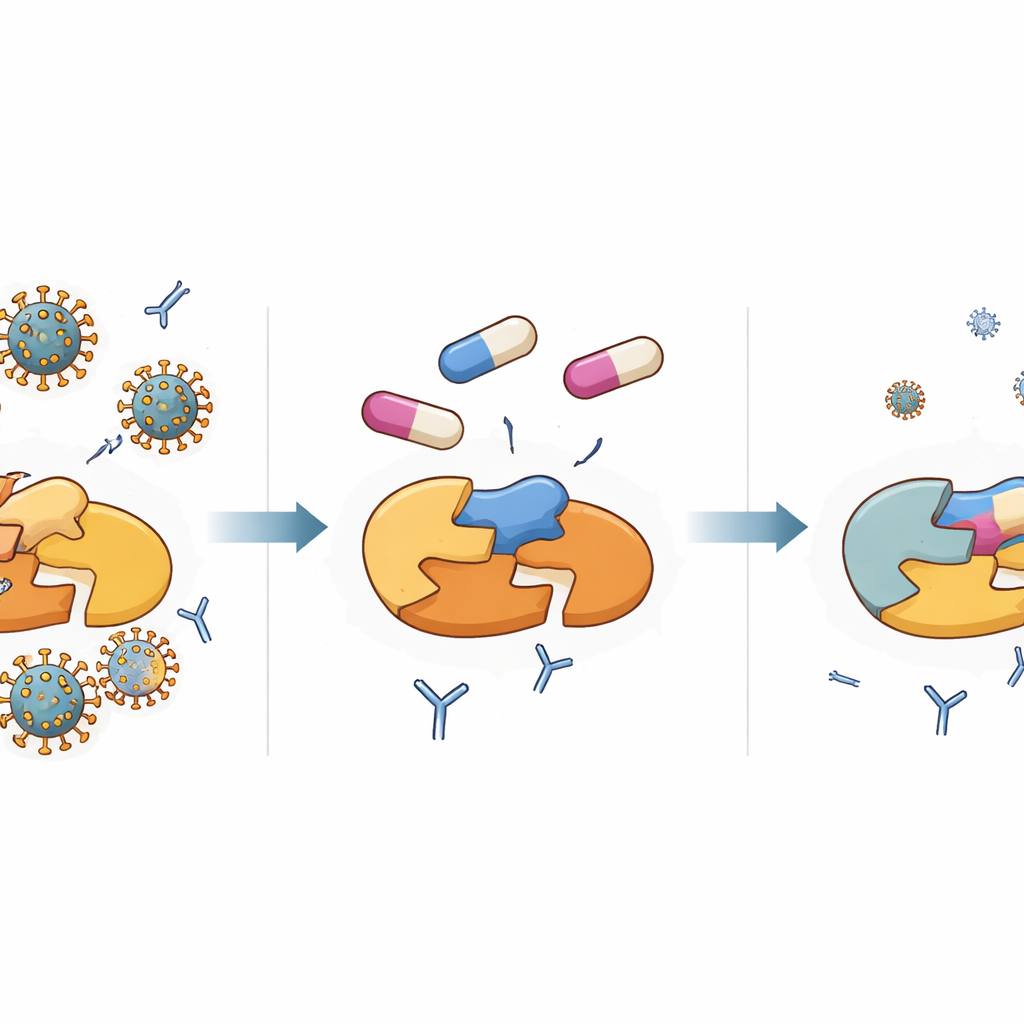
The researchers then asked: does the benefit of ibuzatrelvir depend on how strong a person’s antibodies are at the start? In the placebo group, people with higher neutralizing antibody levels showed a larger drop in viral load by day five—evidence that pre-existing immunity does help. In contrast, in the ibuzatrelvir groups, viral reduction did not meaningfully depend on starting neutralizing antibody levels. Statistical modeling suggested that at the actual average antibody levels in the study, the 600 mg dose of ibuzatrelvir cut virus levels about tenfold more than placebo by day five. Even if the average baseline antibody levels were imagined to be twice as high as they actually were, the drug was still projected to produce at least a fivefold greater reduction in virus than placebo.
What this means for the future
To a non-specialist, the key takeaway is that ibuzatrelvir substantially sped up the drop in virus levels in the nose and throat, even in people who almost all had prior immunity to SARS-CoV-2. Antibodies alone, especially neutralizing ones, were often too modest or short-lived to guarantee fast viral clearance. An antiviral that directly blocks the virus’s machinery added a strong extra push. While this study focused on short-term viral measures rather than hospitalizations or deaths, it suggests that antiviral pills like ibuzatrelvir could remain valuable tools in an era when COVID-19 immunity is widespread but imperfect, especially for people whose antibody responses are weaker or fade quickly.
Citation: Kim, J.H., Knutson, A., Smith, J. et al. Ibuzatrelvir potently reduced viral RNA levels despite a high rate of anti-S seropositivity: a post hoc analysis of serology of the phase 2b study. Sci Rep 16, 12594 (2026). https://doi.org/10.1038/s41598-026-42989-9
Keywords: COVID-19 antiviral, SARS-CoV-2 immunity, ibuzatrelvir, neutralizing antibodies, Omicron variant