Clear Sky Science · en
Associations between tattooed body surface area and maladaptive personality traits in a community sample
Why tattoos and personality still fascinate us
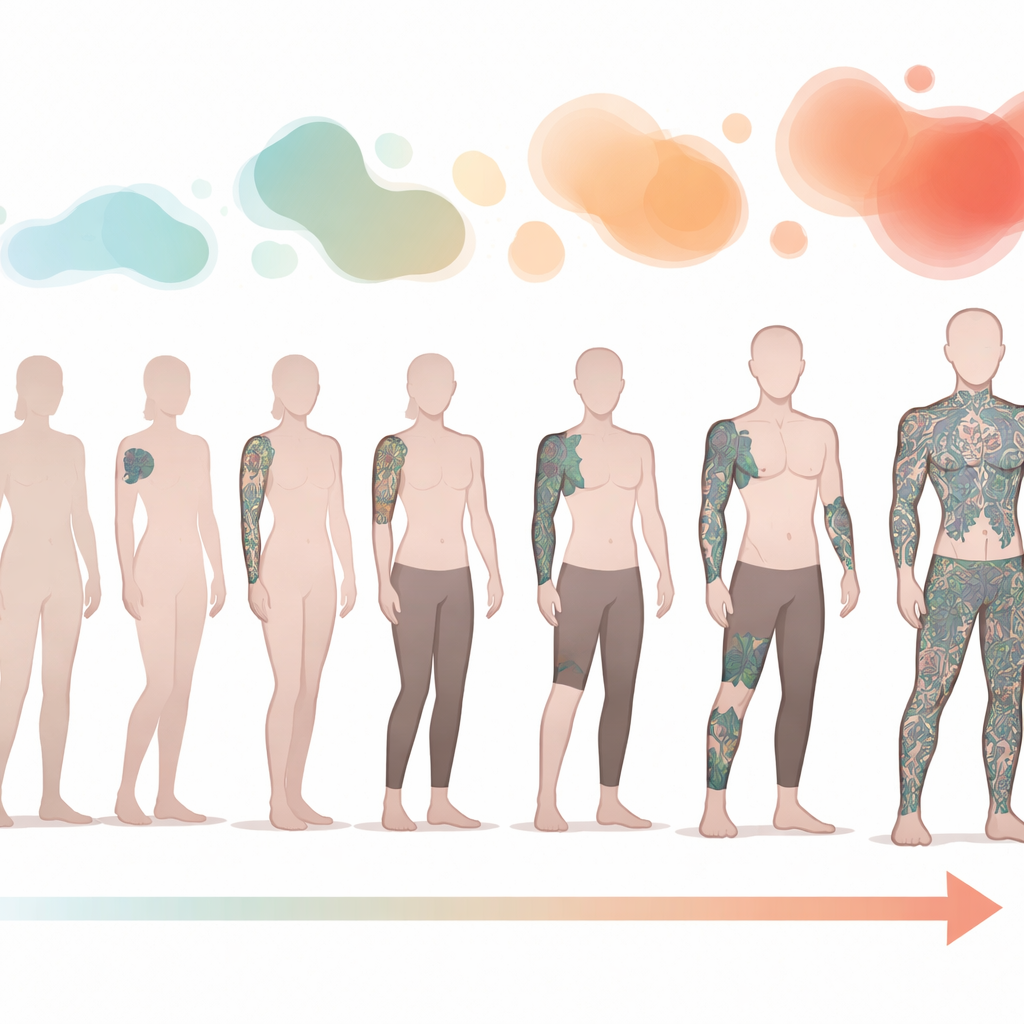
Tattoos are now so common that they show up in offices, classrooms, and family photo albums. Yet many people still quietly wonder whether heavily tattooed individuals are, on average, more impulsive, more rebellious, or more troubled than those without body art. This study tackles that question with modern psychology tools, asking not just whether someone has tattoos, but how much of their body is tattooed, and how that relates to certain personality tendencies linked to everyday risk-taking and conflict with others.
Looking beyond “tattooed or not”
Earlier research often treated tattoos as a yes-or-no marker and compared broad personality traits between tattooed and non-tattooed people. Results were mixed: some studies found higher thrill-seeking or impulsivity, others found only tiny differences. The authors of this study reasoned that such simple measures may miss important nuance. A single small, hidden tattoo likely carries a different social signal than extensive, visible coverage. Instead of viewing tattoos as a sign of mental illness, the researchers focused on whether the extent of tattooing is tied to personality styles that can sometimes cause problems in daily life, such as acting without thinking or being hostile and argumentative.
Measuring ink on skin and traits in mind
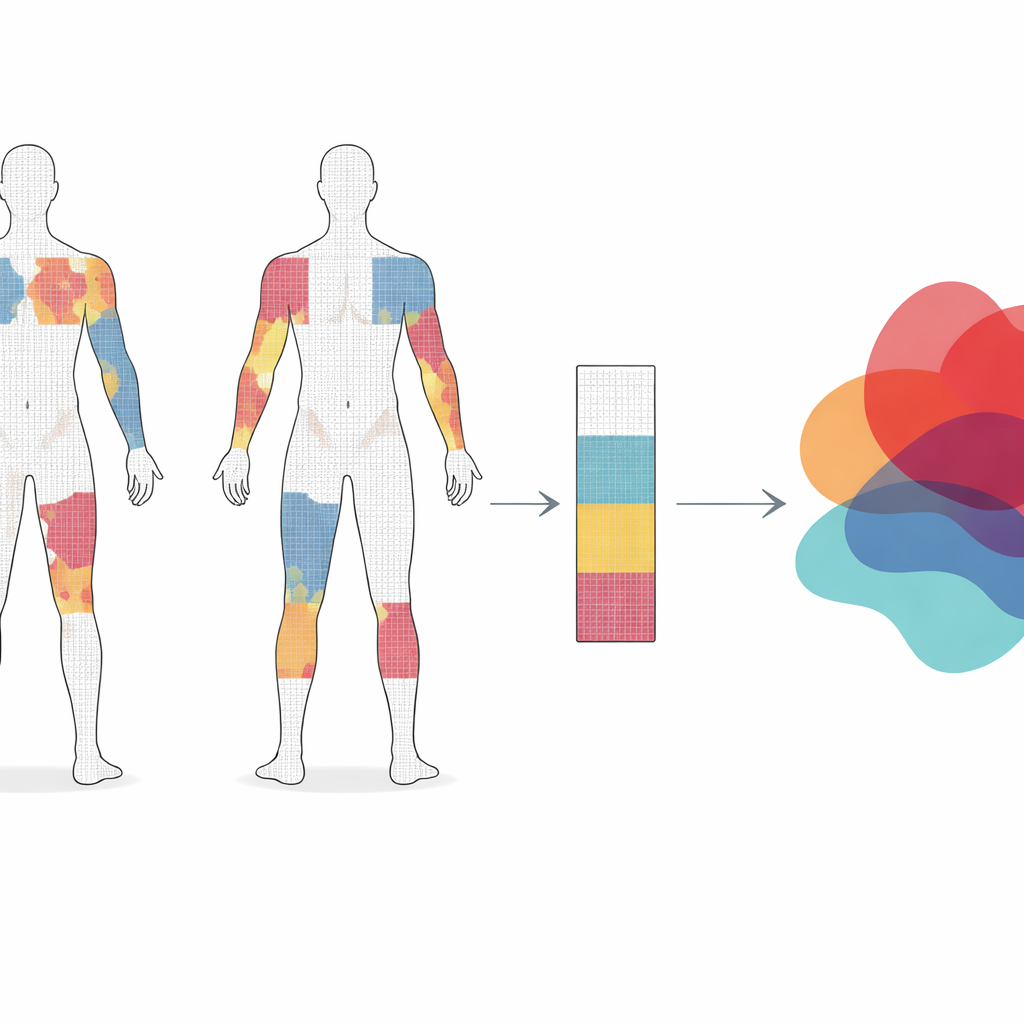
The team recruited 280 adults in Cyprus, ranging from young adults to people in their sixties, many drawn from everyday settings like university spaces and local cafés. Participants shaded in all of their tattoos on front-and-back body diagrams divided into a fine grid. From these maps, the researchers calculated the percentage of each person’s body surface that was tattooed, a measure they call tattooed body surface area, or tBSA. People also reported how many individual tattoos they had. To assess personality, volunteers completed a brief questionnaire that measures five clusters of problematic tendencies, including impulsive and irresponsible behavior (called disinhibition) and a combative, callous style in dealing with others (called antagonism).
What the numbers say about ink and personality
Just under 60% of participants had at least one tattoo. Compared with people without tattoos, those with tattoos scored higher on disinhibition and had somewhat higher overall levels of maladaptive traits, but they did not differ in antagonism or in traits linked to social withdrawal, emotional distress, or unusual thinking. When the researchers looked at tBSA, a more fine-grained indicator than simple counts, clearer patterns emerged. The greater the proportion of the body that was tattooed, the higher the scores on antagonism and disinhibition and the higher the overall maladaptive trait load. Simple tattoo counts showed only weaker links. In more detailed statistical models that accounted for age, sex, and socioeconomic status, antagonism remained the strongest and most consistent personality correlate of higher tattoo coverage.
Small differences and the role of gender
The size of these associations was modest. Effect sizes were in the small-to-moderate range, typical for links between personality and behavior in community samples. The results suggest that most tattooed people are not dramatically different from their non-tattooed peers in terms of problematic traits. Men in the study tended to have greater tattoo coverage than women and scored higher on antagonism, disinhibition, social detachment, unusual experiences, and the overall maladaptive trait score, whereas women scored higher on negative emotionality. These sex differences echo broader patterns in psychology, where men more often show outwardly directed problems and women more often report inwardly focused distress.
What this means for how we view tattoos
For everyday readers, the key message is that tattoos themselves are not a reliable sign of mental illness or severe personality disturbance. Having tattoos was linked to somewhat higher impulsive tendencies, and covering a larger share of the body with tattoos showed a modest connection with more antagonistic and disinhibited styles. But these effects were far from determining who a person is. The work instead highlights the value of precise measurement—both of personality and of tattoo coverage—when we try to understand how body art fits into people’s lives. Future studies that track people over time, and that factor in tattoo visibility, motives, and culture, may reveal whether heavily tattooed individuals follow different life paths or whether tattoos are simply one of many ways people express who they are.
Citation: Adonis, M.N., Sullman, M.J.M., Athanasiadou, A. et al. Associations between tattooed body surface area and maladaptive personality traits in a community sample. Sci Rep 16, 8642 (2026). https://doi.org/10.1038/s41598-026-42987-x
Keywords: tattoos, personality traits, body modification, impulsivity, antagonism